Iran Military Reaffirms Readiness to Alter Nuclear Doctrine and Expands Missile Capabilities Amid Escalating Regional Tensions

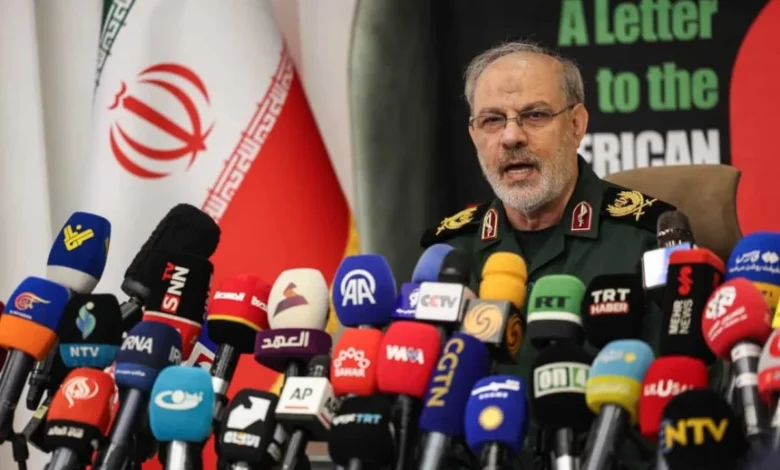
Tehran has signaled a significant and aggressive shift in its strategic calculus, with senior military officials declaring that the Islamic Republic is fully prepared to modify its foundational nuclear doctrine if commanded by its supreme leadership. This hardline posture, articulated in early November, coincides with explicit warnings that the country will continuously expand the operational range of its ballistic missile arsenal and launch unconstrained retaliatory measures against any perceived hostile actions from regional adversaries and Western powers.
The statements, broadcasted through regional media outlets like Al Jazeera and corroborated by statements from the Islamic Revolutionary Guard Corps (IRGC), underscore an intensifying cycle of deterrence and posturing in the Middle East. As diplomatic channels strain under the weight of persistent cyberattacks, economic sanctions, and localized kinetic engagements, Tehran’s military apparatus is doubling down on self-reliance, technological adaptation, and aggressive territorial control, particularly surrounding vital maritime chokepoints like the Strait of Hormuz.
Strategic Shifts and Nuclear Doctrine Posturing
The debate surrounding Iran’s nuclear doctrine has long been a focal point of international diplomacy and intelligence scrutiny. Historically tethered to a defensive fatwa issued by Supreme Leader Ayatollah Ali Khamenei—which formally prohibits the development and stockpiling of nuclear weapons—the recent declarations by military spokespersons suggest that this theological boundary is increasingly negotiable under severe national security pressures.
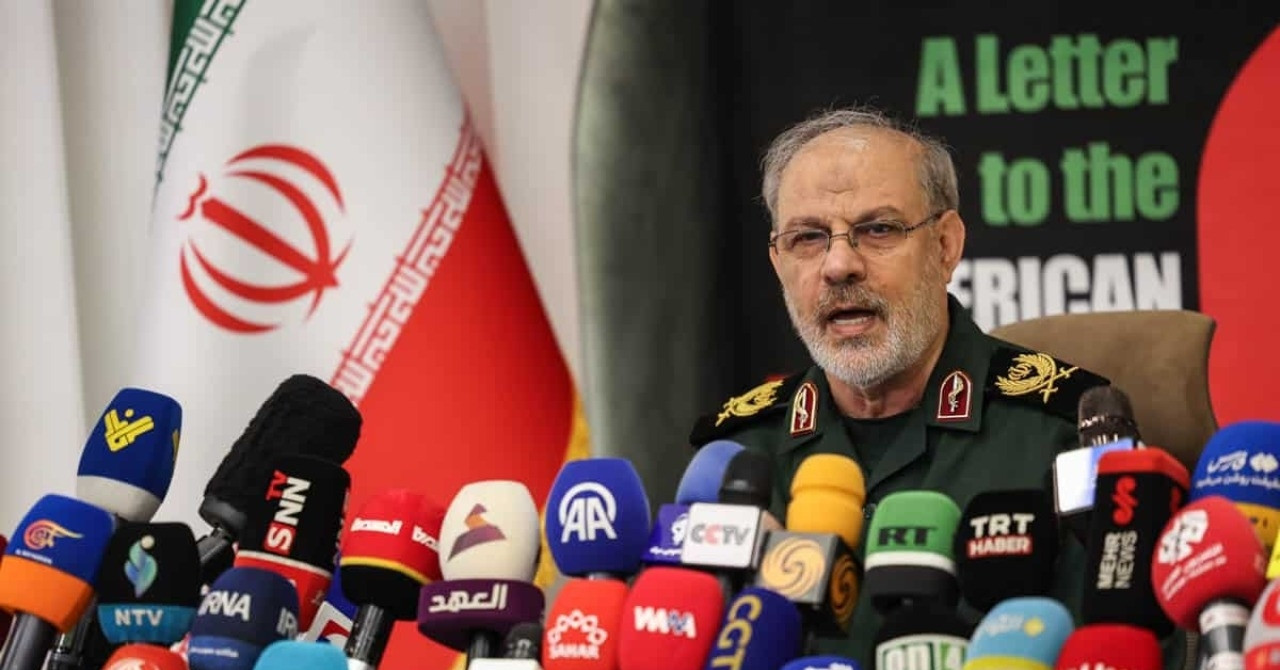
On November 7, Hossein Mohebbi, a prominent spokesperson for the IRGC, publicly stated that the military structure stands fully prepared to implement any necessary modifications to its nuclear policy should the supreme leadership issue a formal directive. While Tehran continues to officially maintain that its nuclear program remains strictly civilian in nature, the willingness of high-ranking military officials to publicly table the concept of doctrine revision marks a calculated psychological escalation.
This posturing is mirrored by sustained financial and intelligence pressures from the West. Notably, the United States government recently escalated its campaign by offering up to $20 million in financial bounties, alongside potential relocation assistance, for individuals who provide actionable intelligence regarding Iran’s covert or overt nuclear infrastructure. Washington’s intensification of covert incentives highlights the persistent Western anxiety over the true status of Tehran’s enriched uranium stockpiles and centrifuge cascades.
Technological Advancement and Missile Range Expansion
Beyond the contentious debate over nuclear policy, Iran’s conventional military framework is undergoing rapid evolution, specifically within its missile and Unmanned Aerial Vehicle (UAV) sectors. Addressing foreign assessments that claim Iran’s missile supply chains are finite and vulnerable to attrition, IRGC officials have firmly rejected these evaluations.
According to Mohebbi, the decentralization and underground relocation of production facilities have insulated Iran’s defense manufacturing sector from sustained aerial campaigns. By burying assembly plants and research laboratories deep beneath mountainous terrain, Tehran claims to have secured an uninterrupted pipeline for research, development, and mass production of advanced weaponry.
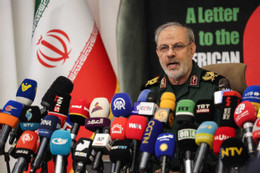
Furthermore, the IRGC highlighted the performance of its domestically engineered missile systems during recent regional skirmishes. Tehran asserts that its advanced ballistic projectiles have successfully penetrated multiple tiers of sophisticated foreign air defense architecture, explicitly challenging the operational efficacy of systems such as the U.S.-manufactured Patriot batteries deployed across the region. By continuously increasing the operational range and maneuverability of these missile systems, the Iranian military aims to project power well beyond its immediate borders, ensuring that any adversary contemplating a preemptive strike faces prohibitive retaliatory costs.
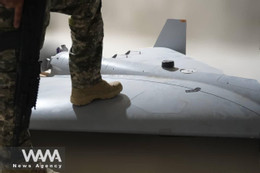
This technological flexing is not isolated to long-range munitions. In parallel with its missile advancements, the Iranian military has continued its active interdiction campaigns in the Persian Gulf and the Gulf of Oman. Recent weeks have witnessed multiple incidents where Iranian forces successfully downed and recovered advanced American reconnaissance and surveillance UAVs operating near critical maritime corridors. These actions demonstrate a persistent, high-readiness air defense posture capable of contesting airspace traditionally dominated by Western military coalitions.
The Geopolitical Significance of the Strait of Hormuz
While missile developments form the backbone of Iran’s strategic deterrence, its leverage over global energy markets remains anchored in its geographic command of the Strait of Hormuz. Through this narrow maritime artery flows a substantial portion of the world’s petroleum supply, making it one of the most critical geopolitical flashpoints on the planet.
On the same day as the IRGC’s doctrinal announcements, senior military official Mohammad Akraminia delivered a resolute declaration regarding Tehran’s enforcement capabilities in the region. Akraminia asserted that the Iranian armed forces have emerged significantly more resilient, cohesive, and battle-tested following direct confrontations with the United States and Israel.
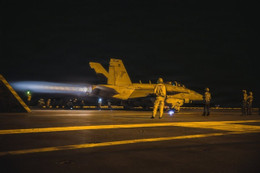
According to Tehran’s military leadership, the institutional memory gained from recent direct exchanges has streamlined command-and-response protocols. The Supreme Leader’s directives now emphasize that any future retaliatory actions executed by Iranian armed forces will be immediate, forceful, and devoid of geographic limitations.
Crucially, Tehran continues to weaponize its physical proximity to the Strait of Hormuz to extract diplomatic concessions and evade economic isolation. In a demonstration of selective maritime management, senior Iranian officials recently confirmed that the nation has exempted four specific countries—India, China, Iraq, and Qatar—from stringent transit and cargo restrictions within the strait. Conversely, vessels associated with nations deemed hostile or uncooperative face rigorous inspections, harassment, or temporary detention.
This tiered enforcement mechanism serves a dual purpose. By offering relief to key Asian and regional trading partners, Iran solidifies vital economic lifelines that help mitigate the suffocating effects of international sanctions. Simultaneously, by maintaining a restrictive chokehold on shipping traffic linked to Western allies—such as recent tensions involving U.S. and South Korean naval dynamics—Tehran reinforces its narrative of sovereign defiance. Iranian officials have maintained that restrictions within the strait will remain active until Washington and its allies satisfactorily address Tehran’s core political and economic demands.
Chronology of Escalation: A Timeline of Recent Events
To fully understand the current friction points, it is necessary to examine the cascading sequence of events that have defined the Iran-U.S.-Israel axis over recent months:
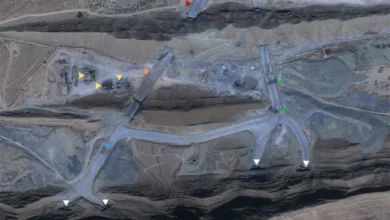
- Early October: Intelligence reports and open-source satellite imagery indicate heightened underground construction activity at several key Iranian military and nuclear research sites, prompting renewed Western concern over the reconstitution of sensitive infrastructure.
- Late October: A series of close encounters occur in the Persian Gulf, culminating in Iranian air defense units targeting and recovering advanced American surveillance UAVs operating near the approaches of the Strait of Hormuz.
- Early November (Phase 1): In a bid to alleviate maritime bottlenecks for friendly nations, high-ranking Iranian officials announce transit exemptions through the Strait of Hormuz specifically tailored for vessels from India, China, Iraq, and Qatar.
- Early November (Phase 2): The United States Department of State announces an expanded rewards program, offering up to $20 million for actionable intelligence regarding Iran’s nuclear proliferation networks.
- November 7: IRGC spokesperson Hossein Mohebbi publicly declares the military’s readiness to alter its nuclear doctrine if ordered by supreme leadership, while simultaneously confirming ongoing enhancements to missile range and payload technologies. Concurrently, Mohammad Akraminia reaffirms Tehran’s unyielding control over the Strait of Hormuz, promising unbounded retaliation against hostile adversaries.
Implications and Global Repercussions
The hardening stance adopted by Iran’s military leadership carries profound implications for global security, energy stability, and non-proliferation regimes. By openly floating the prospect of a nuclear doctrine review, Tehran is engaging in high-stakes psychological brinkmanship, raising the perceived costs of military intervention for Washington and Jerusalem.
For the international community, the continuous expansion of Iran’s missile range and its demonstrated ability to challenge advanced air defense systems complicate regional defense planning. Gulf Cooperation Council (GCC) nations, alongside Western allies, are forced to continually upgrade their multilayered interceptor networks, driving an expensive regional arms race.
Furthermore, the weaponization of the Strait of Hormuz demonstrates Iran’s capacity to induce global economic shockwaves through energy supply disruptions. While carve-outs for major importers like China and India temporarily shield those economies from severe shocks, any prolonged escalation that threatens total closure of the strait would guarantee a spike in international crude oil prices, threatening fragile post-pandemic and inflation-plagued global markets.
As diplomatic frameworks such as the stalled Joint Comprehensive Plan of Action (JCPOA) remain functionally moribund, the trajectory of U.S.-Iran and Israel-Iran relations appears increasingly governed by military deterrence and gray-zone warfare. With Tehran signaling absolute unconstraint in its retaliatory geography and tactical execution, the margin for diplomatic error in the Middle East has grown dangerously thin.