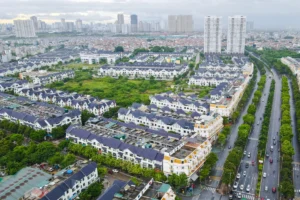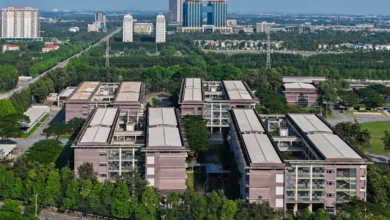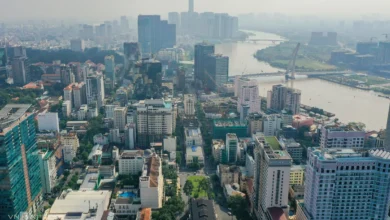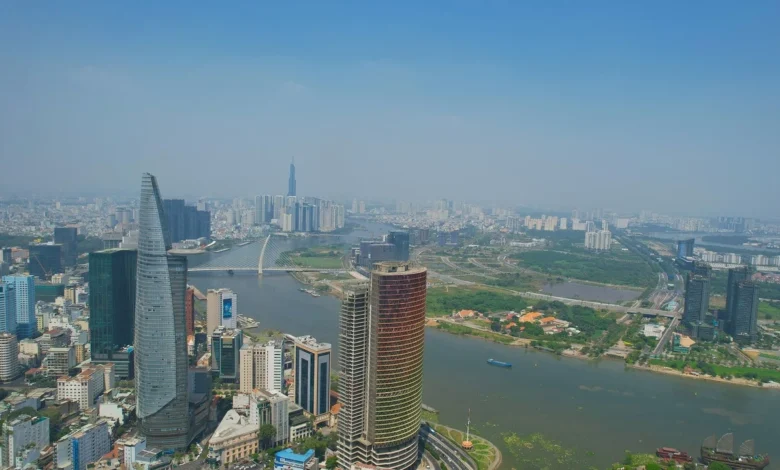
In a clear sign of a shifting economic landscape for Vietnam’s largest commercial hub, Ho Chi Minh City has reported a robust double-digit growth in its real estate service revenue during the first ten months of the year. According to the latest data from the Ho Chi Minh City Statistics Office, the sector generated 373.011 trillion VND (approximately 14.7 billion USD), marking a 10.8% increase compared to the same period in the previous year. This performance underscores a gradual, albeit cautious, recovery for a market that has faced significant regulatory and liquidity hurdles over the past several years.
Market Dynamics and Revenue Drivers
The real estate sector currently accounts for over 56.6% of the city’s total service revenue, cementing its role as a primary engine for local economic growth. The data reveals that the recovery is not limited to land transactions alone but extends deep into the construction and supply chain ecosystem. Revenue from the sale of construction materials and interior finishing products reached 97 trillion VND, reflecting a 28% year-on-year surge. This indicates that stalled projects are slowly returning to life, necessitating immediate capital expenditure on materials and labor.
Furthermore, state revenue from land use fees and housing taxes—a critical component of local fiscal health—saw a 20% increase to 78.917 trillion VND. While this figure represents over 67% of the annual budget projection, the most striking indicator of market momentum is the revenue from land use rights, which jumped 51% compared to last year, reaching 30.702 trillion VND.
The Path to Resolution: Clearing Project Bottlenecks
The city’s administration has adopted an aggressive posture regarding the legacy of stalled real estate projects. To date, municipal authorities have audited 921 projects that were previously flagged for administrative or legal delays. Of these, 361 projects—representing approximately 39% of the total—have successfully navigated the "bottleneck" removal process. For the remaining 560 projects, the city is in the process of defining specific corrective measures, ranging from legal restructuring to financial mediation.
The process of land clearance and site handover has also seen marked improvement. Three high-priority, flagship projects have reached between 98% and 100% completion in terms of land handover, following the successful implementation of compensation, support, and resettlement policies. This progress is vital, as it provides the necessary legal clearance for developers to resume construction and inject capital into the local economy.
Expert Analysis: A Necessary Structural Shift
Dr. Le Ba Chi Nhan, a prominent economist specializing in urban development, notes that while the current revenue figures are encouraging, they should be viewed as a "sign of initiation" rather than a signal that the market has entered a period of sustained, long-term growth.
"The resolution of 361 out of 921 stalled projects is not merely a bureaucratic victory; it is a critical unlocking of frozen land resources and investment capital," Dr. Nhan explained. "When a project is revived, the ripple effect is immediate. It activates construction, materials procurement, financial services, and job creation. This has a direct impact on the city’s Gross Regional Domestic Product (GRDP) and tax collection."
However, Dr. Nhan warns that the city must pivot its strategy. "Moving from a ‘case-by-case’ resolution model to a systemic mechanism is essential for the remaining 560 projects. We cannot rely on ad-hoc solutions to resolve systemic issues that have been years in the making."
Three Pillars for Sustainable Growth
To ensure the momentum continues into the final months of the year and beyond, Dr. Nhan has proposed three strategic pillars for the municipal government:
1. Institutionalizing Inter-agency Coordination:
The city needs a dedicated, high-authority body to categorize stalled projects based on their specific hurdles—whether legal, zoning, land-use, or financial. By clarifying the mandate of each agency and setting rigid timelines for resolution, the city can eliminate the "blame-shifting" culture that often paralyzes decision-making.
2. Radical Reform of Land Valuation:
The current land valuation process remains a significant bottleneck. Dr. Nhan suggests the creation of a transparent, unified database for land pricing that applies methods consistent with market conditions. By clearly distinguishing financial obligations at the onset of a project, the city can prevent the long-term disputes that have historically deterred investors.
3. Prioritizing Market-Ready Products:
Legal and administrative efforts should be prioritized for projects that can immediately deliver products to the market, particularly social housing, affordable apartments, and mid-range residential units. Addressing the supply-demand gap in these segments will not only support fiscal goals but also fulfill a critical social mandate.
The Fiscal Reality: Looking Ahead
The final two months of the year are of critical importance to the city’s fiscal performance. While the 51% growth in land-use revenue is a positive sign, the fact that this only represents 43% of the annual target highlights a significant gap in the ability to convert potential assets into actual budgetary income.
"The government must stop viewing land merely as a source of one-time revenue," Dr. Nhan emphasized. "It must be treated as a resource to generate long-term value. The focus should shift from short-term collections to maximizing the efficiency of land use and investment effectiveness."
The expert concluded that the real measure of success for the city’s policies will not be the revenue collected from land auctions or fees, but rather the economic output generated after those lands are transformed into housing, industrial zones, and commercial hubs.
Broader Implications for the Real Estate Sector
The current data suggests that the worst of the liquidity crisis in Ho Chi Minh City’s real estate sector may be passing. However, the recovery remains fragile and heavily dependent on the efficiency of the administrative machine. For investors and developers, the "new normal" in Ho Chi Minh City is characterized by higher regulatory scrutiny but a more predictable, albeit slower, path to project approval.
As the city enters the final quarter, the focus will remain on the 560 remaining projects. The success or failure of the administration to clear these hurdles will likely determine the trajectory of the city’s real estate market for the next three to five years. For now, the double-digit growth in service revenue serves as a vital proof-of-concept that the city’s corrective measures are functional, provided they are scaled with transparency and strategic urgency.
Ultimately, the revitalization of the real estate market is intrinsically linked to the broader health of the Vietnamese economy. As the city works to stabilize its land-use policy, it is simultaneously laying the groundwork for a more robust, sustainable, and transparent market environment, one that is less prone to the volatile cycles of the past.
Related posts: