Ha Do Group Strategic Pivot: Balancing Renewable Energy Expansion with Financial Liquidity Challenges

Ha Do Group (HDG) is currently undergoing a significant transformation in its business structure, shifting its core focus toward renewable energy to stabilize cash flow; however, while this strategic pivot has led to improved profitability in recent periods, it does not yet fully resolve underlying concerns regarding asset quality and the final settlement of outstanding cash flows.
The transition, which has been unfolding over the past two decades, marks a departure from the group’s origins in construction and real estate development. As HDG continues to divest or de-emphasize legacy sectors in favor of high-yield utility projects, market analysts are closely watching whether the company can successfully manage the complex financial realities of its capital-intensive energy portfolio.
A Decisive Move into Renewable Energy
The most recent indicator of this strategic direction is the decision by the Board of Directors at Ha Do Group to consolidate its ownership in the Binh Gia Wind Power Joint Stock Company. By acquiring the remaining shares previously held by key executives—specifically Vice Chairman and General Director Nguyen Trong Minh, and Deputy General Director Le Xuan Tuan—the company has moved to 100% ownership of the asset. This transaction, now undergoing the necessary legal formalities, signals a tightening of control over its renewable energy pipeline.
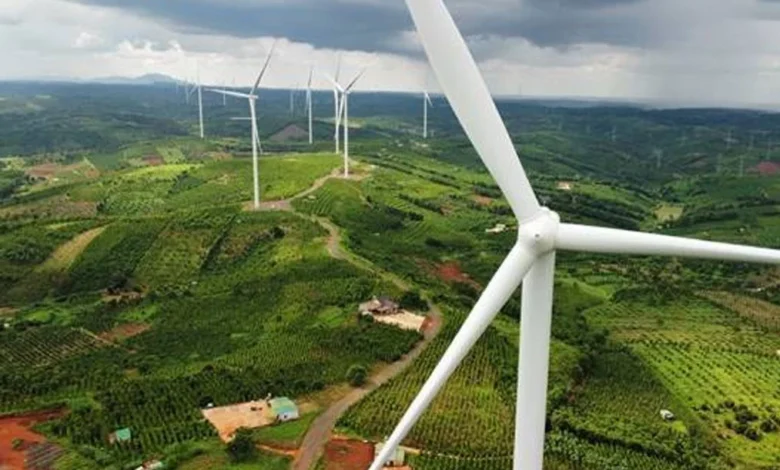
This development is merely the latest chapter in a multi-year strategy. In May 2026, the corporation formally established the Binh Gia entity with a charter capital of VND 610.5 billion, with HDG contributing 99.9% of the investment. This foundation was set shortly after the Lang Son Provincial People’s Committee issued an investment registration certificate for the Binh Gia wind power plant, a project with a planned capacity of 80 MW and an estimated total investment of VND 3 trillion.
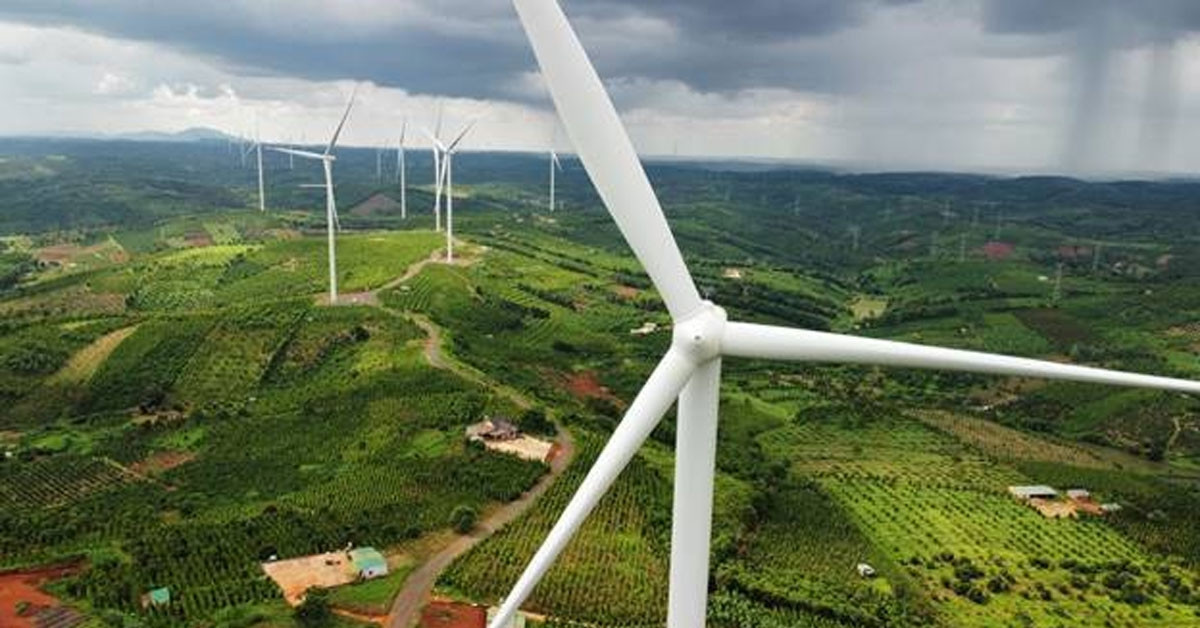
When combined with the Phuc Huu wind power project (50 MW), the addition of these assets is expected to inject 130 MW into HDG’s total capacity in the coming years. This aligns with the group’s broader ambition to reach an operational capacity of 1 GW by 2030, a goal that requires aggressive capital deployment and a disciplined approach to project selection.
Two Decades of Structural Evolution
Ha Do Group’s transition has not occurred in a vacuum. Twenty years ago, the company was primarily known for its construction capabilities. The shift began in 2006, when the firm made its first foray into hydropower with the Za Hung project (30 MW). Success in that venture provided the blueprint for a rapid expansion into other hydroelectric and renewable assets, including the Nam Pong, Nhan Hac, Dak Mi 2, and Song Tranh 4 facilities.
Following the success of its hydropower portfolio, the group diversified into solar and wind power, commissioning the Hong Phong 4 solar plant and the 7A wind power project. By the end of 2025, HDG was operating a diverse portfolio of eight power plants—comprising hydropower, solar, and wind—with a total capacity of 462 MW.
The current strategy involves a two-pronged approach: selective Mergers and Acquisitions (M&A) to acquire mid-sized hydropower projects with immediate cash-flow potential, and the development of large-scale wind power assets. By utilizing energy generation as a reliable, long-term revenue pillar, HDG aims to create a buffer that allows its real estate division to weather cyclical market volatility and ongoing legal delays.
Financial Performance and Profitability Analysis
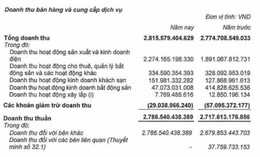
The shift toward renewable energy is clearly reflected in the company’s recent financial statements. For the first six months of 2026, HDG reported net revenue of VND 1,175 billion, remaining largely flat compared to the same period in the previous year. However, the internal composition of this revenue tells a different story.
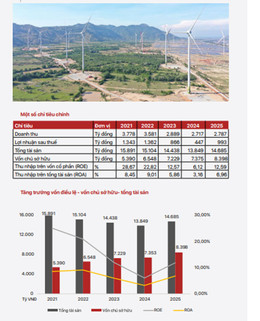
Electricity generation accounted for VND 888 billion—roughly 75% of total revenue. In stark contrast, revenue from real estate development was a mere VND 43 billion, while the hospitality division contributed VND 84 billion. This heavy reliance on energy generation is a trend that has accelerated significantly; in 2020, energy accounted for only 16% of the company’s revenue, whereas by 2025, that figure had ballooned to 82%.
Profitability has seen a notable surge, with after-tax profit reaching VND 386.2 billion, an increase of approximately 65% year-on-year. This improvement, however, is largely technical. It is primarily driven by a downward adjustment in the cost of goods sold for real estate assets, following a re-evaluation of land use costs and historical development expenditures. Furthermore, a significant reduction in financial costs, coupled with lower debt-servicing requirements, has bolstered the bottom line. As of the end of June 2026, the company’s total debt had declined to VND 4,373 billion, down from the beginning of the year, reflecting a disciplined effort to deleverage.
Addressing the Liquidity and Asset Quality Gap
Despite the positive trends in profitability and operational capacity, investors and analysts remain cautious regarding the company’s balance sheet, specifically concerning the quality of its receivables. By the end of June 2026, HDG’s "bad debt" receivables had climbed to approximately VND 939 billion, an increase of VND 293 billion since the start of the year.
The primary source of this concern is the amount owed by the Power Trading Company (a subsidiary of Vietnam Electricity – EVN) regarding the Hong Phong 4 and SP Infra 1 projects, which totals VND 804 billion. These outstanding payments highlight persistent challenges related to power pricing mechanisms and regulatory bottlenecks that continue to affect the renewable energy sector at large.
The real estate segment also presents its own set of complexities. Inventory values for real estate decreased from VND 779 billion at the start of the year to VND 480 billion by mid-year. Conversely, long-term work-in-progress expenses increased by VND 367 billion, with VND 293 billion of that increase tied directly to the Ha Do Green Lane project. This trend indicates that a substantial portion of the company’s capital remains tied up in long-term projects that have yet to be converted into recognized revenue.
Broader Market Implications and Investor Sentiment
The market’s reaction to these developments has been mixed. While the company is successfully executing its transition to a utility-focused business model, its share price has declined by approximately 42% over the last six months, hovering around VND 16,000 per share. This suggests that the stock market has yet to fully price in the potential value of the company’s improved profit margins or its long-term energy strategy.
Interestingly, institutional interest remains high. PYN Elite Fund recently increased its stake in Ha Do Group by 1 million shares, bringing its total ownership to 10.04%. This move suggests that long-term institutional investors see value in the company’s pivot, betting on the eventual resolution of the regulatory issues currently plaguing the power sector.
Conclusion: A Path Toward Stability
Ha Do Group is currently a company in the midst of a fundamental transformation. Its evolution from a construction firm to a power utility provider has been largely successful in terms of establishing a stable revenue base and improving profitability. However, the reliance on renewable energy is a double-edged sword. While it provides consistent cash flow, it also subjects the company to the systemic risks of the power market, specifically regarding the timely settlement of payments from the national grid operator.
Moving forward, the success of HDG will depend not just on its ability to acquire or build new capacity, but on its capacity to navigate the legal and regulatory hurdles that currently trap a significant portion of its capital in accounts receivable and long-term development projects. If the company can resolve these bottlenecks, its strategy of using energy as a "cornerstone" of income while keeping real estate as a growth lever may prove to be a highly effective model for long-term value creation. For now, stakeholders will be watching the upcoming quarterly reports for any signs of movement on the long-overdue receivables and the successful commissioning of the Binh Gia wind project.