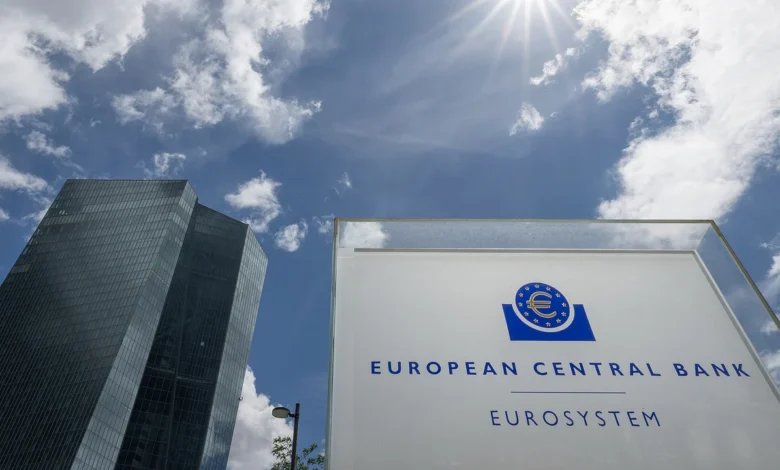
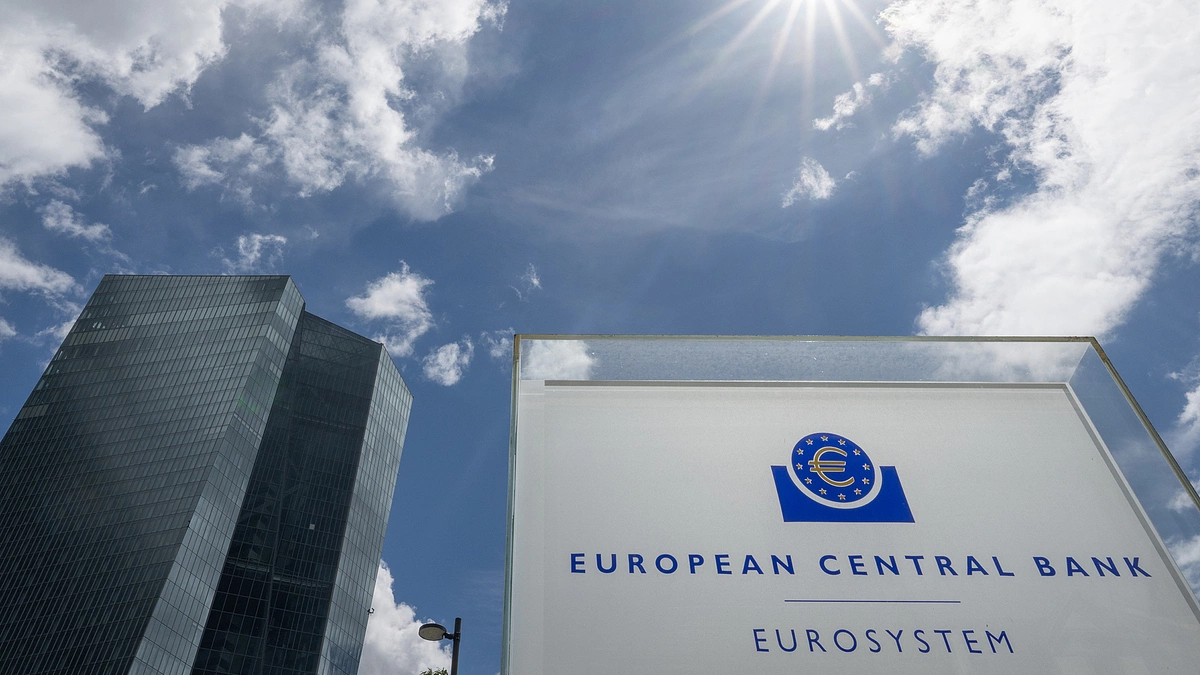
The European Central Bank (ECB) is currently navigating a significant transition period as key leadership positions within its Executive Board become vacant. Over the coming months, a high-stakes diplomatic race has emerged, with France, Germany, the Netherlands, and Spain vying to secure influence within the institution that dictates the monetary policy of the 20-nation Eurozone. This power struggle arrives at a critical juncture for the European economy, as the ECB balances the challenges of cooling inflation with the need to stimulate growth across the bloc.
The Executive Board of the ECB consists of six members: the President, the Vice-President, and four additional members responsible for the day-to-day operations and implementation of monetary policy. These roles are pivotal, as they shape the strategic direction of the Eurozone’s financial future. Members are appointed for non-renewable eight-year terms, ensuring a rotation of expertise and perspectives. By early 2027, half of the board—including the presidency—will see leadership changes, sparking a flurry of behind-the-scenes negotiations among EU member states.
A Calendar of Impending Vacancies
The timeline for these departures is tight, creating a compressed window for succession planning. Isabel Schnabel, a German economist who oversees market operations, is scheduled to depart in January 2027, nearly a year ahead of the expiration of her term, to join the International Monetary Fund (IMF). Her departure is followed by that of ECB President Christine Lagarde, whose term is set to conclude in October 2027, though she has signaled plans to step down as early as February. Furthermore, Chief Economist Philip Lane, an Irish national, is expected to finish his term at the end of May 2027.
The convergence of these departures means that the next year will be defined by an intense, multi-national negotiation process. According to reports from Politico, Spain and the Netherlands have set their sights on the presidency, with candidates such as Pablo Hernández de Cos, the General Manager of the Bank for International Settlements (BIS), and former Dutch Central Bank Governor Klaas Knot being prominently discussed.
The Strategic Positions of France and Germany
While Spain and the Netherlands focus on the top role, France and Germany are concentrating their efforts on the executive board seats concerning market operations and chief economic strategy. France, noted for its deep pool of talent and sophisticated diplomatic machinery, appears to have the upper hand. Its primary candidates include Agnès Bénassy-Quéré, the Deputy Governor of the Bank of France, and Laurence Boone, a senior leader in corporate banking at Santander.
In contrast, Germany is struggling to finalize its candidate list. Internal divisions within the German ruling coalition have hindered Berlin’s ability to present a unified front. According to EU officials, Berlin has requested an extension to the deadline for submitting candidate lists, highlighting the internal friction between Chancellor Olaf Scholz’s government and opposition figures regarding the country’s financial priorities.
"When Germany is still debating whom to put forward, the French candidates have been prepared for months," noted Carsten Brzeski, Chief Economist for the Netherlands at ING. This sentiment is echoed by many analysts who suggest that France’s proactive approach, combined with a willingness to cultivate candidates for years, gives it a distinct advantage in European institutional politics.
The "French Model" vs. The German Approach
Professional analysis suggests a fundamental difference in how France and Germany approach international appointments. Analysts like Holger Schmieding of Berenberg bank observe that French political leadership views human resources and institutional influence with a higher level of strategic importance than their German counterparts.
Stefan Gerlach, a chief economist at EFG Bank, points out that these positions require more than just technical expertise; they demand a high degree of international political acumen. "They emphasize cultivating talent with diverse experience, who are comfortable working in international environments and possess extensive networks," Gerlach remarked.
Germany, conversely, has historically prioritized individuals with deep, specialized academic backgrounds. While this provides a high level of technical rigor, it often leaves German candidates at a disadvantage when it comes to the "soft power" skills of coalition building, administrative management, and navigating the complex political landscape of Brussels. Consequently, German candidates are often dismissed by peers for lacking the necessary experience in high-level management or international diplomacy.
The Impact of Internal Coalition Politics
The German struggle is exacerbated by the fragile nature of its current governing coalition. Without a consensus between Finance Minister Christian Lindner’s ministry and other key stakeholders, Germany finds itself sidelined in the early stages of the selection process. Joachim Nagel, the current President of the Deutsche Bundesbank, is widely considered a strong candidate who could command support across the Eurozone. However, his path to the ECB is currently obstructed by the domestic political infighting between the FDP and the SPD.
"If Chancellor Scholz and his cabinet had moved early to back Joachim Nagel, he might have had a very strong chance," says Schmieding. Instead, the lack of a clear, unified nomination from Berlin has allowed other member states to consolidate their own positions, effectively freezing Germany out of the initial bargaining phase.
The Institutional Selection Process
Under European Union regulations, the selection process for the ECB Executive Board is rigorous. The process begins with finance ministers from the Eurozone reaching a consensus on a candidate. That nominee must then undergo a confirmation hearing at the European Parliament, where they are grilled on their economic philosophy, independence, and vision for the Eurozone. Following the parliamentary review, the final appointment is confirmed by the European Council, representing the heads of state of the EU member states.
The ministers are eager to finalize this process before the end of the year to prevent a power vacuum. Kyriakos Pierrakakis, who chairs the Eurogroup (the informal body of finance ministers from the Eurozone), emphasized the need for speed. "We understand that we need to act quickly, but traditionally, these are decisions heavily influenced by high-level leaders," Pierrakakis noted on November 9th.
Broader Implications for Monetary Policy
The outcome of these appointments will have long-term implications for the Eurozone. As the ECB faces the ongoing challenge of managing inflation while navigating a sluggish economic recovery, the composition of the Executive Board is more critical than ever. The board is split between "hawks" who prioritize aggressive inflation control through higher interest rates, and "doves" who are more concerned with growth and the social impact of tight monetary policy.
If France succeeds in securing the Chief Economist position, it may signal a shift toward a more balanced, growth-oriented approach. Conversely, if Germany manages to resolve its internal disputes and place a strong candidate in a key role, it could reinforce the traditional focus on price stability that the Bundesbank has championed for decades.
A Package Deal?
Industry observers and diplomatic sources suggest that the three upcoming vacancies will likely be resolved through a "package deal." Rather than fighting for individual positions, the major powers—France, Germany, Spain, and the Netherlands—are expected to negotiate a broad agreement that ensures regional balance and satisfies the political requirements of each nation.
"Perhaps this approach will help everything go more smoothly," Pierrakakis hinted, suggesting that a compromise among the four nations is not only possible but likely. This "grand bargain" would serve to minimize conflict and ensure that the ECB remains functional and authoritative as it navigates the economic uncertainties of 2027.
As the deadline approaches, the eyes of the global financial community remain fixed on Frankfurt. The decisions made in the coming weeks will define not just the personnel of the European Central Bank, but the very trajectory of the Eurozone’s economic policy for the next decade. For France, the challenge is maintaining its momentum; for Germany, it is a race against time to overcome domestic discord and reclaim its seat at the table. Regardless of the outcome, the process serves as a vivid reminder of the delicate balance of power required to maintain the unity and efficacy of the European monetary union.