Vietnam Shrimp Industry Targets $4.7 Billion Export Goal in 2027 by Prioritizing Value Over Volume

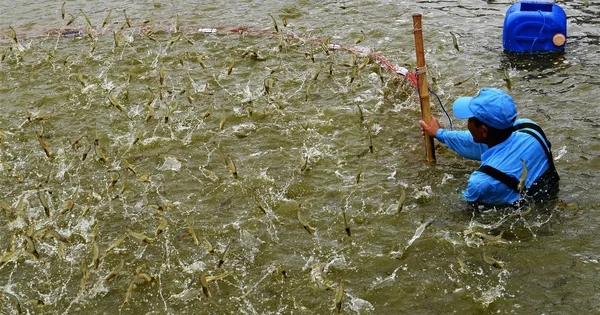
The Vietnamese shrimp industry is charting a decisive course toward sustainable growth, setting an ambitious export target of $4.6 to $4.7 billion for the year 2027. Moving away from a traditional reliance on sheer production volume and raw footprint expansion, industry leaders, policymakers, and agricultural experts are converging on a modernized strategy focused on enhancing operational efficiency, lowering production costs, standardizing quality control, and fortifying global market competitiveness.
This strategic pivot was underscored during a high-level national conference held on November 21 in Cà Mau province. Co-hosted by the Ministry of Agriculture and Environment alongside the Cà Mau Provincial People’s Committee, the summit brought together stakeholders from 22 brackish-water shrimp-producing provinces and cities. The primary objective was to review the industry’s performance over the preceding year, evaluate ongoing structural challenges, and finalize the comprehensive production and export roadmap leading up to 2027.
Current Production Landscape and Regional Dominance
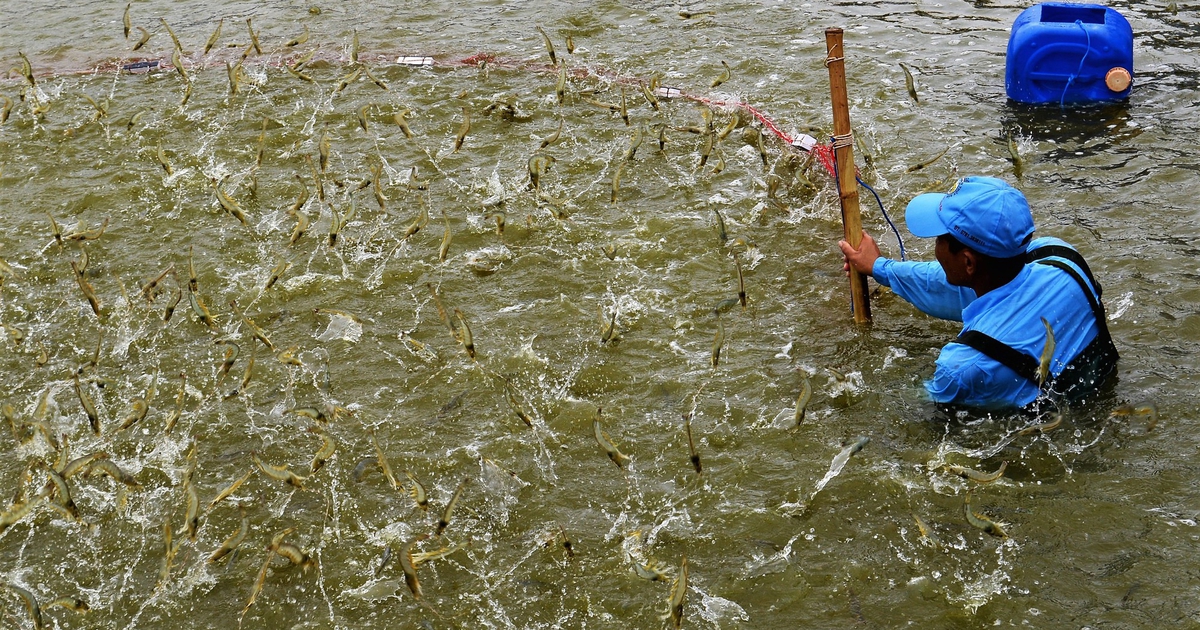
According to comprehensive reports presented by the 22 participating localities, Vietnam’s brackish-water shrimp farming sector maintained a positive trajectory through 2026. The total nationwide farming area surpassed 759,500 hectares. This footprint comprised nearly 637,400 hectares dedicated to tiger prawns (Penaeus monodon) and approximately 122,100 hectares utilized for whiteleg shrimp (Litopenaeus vannamei). Total raw shrimp production reached 1.47 million metric tons, representing a solid year-on-year increase of nearly 5%. Of this total output, tiger prawns accounted for 450,000 tons, while intensive whiteleg shrimp farming contributed roughly 1.02 million tons.
Geographically, the Mekong Delta continues to serve as the undisputed epicenter of Vietnam’s aquaculture powerhouse. The region accounts for approximately 711,000 hectares of farming space—representing nearly 94% of the national total—and yields close to 1.3 million metric tons of shrimp annually, making up roughly 88% of the country’s aggregate production. Within this southern basin, provinces like Cà Mau have expanded their administrative and ecological footprints, particularly following recent regional administrative integrations, solidifying their positions as national hubs for intensive cultivation, processing, and export logistics.
Export Performance and Global Market Dynamics
Data compiled by the Vietnam Association of Seafood Exporters and Producers (VASEP) highlights the resilience and global demand for Vietnamese crustacean products. During the first ten months of 2026, the nation’s cumulative shrimp export turnover reached approximately $4.22 billion, marking a robust 9% growth compared to the same period in the previous year.
China and Hong Kong maintained their positions as Vietnam’s largest export destinations, absorbing over $1.42 billion worth of shrimp products during the ten-month window. The United States followed as the second-largest market with $563.1 million, closely trailed by Japan at $503.4 million and the European Union at $461.4 million.
Despite these positive revenue figures, industry analysts and trade associations caution that macroeconomic headwinds, shifting international trade regulations, and stringent sanitary and phytosanitary (SPS) measures in Western markets continue to demand tighter quality assurance across the entire supply chain.
Structural Bottlenecks and Supply Chain Vulnerabilities
While the financial metrics demonstrate steady expansion, Deputy Minister of Agriculture and Environment Phùng Đức Tiến delivered a candid assessment of the persistent vulnerabilities holding back the domestic shrimp sector during the Cà Mau conference.
Among the primary structural constraints highlighted by the ministry are persistently high production costs, unpredictable success rates in grow-out farming, and inadequate technological infrastructure across smallholder farms. Furthermore, inconsistencies in seed quality control and a lack of standardized, digitalized traceability systems continue to undermine Vietnam’s competitive edge in high-end international markets.
A critical vulnerability lies in the country’s dependence on imported and wild-caught broodstock. The nationwide demand for high-quality shrimp post-larvae is estimated at 150 to 160 billion fry annually. However, the supply of high-grade parent stock remains heavily reliant on external sourcing. During the first ten months of 2026 alone, Vietnam imported 72,763 tiger prawn broodstock and 136,183 whiteleg shrimp broodstock to meet hatchery demands. Industry experts emphasize that achieving long-term autonomy requires accelerated domestic selective breeding programs to reduce import dependency and secure biosecurity at the hatchery level.
Compounding these supply chain issues is the fragmented nature of production. A vast majority of Vietnam’s shrimp farming is conducted by small-scale, dispersed households. Without strong, formalized linkages between farmers, cooperatives, and processing enterprises, the industry struggles to enforce uniform quality standards, optimize feed conversion ratios, or negotiate favorable input and output pricing.
The 2027 Roadmap: Quality, Efficiency, and Sustainability
Looking ahead to the 2027 production cycle, the Ministry of Agriculture and Environment has set calculated targets that prioritize qualitative growth over geographical expansion. The projected nationwide brackish-water aquaculture area is slated for a slight, optimized adjustment to 755,000 hectares—including 630,000 hectares for tiger prawns and 125,000 hectares for whiteleg shrimp. Despite a controlled footprint, target production is projected to reach 1.5 million metric tons, driven by higher productivity rates and advanced farming technologies. Of this volume, tiger prawn output is projected at 450,000 tons, while whiteleg shrimp is expected to climb to 1.05 million tons, collectively generating an anticipated export turnover of $4.6 to $4.7 billion.
Addressing the delegates in Cà Mau, Deputy Minister Phùng Đức Tiến emphasized that future growth cannot rely on horizontal expansion or simply increasing raw tonnage.
"The fundamental priority is no longer just about how many tons of shrimp we harvest, but how effectively we can lower production costs, elevate income for aquaculture farmers, enhance corporate competitiveness, and firmly establish the prestige of Vietnamese shrimp products on the global stage," Mr. Tiến stated.

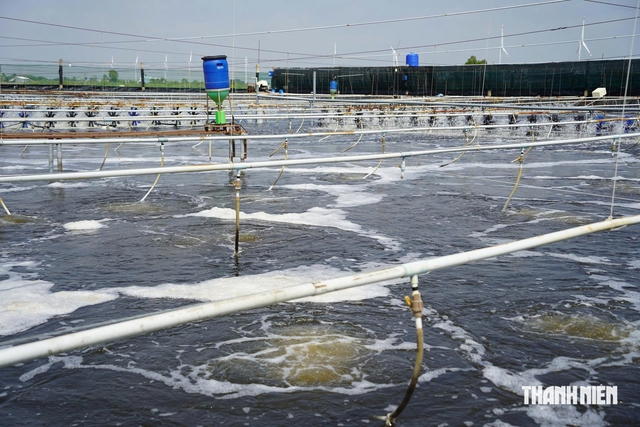
The strategy calls for accelerated integration of high-tech aquaculture models, such as recirculating aquaculture systems (RAS), biofloc technology, and smart-monitoring tools for water quality management. These technologies are seen as essential for mitigating disease outbreaks, reducing environmental footprints, and adapting to climate change impacts, including saltwater intrusion and unpredictable weather patterns.
Regional Leadership and Ecological Models
Local government officials are actively aligning their regional development plans with national sustainability goals. Hồ Thanh Thủy, Deputy Secretary of the Provincial Party Committee and Chairwoman of the Vietnam Fatherland Front Committee of Cà Mau province, noted that while the region’s aquaculture potential remains immense, translating resource abundance into maximum economic value requires deeper structural reforms.
Cà Mau has made significant strides in organizing its production base, establishing 48 integrated production chains covering approximately 38,169 hectares under certified sustainability standards. These include innovative ecological and organic farming models such as shrimp-forest and shrimp-rice systems. These integrated methods not only command premium pricing in environmentally conscious markets like the EU but also provide natural buffers against disease and climate vulnerability.
Following recent administrative consolidations that merged Cà Mau and neighboring Bac Lieu into an expanded administrative and economic zone, the region possesses a unique spatial advantage. Leaders envision the newly integrated territory evolving into a premier national hub for modern aquaculture, combining high-tech intensive farming with extensive ecological and rotational models.
Implications for the Global Seafood Market
The strategic realignment of Vietnam’s shrimp industry carries significant implications for global seafood trade. By addressing upstream vulnerabilities—specifically through enhanced broodstock management, lowered production overheads, and rigorous traceability protocols—Vietnam is positioning itself to compete more effectively with major global producers such as Ecuador and India.

For international buyers and importers, Vietnam’s transition toward certified, eco-friendly, and high-value processed shrimp products signals a reliable, transparent supply chain capable of meeting stringent ESG (Environmental, Social, and Governance) standards. As the sector executes its roadmap toward the 2027 targets, the success of Vietnam’s shrimp industry will hinge on the collaborative execution of public-private partnerships, technological modernization, and unwavering adherence to international quality benchmarks.