Gold fever returns to China as consumers redefine investment amidst a shifting economic landscape

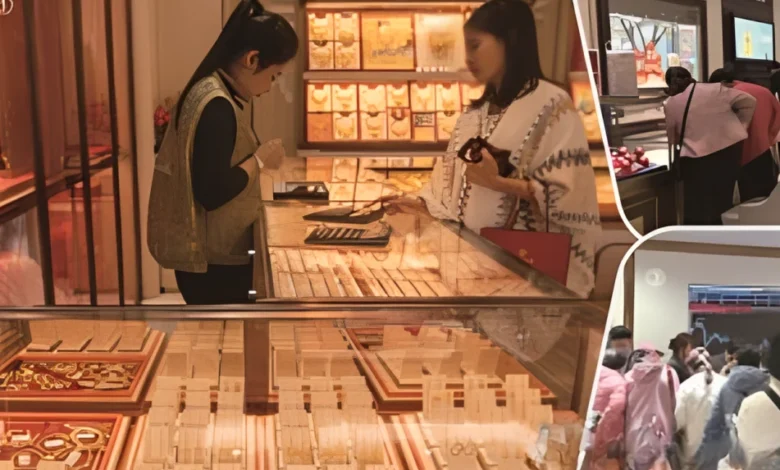
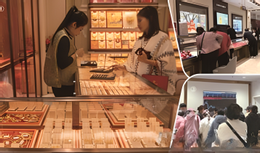
In major metropolitan hubs across China, including Beijing, Shenzhen, and Shanghai, the scene at local jewelry retailers and gold bullion outlets has become a defining image of the current market climate. Long, winding queues of consumers are braving the wait to purchase gold bars and jewelry, a phenomenon occurring even on standard workdays. While an outside observer might interpret this activity as a classic retail frenzy or speculative panic, the underlying reality is far more nuanced. Behind every transaction lies a specific, deeply rooted consumer demand, reflecting a fundamental shift in how the Chinese public perceives and interacts with gold as an asset class.
The Market Context: A Sharp Correction in Global Gold Prices
The current surge in physical gold buying follows a period of significant volatility in international markets. As of mid-November 2026, the global gold market has faced substantial downward pressure. In the trading session on November 16, gold prices experienced a sharp decline of 4.56%, closing at $3,832.23 per ounce—the lowest level since the beginning of 2025. By November 18, the downward trend persisted, with prices dipping toward the $3,800 threshold and occasionally touching $3,780. This marks a seven-session losing streak, effectively erasing gains made since September 2025.
This decline is not an isolated event but a reaction to broader macroeconomic shifts. According to analysts at Oriental Jincheng, a leading Chinese credit rating organization, the pressure on gold is primarily driven by two critical factors. First, the resurgence of U.S. Treasury yields, with the 10-year note climbing back above the 5% mark, has dramatically increased the opportunity cost of holding non-yielding assets like gold. Second, the strengthening of the U.S. Dollar has made gold—which is denominated in dollars—more expensive for holders of other currencies. Furthermore, market sentiment indicates a greater than 92% probability that the Federal Reserve will implement a 25-basis-point interest rate hike in December, further suppressing the metal’s appeal to institutional investors.
Consumer Behavior: A Shift from Speculation to Practical Consumption
Contrary to the narrative of speculative panic, the current influx of buyers in China represents a calculated "release" of pent-up demand. For several months, high gold prices had acted as a deterrent, causing many households to delay planned purchases. Now that prices have retreated to a level perceived as more "manageable," these consumers are returning to the market.
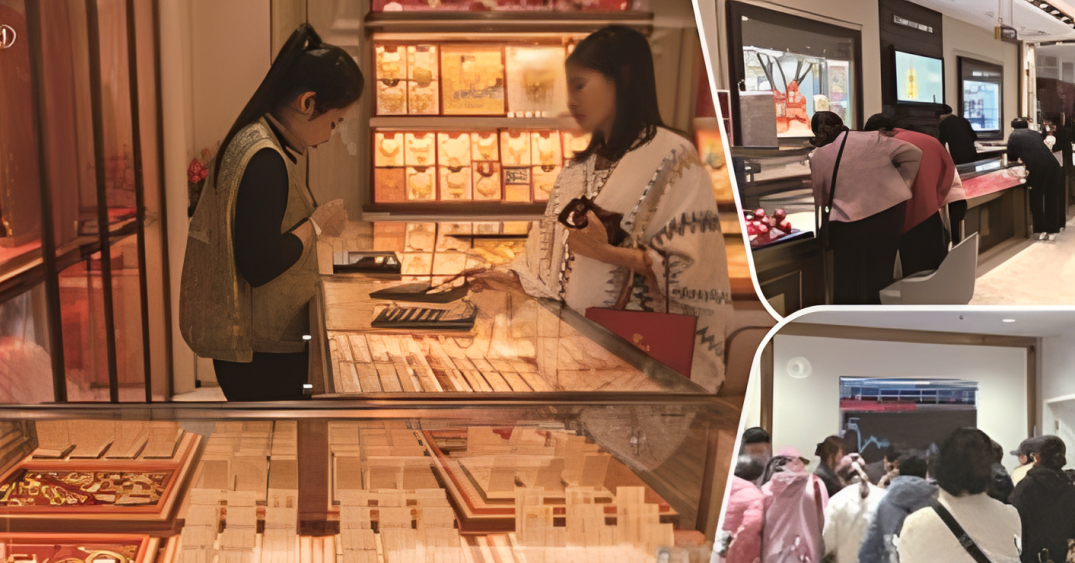
At the Baicha Taishikou shopping complex in Beijing, the scene has been particularly vibrant since the start of November. Sales staff report that gold bars weighing under 30 grams are consistently selling out. The 5, 10, and 20-gram options are in the highest demand. What is striking is the behavior of the buyers: rather than purchasing and leaving, many linger to inquire about future restocks or express their intent to return the following morning. Some, deterred by the prospect of waiting in line again, choose to consolidate their purchases into larger 100-gram bars.
In Shenzhen, the trend is even more pronounced. Data from the Industrial and Commercial Bank of China reveals that over a single weekend, one prominent branch saw nearly 60,000 customer interactions, with approximately 70% of those individuals purchasing gold for personal use, such as daily wear or gifts for upcoming weddings. The sight of consumers arriving with suitcases to transport their gold purchases has become a testament to the scale of this consumer-led demand.
Decoding the Cultural and Economic Drivers
The core of this trend lies in the traditional Chinese affinity for "hard assets" during periods of economic uncertainty. For many families, gold is not merely a financial instrument but a social necessity. The tradition of gifting gold—specifically the "three gold" (ring, necklace, bracelet) or "five gold" (adding earrings and anklets) sets during weddings—is a deeply embedded cultural requirement that is difficult to postpone indefinitely.
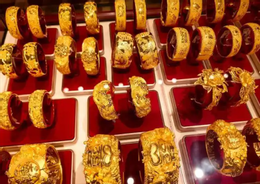
However, the nature of these purchases is evolving. There is a clear transition toward smaller, more refined products. While larger, heavier gold pieces once signaled wealth and status, modern consumers are increasingly favoring 5 to 10-gram bars and jewelry designs that are lightweight and intricate. This shift is driven by a desire for "wearable" assets that maintain a high aesthetic appeal while allowing the buyer to accumulate gold gradually, rather than committing large sums of capital in a single transaction.
The World Gold Council (WGC) data supports this trend, showing that the proportion of consumers preferring products under 10 grams has increased significantly compared to 2025. This is not necessarily an indication of reduced purchasing power, but rather a strategic response to high price volatility. By choosing smaller, more frequent purchases, consumers are mitigating the risk associated with timing the market at high price points.
Statistical Analysis of Q3 and Beyond
A closer look at the Q3 2026 data presents a fascinating paradox. Gold jewelry consumption in China fell by 22% compared to the same period in the previous year, marking the lowest volume for a third quarter since 2006. Yet, when examining the total monetary expenditure, the figure remains robust. Consumers spent approximately 608 billion yuan on gold jewelry, surpassing the long-term quarterly average of 552 billion yuan.
This data underscores the reality that while the volume of gold purchased (in grams) has decreased, the total capital expenditure has remained high. The Chinese consumer is purchasing more efficiently, prioritizing quality and design over raw volume. This behavior demonstrates a high degree of market adaptation, where consumers have learned to navigate an environment where high gold prices are the "new normal."
Future Outlook and Expert Perspectives
In the short term, market sentiment remains cautious. Experts like Dinh Tran Vu from the Cung Phong Investment Consulting Company suggest that gold prices will likely continue to trade within a range, heavily influenced by interest rate cycles and the net buying activities of central banks. Until the cycle of rising interest rates cools, any significant recovery in gold prices will likely be capped.
However, the long-term logic remains intact. The World Gold Council projects that gold jewelry consumption in China will continue its seasonal recovery throughout the fourth quarter of 2026. Two categories are expected to drive this growth: "hard gold"—a high-purity gold processed for increased durability and resistance to deformation—and "ancient-style gold," which utilizes traditional craftsmanship techniques and is favored for its cultural resonance.
Furthermore, investment demand for gold is expected to maintain its strength, particularly as global geopolitical tensions remain a concern. For the Chinese consumer, the recent price correction has served as a window of opportunity rather than a signal of market failure. As households continue to balance the dual roles of gold as a store of value and a cultural staple, the market is likely to see sustained, albeit more disciplined, participation. The current trends indicate that gold remains a foundational element of the Chinese household’s financial strategy, with a growing sophistication in how that wealth is acquired and maintained.