Ho Chi Minh City Achieves Major Milestone with Successful Key Span Integration of the 1,000-Billion-VND Pedestrian Bridge Across the Saigon River

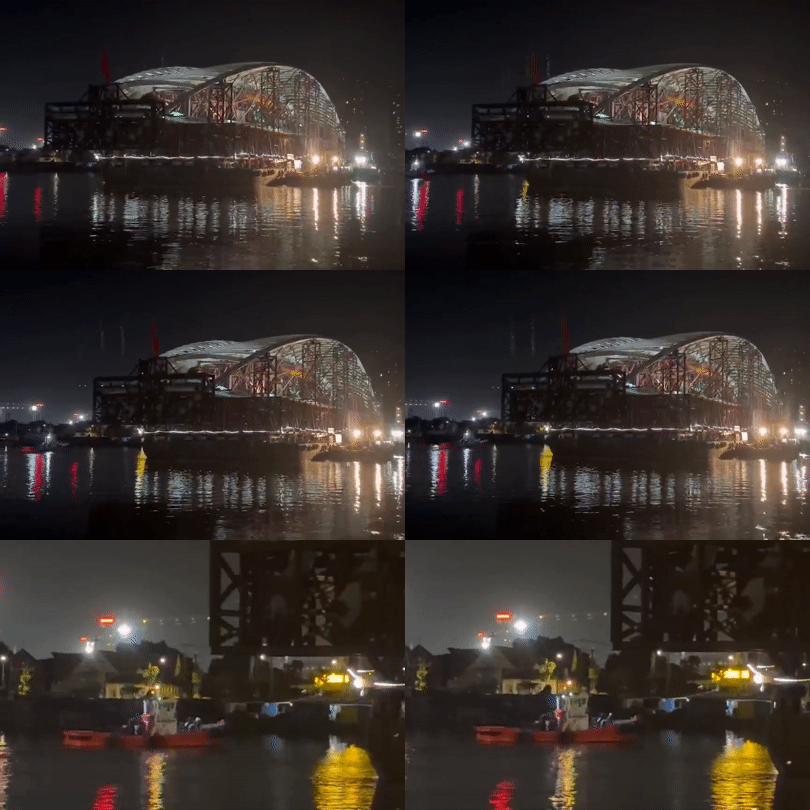
Ho Chi Minh City reached a historic milestone in its urban development and civil engineering endeavors on the morning of October 21, as construction teams successfully executed the pivotal key span integration for the landmark pedestrian bridge spanning the Saigon River. Commenced just 19 months prior in March 2025, this ambitious infrastructure project—with a total investment approaching 1,000 billion Vietnamese đồng—is designed to directly connect the historic Bach Dang Wharf in District 1 with the rapidly expanding Thu Thiem New Urban Area in Thu Duc City. The successful integration marks a critical step toward the bridge’s scheduled inauguration ahead of the upcoming Lunar New Year, promising to reshape the metropolitan skyline and enhance pedestrian connectivity across one of Vietnam’s most vital waterways.
Engineering Precision and Hydrographic Strategy
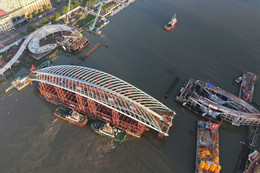
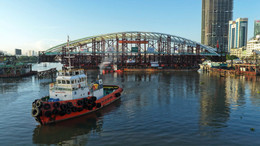
The complex operation to place the massive steel structure began in the early hours of the morning, leveraging meticulous hydrological data and advanced marine engineering techniques. At approximately 4:00 AM, technical crews initiated the deployment of a specialized barge system, positioning it perpendicular to the powerful currents of the Saigon River. Executing such a monumental maneuver required exceptional precision, as the engineering team had to synchronize the operation with the river’s tidal cycle during a narrow window when water level fluctuations and current velocities were at their minimum.
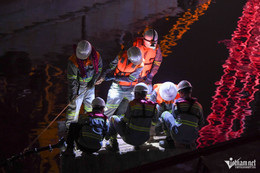
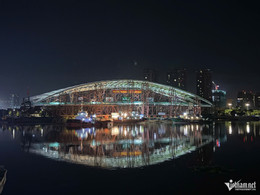
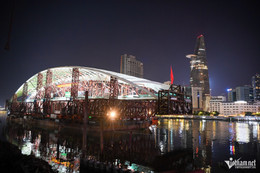
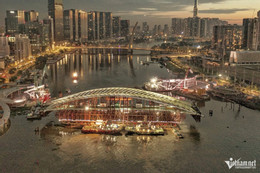
According to Nguyen Huu Hoang, a representative of the project’s financial sponsor and development team, the technical challenges during this phase were unprecedented. The operation involved rotating a massive 3,400-ton steel arch structure—shaped uniquely like a water-coconut leaf, a cultural symbol of the Southern Vietnamese landscape—into the heart of the river.
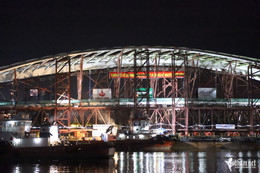
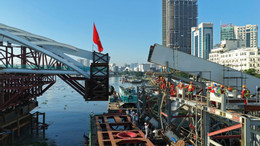
"To ensure absolute safety, the rotation and placement of the massive barge had to be conducted with extreme caution over a critical two-hour window," Hoang explained. He noted that as the structure neared its final resting point, the remaining clearance between the span ends was a mere 25 centimeters for a span length exceeding 180 meters, with gaps at the key span joints measuring only three centimeters. Consequently, the project’s technical controllers had to maneuver the equipment centimeter by centimeter to avoid catastrophic collisions with the existing bridge abutments.
Coordinated Workforce and Marine Logistics
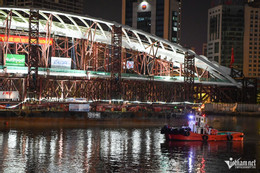
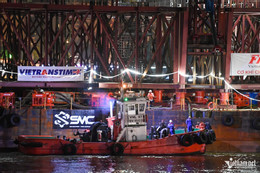
Rather than relying on sheer manual labor, the joint-venture contractors deployed an advanced fleet of specialized marine equipment and a highly trained workforce. Approximately 150 skilled personnel, alongside two push boats and two tugboats, were deployed to manage the intricate positioning of the heavy components.
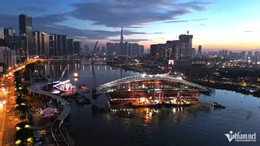
By 6:00 AM, the massive barge had moved into close proximity to the designated drop zone. The engineering crews then began ballasting the barge by pumping water into its internal compartments, steadily lowering the elevation of the assembly to bring the bridge girder into alignment with the shore-based infrastructure. This ballasting procedure concluded by 7:30 AM, allowing technical teams to perform fine geometric leveling to ensure the center of the bridge superstructure matched seamlessly with the abutment systems on both riverbanks before permanent welding commenced.
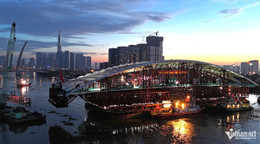
The official welding and structural locking phase was scheduled between 9:00 AM and 1:00 PM. Following this, participating units were slated to dismantle and retract the barges and temporary framework out of the navigation channel. To guarantee absolute safety throughout the operation, maritime authorities implemented a temporary closure of the Saigon River shipping lane around the construction zone from 2:00 AM to 6:00 PM daily across October 21 and 22.
Project Background and Architectural Significance
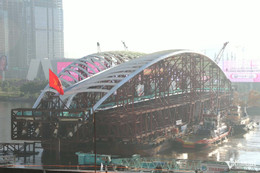
The pedestrian bridge project represents a transformative architectural and infrastructural leap for Ho Chi Minh City. Spanning a total length of approximately 720 meters, with a varying deck width from 6 meters to 11 meters, the bridge is designed not merely as a functional transit route, but as an iconic public space and tourist attraction. Its architectural concept draws deep inspiration from the nipa palm leaf (la dua nước), a flora deeply rooted in the cultural identity of Southern Vietnam.
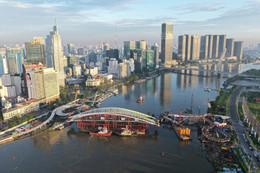
The integration of the bridge is part of a broader master plan to transform the Saigon River banks into vibrant public gathering spaces, pedestrian zones, and cultural hubs. For decades, the Saigon River has served primarily as a commercial waterway and a physical barrier dividing the historic downtown core from the emerging financial and residential hub of Thu Thiem. By bridging this gap exclusively for non-motorized transport, city planners aim to encourage green mobility, reduce carbon emissions in the urban center, and foster a more integrated urban lifestyle.
Broader Economic and Urban Implications
The completion of the pedestrian bridge prior to the 2027 Lunar New Year is expected to yield substantial socio-economic and tourism benefits for Ho Chi Minh City. Economically, the enhanced physical linkage between District 1 and Thu Thiem will accelerate the commercial viability and real estate development of the Thu Thiem New Urban Area, drawing higher foot traffic to its planned commercial complexes, cultural centers, and public parks.
Furthermore, the bridge is anticipated to become a major magnet for domestic and international tourism. By offering unobstructed panoramic views of the downtown skyline and the Saigon River, the pedestrian bridge will likely feature prominently in city-sponsored events, festivals, and nightly public gatherings, mirroring iconic waterfront pedestrian bridges found in major global metropolises such as Singapore, London, and Sydney.
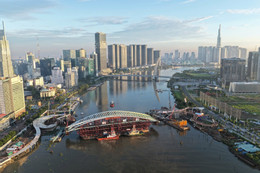
Following the successful execution of the main span key integration, the contractors will shift their focus to comprehensive finishing works. These include the installation of the bridge deck surface, architectural railings, sophisticated structural lighting systems, and auxiliary visitor amenities. As Ho Chi Minh City continues to execute its grand vision for riverfront revitalization, the successful locking of the Saigon River pedestrian bridge stands as a testament to the growing prowess, technical sophistication, and ambition of Vietnam’s modern civil engineering sector.