The intricacies of Vietnam’s land administration system, hereditary property laws, and local bureaucratic errors often converge into complex civil disputes that take years to resolve through the judicial system. A notable case originating in Quang Binh province—later adjudicated by the High People’s Court in Da Nang under appellate judgment number 194/2025/DS-PT—underscores the profound legal and personal consequences when administrative inaccuracies overlap with family inheritance matters. This landmark litigation not only highlights systemic vulnerabilities in historical land-measurements and certificate issuance but also provides critical insight into how appellate courts balance statutory inheritance rights with long-term equitable possession.
Background and Genesis of the Land Dispute
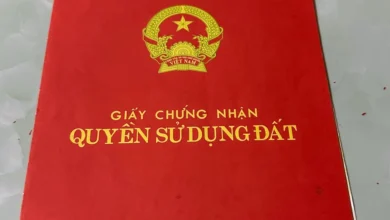
The legal battle centers around a residential land parcel originally spanning 1,162 square meters located in Quang Binh province. The land was legally established and registered under the name of the patriarch of the family, hereafter referred to as the father of Mrs. N., during a period of evolving land reform and systematic titling, culminating in the issuance of an initial Land Use Right Certificate (commonly referred to as a "red book") in 1994.
The family structure surrounding the estate is complex. The father had previously contracted a marriage with his first wife, with whom he had three children. Following the passing of his first wife, he entered into a subsequent marriage with Mrs. N.’s mother, with whom he had an additional five children, including Mrs. N. The family experienced multiple losses over the decades: Mrs. N.’s mother passed away in 1989, and the father passed away in 1997 without leaving a formal written will. Among the children was an older brother who tragically became a recognized war martyr, a detail that added significant emotional weight and a desire for memorialization to the subsequent legal proceedings.
Following the death of the father, the property remained undivided, serving as the ancestral hearth. However, a series of administrative actions initiated in the mid-2000s catalyzed a multi-layered legal crisis involving boundary shifts, phantom land re-issuances, and competing inheritance claims among half-siblings and descendants.
Chronology of Administrative Errors and Boundary Shifts
The administrative missteps began more than a decade after the original land title was granted. The chronology of key events underscores the administrative flaws that plagued the property:
- 1994: The original Land Use Right Certificate for 1,162 square meters of land is formally issued in the name of Mrs. N.’s father.
- 1997: The father passes away intestate, leaving the property to be managed informally by the surviving family members.
- 1998: Mrs. H., the granddaughter of the father through his eldest son from his first marriage, begins residing in a temporary shelter on a portion of the ancestral land.
- 2006: During a local cadastral measurement and mapping campaign conducted by municipal authorities, the original parcel is split into two distinct new plots. Due to surveying errors, boundary miscalculations, and a lack of rigorous field checks, the recorded surface area associated with the father’s original holding mysteriously shrinks by 307 square meters, dropping from 1,162 square meters down to 855 square meters. Furthermore, a 307-square-meter slice of the original parcel is shifted entirely into Plot 157—an area where Mrs. H. had constructed her dwelling.
- 2007: Local authorities commit a profound procedural violation by issuing an updated Land Use Right Certificate for the property still bearing the name of the father, despite official records and local knowledge confirming that he had been deceased for a full decade. The reissue is processed based on erroneous declarations submitted by some of the siblings during a period when regulatory oversight was lax.
- 2019–2024: Realizing that the land title bears a deceased person’s name and that the overall recorded surface area has experienced a drastic, unexplained reduction, Mrs. N. launches a formal civil lawsuit seeking to annul the flawed 2007 land title, rectify the cadastral maps, and execute a statutory division of the hereditary estate.
Divergent Claims Among Descendants
As the litigation progressed through the courts, the positions of the primary litigants highlighted deep-seated familial divisions compounded by administrative confusion.
Mrs. N., acting on behalf of her branch of the family and supported by several siblings, argued that the 2007 re-issued certificate was fundamentally illegal because it was issued to a deceased individual. She contended that the inexplicable loss of 307 square meters deprived the legitimate heirs of their lawful inheritance. Mrs. N. expressed a profound personal motivation: she sought to reclaim the land to construct an ancestral worship house dedicated to her late parents and her fallen brother, who was a recognized war martyr.
Conversely, Mrs. H., the granddaughter occupying a portion of the disputed land, presented a narrative rooted in long-term possession and hardship. According to Mrs. H., she had lived on the land since 1998 under the permission of her paternal grandfather. When her initial temporary shelter was destroyed by severe storms, local authorities assisted in building her current residence on the site. She noted that the land she currently occupies has never been officially titled in her name. While Mrs. H. did not oppose the general principle of dividing the ancestral estate to allow Mrs. N. to build a worship house, she fiercely advocated for her own legal protections. Citing her continuous habitation since 1998, her contribution to maintaining the property, her difficult personal and medical circumstances, and her status as a vulnerable descendant residing on the only home she had ever known, she requested a dedicated share of the estate.
First-Instance Trial and Judicial Rectification
The initial legal challenge was brought before the People’s Court of Quang Binh Province. During the court of first instance, the judiciary evaluated the cadastral evidence, listened to the testimonies of the various heirs, and reviewed the administrative oversights committed by local land management offices.

The first-instance court ruled largely in favor of Mrs. N.’s core petitions. The court formally declared the 2007 Land Use Right Certificate void, recognizing that issuing a land title to a person deceased for ten years violated basic legal principles. Additionally, the court invalidated the flawed 2006 cadastral measurements that had arbitrarily fragmented the property and reduced its recorded size.
In terms of estate distribution, the first-instance court apportioned the estate among the legal heirs. Under this initial division, Mrs. H. was allocated 450 square meters, while Mrs. N. was slated to receive 321.8 square meters, augmented by portions voluntarily relinquished by other co-heirs who wished to support the construction of the ancestral worship house.
Dissatisfied with the distribution ratios and the handling of the property boundaries, Mrs. H. and several other interested parties filed appeals, pushing the case to the appellate level.
Appellate Review and Final Legal Determinations
The case ultimately reached the High People’s Court in Da Nang for appellate review under judgment number 194/2025/DS-PT, dated May 19, 2025. The appellate panel conducted a rigorous re-examination of both the administrative validity of the land titles and the equity of the hereditary distribution.
The appellate court reaffirmed foundational administrative findings:
- Illegality of Post-Mortem Titling: The issuance of the 2007 land title in the name of a deceased individual was unequivocally unlawful and violated national land-administration laws.
- Flawed Cadastral Surveying: The 2006 land remeasurement lacked proper evidentiary backing, directly causing the unwarranted 307-square-meter reduction from the original 1,162 square meters established in 1994. Consequently, the court confirmed that the lawful hereditary estate area stood precisely at 1,162 square meters, rather than the inflated 1,381.2 square meters claimed by some parties or the reduced figures resulting from surveying errors.
- Recognition of Direct Heirs: The court established that the first-tier heirs consisted of eight children, explicitly including the children from the father’s first marriage. The inclusion of these half-siblings was justified by the fact that they had been integrated into the family unit, nurtured, and raised alongside the other children.
A particularly critical aspect of the appellate judgment involved balancing statutory inheritance fractions with equitable possession rights. The court acknowledged that Mrs. H. had lived continuously on the property since 1998 without encountering formal opposition from the family, had contributed labor to maintaining the asset, and possessed no alternative housing. Therefore, the appellate panel upheld the decision to grant Mrs. H. a dedicated inheritance share. This approach served a dual purpose: it formally recognized her labor contribution and safeguarded her fundamental right to housing.
However, adjustments were made to the final shares. Because one of the co-heirs formally retracted their previous voluntary relinquishment of land to Mrs. N., the appellate court adjusted Mrs. N.’s proportional share of the estate from 5/9 down to 4/9. The appellate court ultimately upheld part of the appellants’ claims, modifying the first-instance judgment specifically concerning the precise division of inheritance shares and the allocation of judicial survey costs, while preserving the core rulings regarding the nullification of invalid land titles.
Broader Implications for Land Administration and Inheritance in Vietnam
The resolution of this protracted legal saga offers several crucial takeaways regarding property rights, administrative compliance, and familial succession in Vietnam.
- Vulnerabilities in Cadastral Management: The case exposes the severe legal complications that arise when local land offices execute mapping campaigns without rigorous cross-checking. The arbitrary shifting of plots and the shrinkage of recorded land areas often trigger years of costly litigation between private citizens who are left to bear the burden of administrative incompetence.
- The Danger of Post-Mortem Administrative Transactions: Issuing land use certificates in the names of deceased individuals remains a glaring procedural vulnerability. Land management agencies are legally obligated to verify the vital status of titleholders before processing re-issuances, as failure to do so compromises the legal integrity of the national land registry.
- Balancing Formal Law with Equity: The appellate court’s handling of Mrs. H.’s occupancy demonstrates the judiciary’s willingness to integrate equitable considerations into strict statutory inheritance frameworks. Long-term possession, lack of alternative shelter, and good-faith contributions to property maintenance are heavily weighed when courts determine the physical apportionment of ancestral estates.
As land values continue to rise across both urban and rural regions of Vietnam, disputes combining historical administrative errors with complex blended-family dynamics are likely to persist. The High People’s Court’s ruling in the Quang Binh case serves as an authoritative judicial precedent, emphasizing that while administrative mistakes by local authorities can and must be legally corrected, the equitable rights of long-term occupants and the collective interests of all legal heirs must be harmonized to achieve a just and durable resolution.