A seemingly minor traffic incident involving a stray fowl on the bustling streets of Singapore has unexpectedly escalated into a protracted legal battle, culminating in a high court appeal. What began as a split-second defensive maneuver by a private-hire vehicle driver to avoid hitting a crossing chicken has resulted in extensive court hearings, fierce debates over animal taxonomy, and thousands of dollars in legal fees. The case underscores the unpredictable nature of urban driving, the legal boundaries of passenger liability, and the difficult reality of splitting split-second decisions in a court of law.
The Genesis of an Extraordinary Dispute
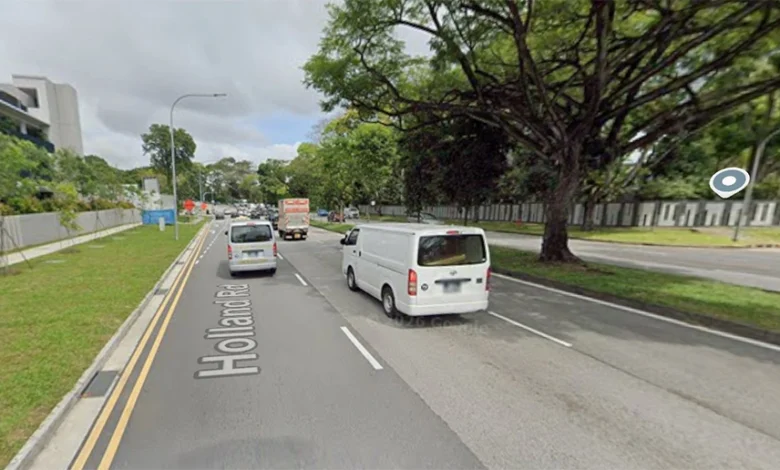
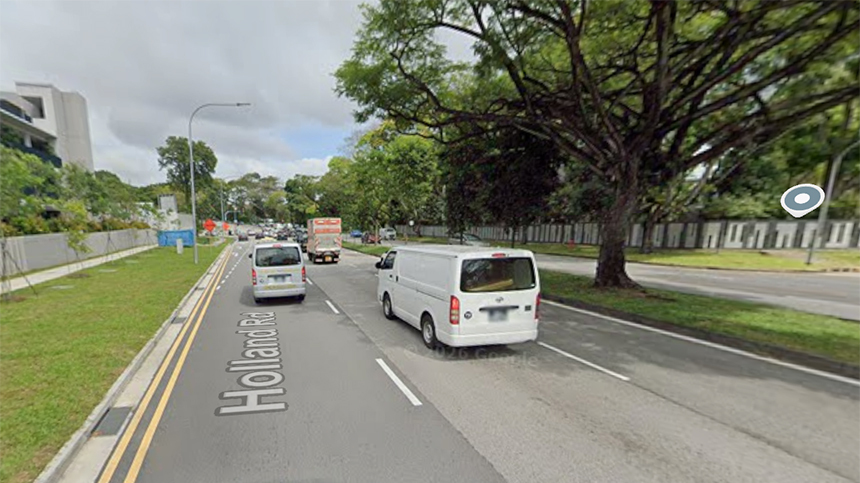
The unusual sequence of events unfolded on the morning of February 19, 2024, along the heavily trafficked Holland Road in Singapore. Yvonne Chen Qianyun was riding as a passenger in a private-hire car operated by Tan Teng Kiat. As the vehicle maintained its pace within the stream of city traffic, a sudden and unexpected hazard materialized: a chicken darted across the multi-lane thoroughfare.
The vehicle traveling directly in front of Mr. Tan’s car slammed on its brakes to avoid striking the bird. Reacting instantaneously to the sudden deceleration of the lead car, Mr. Tan applied his own brakes firmly to prevent a rear-end collision. The abrupt stop successfully averted a crash, keeping both vehicles and their occupants safe from a physical impact. However, the sudden and aggressive deceleration set off a chain reaction of discomfort and grievance inside the cabin, ultimately landing the two parties in a district court months later.
Courtroom Confrontations and Taxonomic Debates
During the ensuing district court proceedings, Ms. Chen filed a formal civil suit against Mr. Tan, seeking compensation for injuries she claimed to have sustained during the emergency braking maneuver—specifically worsening lower back pain. She argued that the driver had failed to maintain a safe and adequate following distance from the vehicle ahead, forcing him to execute a violent, unnecessary, and negligent stop. She contended that Mr. Tan’s braking intensity far exceeded what was reasonably required under standard driving conditions.
Mr. Tan staunchly defended his actions, testifying that he was traveling at approximately 50 kilometers per hour and maintaining a distance of roughly 10 meters behind the lead car. He maintained that he should have been granted the time and space to brake smoothly rather than being forced into an emergency stop.
Curiously, the courtroom proceedings occasionally drifted into absurd territory when the plaintiff and defendant spent considerable time arguing over the exact identity and behavior of the animal that caused the chaos. Ms. Chen insisted that the creature was a "ground-dwelling" chicken, while Mr. Tan maintained it was a rooster that had "flown across" the road. Dismissing the semantic debate with pragmatic brevity, District Judge Jonathan Ng Pang Ern noted in his published judgment on November 18 that the dispute fundamentally stemmed from "a chicken crossing the road," referring to the animal simply as a chicken.
Legal Analysis of Following Distances and Emergency Braking
Under Singaporean road traffic regulations, motorists are legally required to maintain a minimum following distance of one vehicle length for every 16 km/h of speed to ensure sufficient stopping space in emergencies. At a speed of 50 km/h, the required safe distance translates to approximately three car lengths, or roughly 12 to 15 meters, given that an average car measures between 4 and 5 meters in length.
During testimony, the court noted discrepancies in the estimated distances. While Mr. Tan claimed a gap of 10 meters, Ms. Chen asserted that the vehicle was trailing only 4 to 5 meters behind the lead car. However, Judge Ng emphasized that the precise calculation of the following distance was ultimately secondary to the reality of the situation: Mr. Tan had successfully applied his brakes in time to avoid a collision.
The judge pointed out the logistical impossibility of expecting a driver to execute a progressive, gradual stop when confronted with an immediate hazard. Testimony from both parties confirmed that the entire incident transpired within a fraction of a second. Judge Ng noted that it would be entirely unrealistic to expect any motorist to maintain composure and calculate a measured deceleration rate when faced with a sudden emergency stop by a preceding vehicle.
Furthermore, the court scrutinized Ms. Chen’s behavior immediately following the incident. Evidence revealed that she had actively inquired about the license plate of the lead vehicle, suggesting that Mr. Tan act as a witness for her intended lawsuit against the other driver, all while citing worsening back pain and attempting to secure compensation. The judge remarked that if the lead vehicle had merely braked gently, Ms. Chen would not have reacted with such intense physical distress, thereby validating the necessity and legitimacy of the emergency braking action.
Judicial Verdict and Financial Penalties
In delivering his final verdict, Judge Ng ruled firmly in favor of the defendant, dismissing Ms. Chen’s civil suit in its entirety. The court ordered Ms. Chen to pay Mr. Tan 15,000 SGD (approximately 11,500 USD) in legal costs, alongside taxes and associated procedural disbursements.
While acknowledging that Ms. Chen was an innocent passenger who suffered discomfort and had no control over the unfolding events, the judge underscored fundamental principles of legal liability. He stressed that the law does not hold individuals strictly liable for every unforeseen risk or misfortune encountered in daily life.
"In an imperfect world, there are mishaps that simply have to be accepted where they occur," Judge Ng wrote in his judgment. "This case, originating from a chicken crossing the road, is deeply unfortunate but certainly part of the unexpected vagaries of life."
Drawing an analogy to textbook traffic accidents, the judge compared the situation to a public bus driver braking sharply to avoid a pedestrian or animal crossing the road. He noted that any prudent, reasonably competent driver would naturally apply their brakes abruptly under identical pressure.
Broader Implications and the Path to the High Court
Dissatisfied with the district court’s ruling and the financial penalties imposed upon her, Ms. Chen has formally filed an appeal with the High Court, seeking to overturn the decision. Legal analysts suggest that the appeal will likely focus on the interpretation of statutory following distances and the legal definition of contributory negligence in sudden-emergency situations involving public-hire vehicles.
The case has captured public attention across Singapore, sparking widespread online discourse regarding commuter rights, the responsibilities of private-hire drivers, and the unpredictable hazards posed by urban wildlife. As green spaces intersect increasingly with dense roadways in metropolitan environments, encounters with stray chickens, monitor lizards, and other fauna remain an unavoidable reality for motorists.
Ultimately, the High Court’s forthcoming review of the case will establish a crucial legal precedent regarding how the judiciary evaluates passenger claims against drivers who perform emergency maneuvers. Until then, the saga of the Holland Road chicken serves as a costly reminder that even the smallest disruptions in daily traffic can generate ripples that resonate far beyond the asphalt.