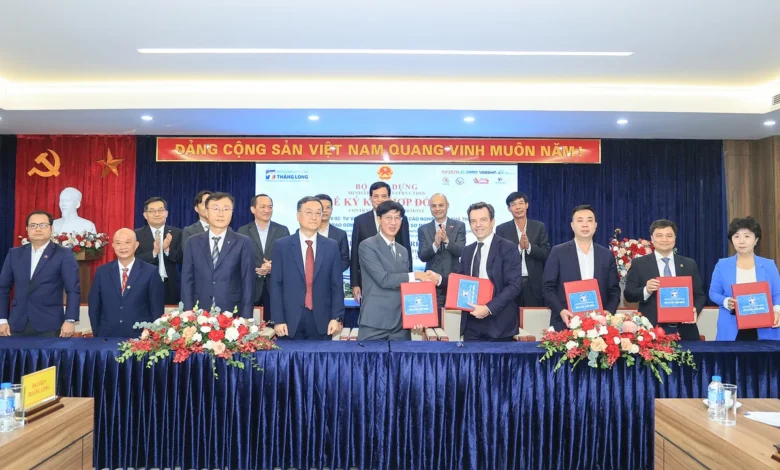
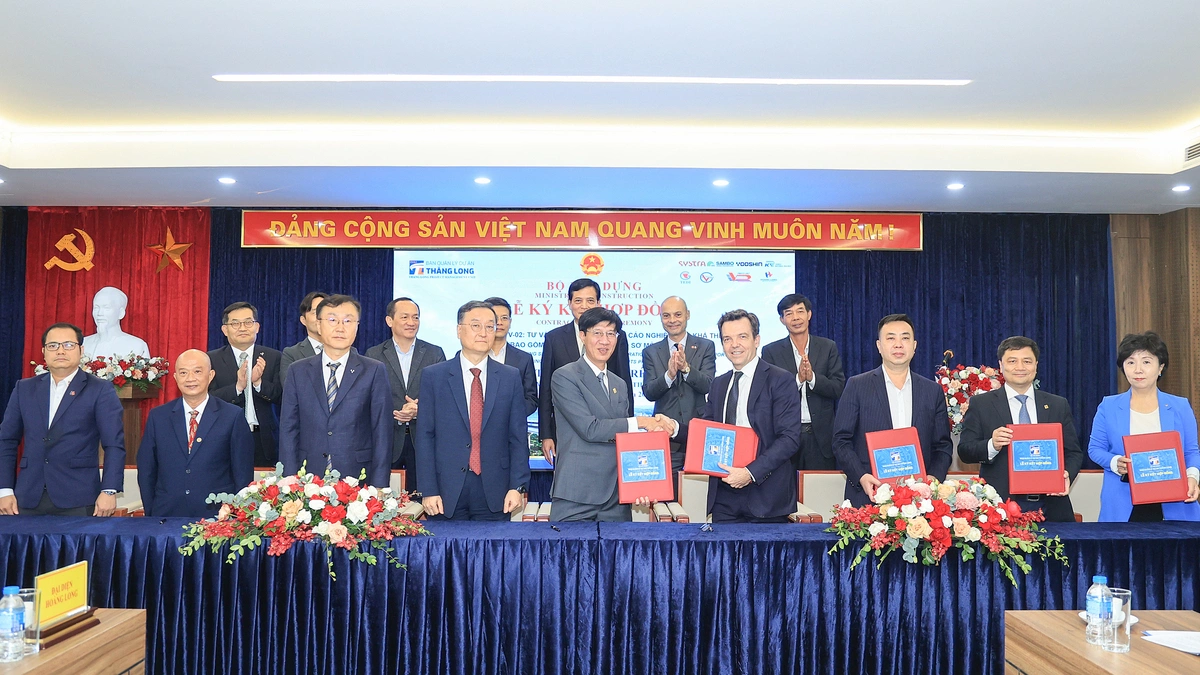
On November 25, the Thang Long Project Management Board officially signed a consultancy contract for the North-South High-Speed Railway project, valued at over 10.243 trillion VND. This landmark agreement involves a consortium of eight prestigious firms from Vietnam, France, and South Korea, marking a critical transition from the preliminary planning phase to the rigorous implementation stage of Vietnam’s most ambitious infrastructure endeavor to date.
The contract, designated as package TV-02, represents a foundational pillar for the entire North-South High-Speed Railway, which is envisioned as the backbone of the nation’s future transportation network. The scope of work for the consortium includes comprehensive surveys, the preparation of feasibility studies, Front-End Engineering Design (FEED), and the development of tender documentation for future construction phases.
A Consortium of Global Expertise
The successful consortium is spearheaded by the French engineering giant SYSTRA, which brings extensive global experience in high-speed rail development. The team also includes three prominent South Korean firms: Sambo Engineering, Yooshin Engineering Corporation, and the Korea National Railway (KNR). These international partners will collaborate with four leading Vietnamese entities: the Transport Engineering Design Incorporated (TEDI), TEDI SOUTH, the Transport Investment and Construction Consultant Joint Stock Company (TRICC), and Hoang Long Construction Consultancy Joint Stock Company.
The selection of this specific consortium highlights the government’s commitment to integrating world-class technological standards with local expertise. By leveraging the combined strengths of these firms, Vietnam aims to ensure that the project not only meets international safety and efficiency benchmarks but also facilitates the transfer of critical high-speed rail technology and management expertise to the domestic workforce.
The Strategic Importance of the FEED Phase
During the signing ceremony, Deputy Minister of Construction Bui Xuan Dung emphasized the unique complexity of this project. He noted that this is the first time Vietnam has undertaken a high-speed rail project of such massive scale and technical sophistication. Consequently, the Front-End Engineering Design (FEED) stage is not merely a procedural step but a strategic necessity.
"The FEED phase is the cornerstone of the entire investment," Deputy Minister Dung stated. "It dictates the feasibility, quality, and long-term operational efficiency of the project. The consortium must ensure that all data collected is accurate, reliable, and comprehensive to avoid costly delays or design flaws in the construction phase."
The Deputy Minister outlined four critical directives for the consortium:
- Human Resource Mobilization: The consortium is required to deploy a high-caliber team of experts and establish a professional management structure to oversee project progression.
- Technological Integration: Technical standards must be cutting-edge, adapted to Vietnam’s unique geographical and climatic conditions, and ensure long-term sustainability and safety.
- Transparent Investment Planning: The consortium must provide clear, competitive, and legally compliant investment proposals, ensuring that the cost-benefit analysis remains robust throughout the project life cycle.
- Knowledge Transfer: A primary objective is the empowerment of Vietnamese engineers, who must work closely with international experts to master the technologies and management systems involved in high-speed rail.
Project Timeline and Milestones
The signing of this contract follows the official announcement of the winning consortium just three days prior. With a 30-month performance period, the consortium has a tight schedule to complete its objectives. The Thang Long Project Management Board has set an ambitious target to begin the actual construction of the high-speed rail line by the end of 2028.
The project timeline is structured to move systematically from research to procurement:
- Late 2024: Finalization of the consortium team and contract signing.
- 2025 – 2027: Execution of feasibility studies, route selection, and FEED documentation.
- Late 2027: Completion of tender documents for construction contractors.
- End of 2028: Planned commencement of construction work.
Implications for Vietnam’s Infrastructure
The North-South High-Speed Railway is more than a transport project; it is a catalyst for national economic growth. By connecting the northern hub of Hanoi with the southern economic engine of Ho Chi Minh City, the railway aims to reduce travel time significantly, alleviate pressure on existing road and air networks, and stimulate industrial and commercial development in provinces along the corridor.
The project is expected to have a profound impact on the domestic logistics chain. By providing a high-speed, high-capacity alternative to current transport methods, the railway will likely lower the cost of doing business, enhance regional connectivity, and support the government’s goal of modernizing the national transport infrastructure to match the country’s rapid industrialization.
Official Oversight and Accountability
Dinh Cong Minh, Director of the Thang Long Project Management Board, underscored the necessity of strict oversight. He stated that the board will act as the primary liaison, directly managing the progress, quality, and volume of work delivered by the consortium.
"Every deliverable must be clearly defined and linked to specific responsibilities," Director Minh said. "We are implementing a rigorous monitoring mechanism where every individual and entity involved is held accountable for their contribution to the project’s milestones."
Patrick Desforges, representing the consortium, pledged full cooperation with the Ministry of Construction, the project management board, and local authorities along the proposed route. He emphasized that the consortium is committed to risk management, proactively identifying potential technical and logistical hurdles to provide the government with the necessary data to make informed, timely decisions.
Addressing Technical and Operational Challenges
The geographical diversity of Vietnam presents significant engineering challenges, including varied terrain, soft soil conditions in certain regions, and the need for seismic-resilient infrastructure. The consortium’s task involves not only planning the rail alignment but also selecting the right signaling, power, and rolling stock technologies.
The choice of technology will be a decisive factor in the project’s long-term success. The integration of international standards, such as those used in France and South Korea, will be tempered by the need for localized solutions that ensure durability and ease of maintenance within the Vietnamese regulatory and operational environment.
A New Era for National Development
The signing of this contract marks a turning point in Vietnam’s history. For decades, the North-South corridor has relied on legacy rail and road systems that are increasingly unable to meet the demands of a growing economy. The transition to high-speed rail represents a significant leap in national capabilities, signaling to the international community that Vietnam is prepared to embrace high-tech infrastructure solutions.
As the consortium begins its 30-month work program, the focus will remain on precision, safety, and transparency. The success of package TV-02 will serve as the foundation upon which the future of Vietnam’s transportation network will be built. With high-level support from the government and the inclusion of global industry leaders, the project is positioned to become a benchmark for future infrastructure developments in Southeast Asia.
By prioritizing thorough research and professional design during this phase, the government aims to minimize the risks often associated with mega-infrastructure projects, ensuring that when the first rail is laid in 2028, it will be the beginning of a safe, efficient, and transformative era for the Vietnamese people.
Related posts: