Japan Seeks Talent From Vietnam to Revitalize Its Semiconductor Industry Amid Severe Labor Shortages


In the wake of an aggressive national strategy to reclaim its historic dominance in global technology, Japan is aggressively pursuing the revitalization of its domestic semiconductor manufacturing sector. Once a titan in the global chip market during the late 20th century, the East Asian nation faces a formidable bottleneck threatening its modern ambitions: a critical and deepening shortage of specialized human resources. As regional manufacturing hubs—most notably the southern island of Kyushu, widely heralded as Japan’s "Silicon Island"—surge back to life with multi-billion-dollar investments, the government and industry leaders are looking outward. Increasingly, Vietnam and its burgeoning pool of young, tech-savvy engineering talent are being viewed as the definitive solution to Japan’s acute semiconductor labor crunch.
A Historical Overview of Japan’s Semiconductor Rise and Fall
To understand the urgency behind Japan’s current recruitment initiatives, it is necessary to examine the trajectory of the nation’s electronics industry. During the 1970s through the 1990s, Japan was an undisputed powerhouse in semiconductor production, capturing a dominant share of the global market. The pinnacle of this era was reflected on the island of Kyushu, where semiconductor production value soared to an unprecedented 1.392 trillion yen in the year 2000.
However, this golden age proved vulnerable. The aggressive rise of South Korean memory manufacturers, coupled with cyclical shifts in global supply chains and prolonged domestic economic stagnation, dealt a severe blow to Japanese chipmakers. Market share eroded rapidly, and domestic production capabilities dwindled as companies scaled back investments, leading to a generational gap in engineering expertise and a decline in institutional focus on microelectronics.
Recognizing semiconductors as the foundational cornerstone of national security, economic resilience, and emerging technologies like artificial intelligence (AI) and the Internet of Things (IoT), the Japanese government launched a comprehensive revitalization strategy. The primary objective of this national campaign is ambitious: to more than triple domestic semiconductor sales revenue from 5,000 billion yen in 2020 to 15,000 billion yen by 2030.
The Three-Phase National Strategy and Financial Commitments
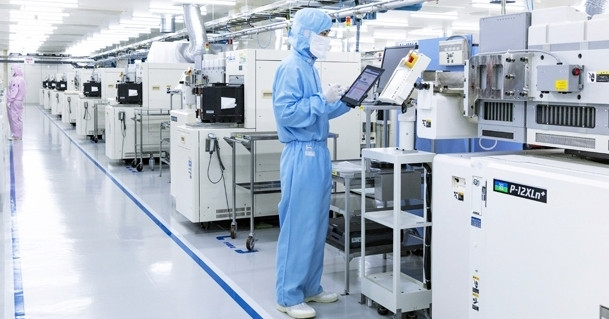
Japan’s roadmap to semiconductor resurgence is structured across three distinct developmental phases. In the first phase, spanning the early 2020s, the government focused on securing a resilient domestic baseline for advanced chip production to supply local AI and IoT infrastructure. The second phase emphasizes deep bilateral and multilateral cooperation with global partners to co-develop next-generation semiconductor technologies. Finally, the third phase targets the commercialization and mass adoption of future-proof technologies through integrated global alliances.
To operationalize this vision, the Japanese government has committed unprecedented financial resources. In the first three years of the strategy alone, starting in 2021, Tokyo injected approximately 4,000 billion yen into semiconductor research, development, and infrastructure subsidies.
These aggressive fiscal injections are already yielding tangible economic dividends. In 2023, the semiconductor production value on Kyushu Island reached 1,153.4 billion yen, marking the first time in 16 years that output surpassed the coveted 1,000-billion-yen threshold. Building on this momentum, government projections indicate that public funding for the semiconductor sector will continue to scale upward, reaching an estimated 10,000 billion yen during the 2024–2030 period. Furthermore, comprehensive private-sector surveys project that total equipment investments related to Japan’s semiconductor industry will attract an astonishing 6,200 billion yen over the next decade.
The Anatomy of Kyushu’s Labor Crisis
Despite a massive influx of capital, government backing, and soaring production metrics, Japan’s domestic talent pipeline remains dangerously constrained. According to Mr. Ataguchi, a representative of the Kyushu Bureau of Economy, Trade and Industry (METI Kyushu), the domestic appeal of the semiconductor manufacturing profession among native Japanese university students remains suboptimal. This hesitance is compounded by historical structural gaps, including insufficient public awareness regarding modern cleanroom environments, limited academic-industry collaboration, and a shortage of hands-on training facilities.
Consequently, projections issued by METI indicate that from now until 2032, the semiconductor sector on Kyushu Island alone will face a persistent shortfall of approximately 1,000 workers annually across short- and medium-term horizons. The roles experiencing the most acute deficits are facility operations engineers, manufacturing technicians, and specialized research and development (R&D) personnel.
The structural mismatch between educational output and industry demand has forced

Japanese corporations, economic organizations, and educational institutions to pursue aggressive workforce diversification strategies. This imperative has directly motivated recent delegations of Japanese business executives to travel to Vietnam to conduct extensive labor market surveys, establish institutional partnerships, and explore long-term recruitment frameworks.
Defining the Skill Sets Required by Japanese Chipmakers
For Vietnamese engineers and technical graduates aiming to enter the Japanese semiconductor ecosystem, the barrier to entry requires rigorous academic preparation and multidisciplinary proficiency. According to industry assessments provided by METI Kyushu representatives, Japanese semiconductor firms expect candidates to possess a rock-solid foundational knowledge base spanning electrical engineering, electronics, telecommunications, precision machinery, chemical engineering, material sciences, finance, and industrial management.
For positions dedicated to research and development (R&D), the expectations are even higher. Candidates must demonstrate advanced programming capabilities, deep technical mastery over material science physics, and cross-cultural adaptability. Furthermore, practical problem-solving skills and familiarity with international production standards are non-negotiable requirements for professionals operating within high-precision Japanese manufacturing facilities.
Bilateral Perspectives: Bridging the Gap Through Strategic Partnership
The convergence of Japan’s capital-rich industrial revival and Vietnam’s demographic dividend represents a mutually beneficial economic alignment. Mr. Ishikawa Isamu, Deputy Chief of Mission at the Embassy of Japan in Vietnam, has emphasized that the semiconductor industry in Kyushu—which accounts for over half of Japan’s total integrated circuit production value—is entering a critical phase of explosive growth.
Deputy Chief Ishikawa noted that structural cooperation in human resource development serves the strategic interests of both nations. Vietnam possesses a high-quality talent pool characterized by strong academic performance in science, technology, engineering, and mathematics (STEM) disciplines. Meanwhile, Japan offers advanced technological infrastructure, deep domain expertise, and robust financial capital. By bridging Vietnam’s capable engineering graduates with Japan’s high-tech manufacturing hubs, both countries can achieve sustainable technological synergy.

Recent high-profile initiatives underscore this growing connectivity. Educational institutions in both nations are currently establishing collaborative credit-transfer programs, joint training laboratories, and specialized internship tracks designed to funnel Vietnamese talent directly into Japanese facilities. These initiatives build upon a broader framework of economic diplomacy aimed at integrating supply chains between the two nations.
Broader Economic Implications and Future Outlook
The deepening collaboration between Japan and Vietnam within the semiconductor domain carries profound implications for the broader geopolitical and technological landscape of the Asia-Pacific region. As global supply chains undergo continuous restructuring driven by supply chain security, geopolitical diversification, and the relentless rise of artificial intelligence, traditional manufacturing models are giving way to transnational talent ecosystems.
For Japan, successfully overcoming its domestic labor shortage through international cooperation will determine whether its national strategy to reclaim 20% of the global semiconductor market share by 2030 succeeds or falters. Failure to secure adequate human capital risks bottlenecking multi-billion-dollar investments in fabrication plants (fabs) and packaging facilities.
For Vietnam, this partnership offers an unprecedented catalyst to move up the global value chain. Transitioning from a provider of general software outsourcing and basic manufacturing assembly to a specialized contributor in microchip design, semiconductor materials research, and advanced wafer testing will significantly enhance the nation’s technological standing. It validates Vietnam’s national strategy to develop high-tech industries and positions the country as an indispensable node in the future architecture of global electronics manufacturing.
As Japanese delegations continue their outreach to Vietnamese universities and technical academies, the framework for a robust, cross-border semiconductor labor market is rapidly solidifying. What began as a localized regional labor deficit on a southern Japanese island has transformed into a compelling testament to international cooperation, proving that the future of high-technology relies not merely on capital and machinery, but on the cross-pollination of global human ingenuity.