Rare 1964 Honda Super Cub C65 with Over 60 Years of History Finds New Home with US Collector After Leaving Vietnam

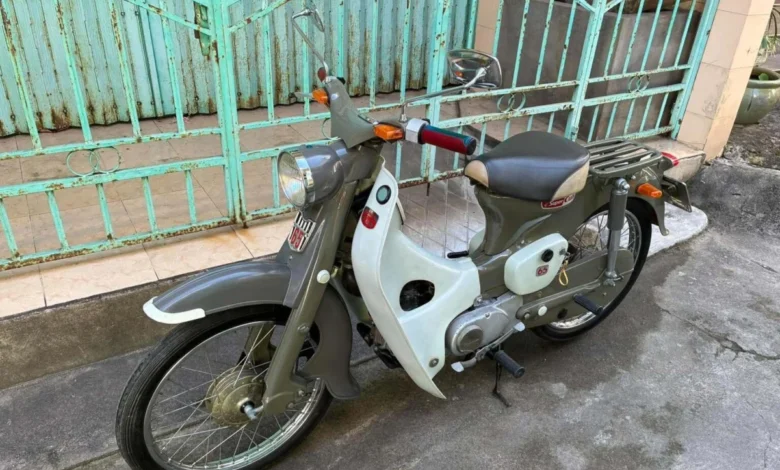
A remarkably well-preserved Honda Super Cub C65, manufactured in 1964, has recently transitioned from a Vietnamese motorcycle collector to a vintage enthusiast residing in the United States. Spanning a heritage of over six decades, this specific iteration of Honda’s legendary commuter line continues to astonish classic vehicle experts due to its extraordinarily high degree of original factory preservation. From its vintage paintwork to its matching mechanical components, the six-decade-old machine stands as a rolling testament to early automotive craftsmanship, attracting significant international attention within the high-end motorcycle restoration and preservation community.
The Evolution of the Super Cub and the Significance of the C65
Introduced in the late 1950s, the Honda Super Cub fundamentally revolutionized personal mobility across the globe. Conceived by Soichiro Honda and Takeo Fujisawa, the motorcycle was engineered with a primary mission: to create an affordable, reliable, and exceptionally user-friendly mode of transportation accessible to the masses. Its revolutionary step-through frame, enclosed chain guard, and clutchless rotary transmission made it an instant global phenomenon.
By the mid-1960s, Honda was aggressively expanding its international footprint and diversifying its displacement offerings. The Super Cub C65 arrived during this pivotal growth phase. Building directly upon the foundational design language of its predecessors, the C65 introduced a refined four-stroke engine configuration packaged within the iconic lightweight layout. These early displacement variants are exceedingly rare in the modern secondary market, particularly specimens that have managed to escape extensive aftermarket modifications or structural restorations.
Transaction Details and Preservation Status
The motorcycle was previously held in the collection of Mr. Thát Sán Tựu, a prominent and respected vintage motorcycle collector based in An Giang province, Vietnam. According to Mr. Tựu, the vehicle has recently been formally transferred to a buyer living in the United States who specializes in acquiring historical two-wheelers. Out of respect for the collector’s privacy and the private nature of high-end international acquisitions, the exact financial terms of the transaction have been kept strictly confidential.
Despite logging more than sixty years of existence, the Honda C65 remains mechanically sound, with its historic four-stroke powerplant continuing to operate with remarkable stability. Industry specialists note that the true value of vintage motorcycles lies far beyond mere chronological age; it heavily relies on physical condition, matching numbers, structural integrity, and the extent to which factory-original components remain intact. A completely restored vehicle, while visually striking, rarely holds the same historical prestige among dedicated purists as a machine that retains its factory finish, patina, and original mechanical assembly.
Detailed Examination of Originality and Aesthetic Patina
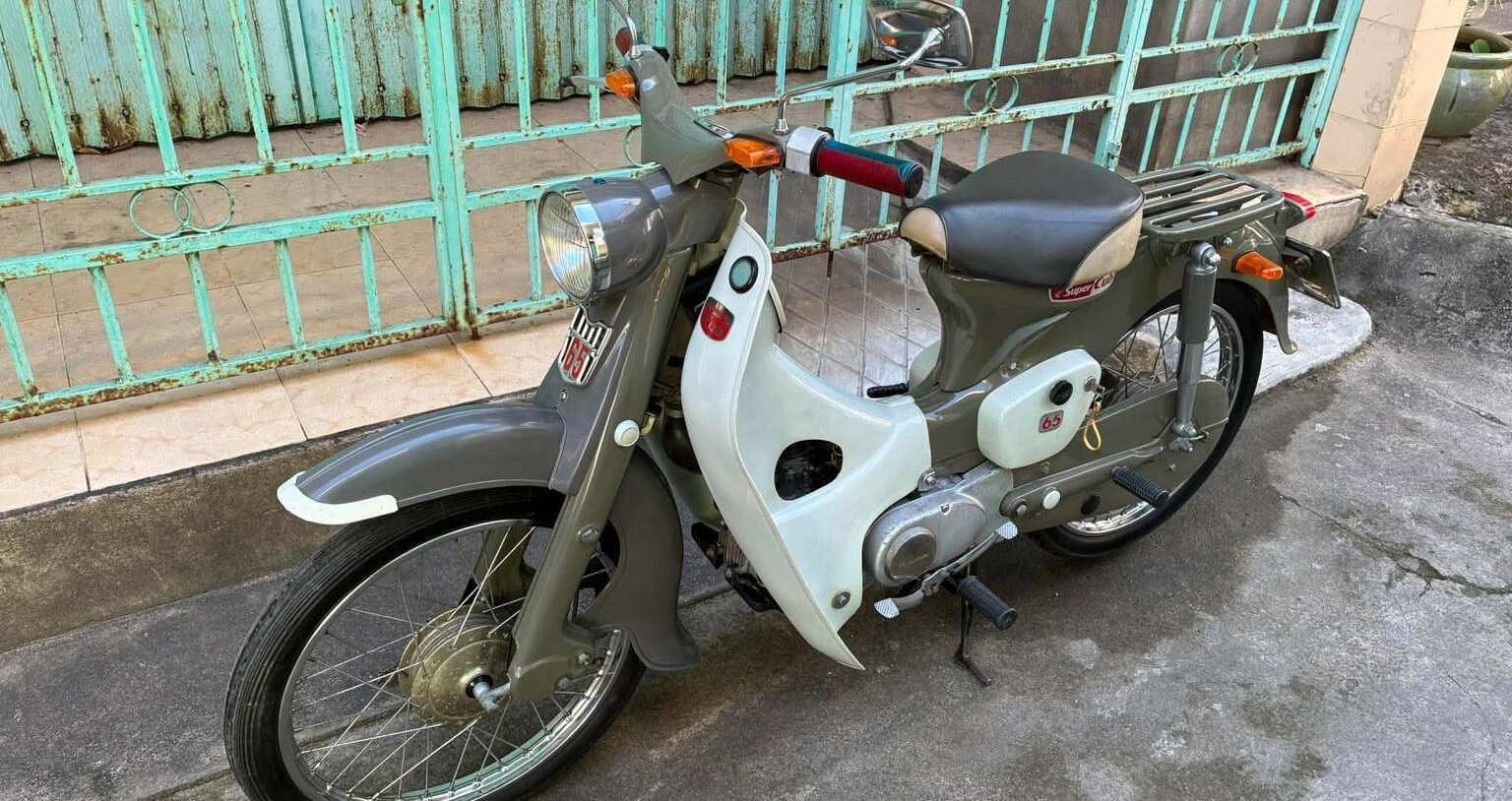
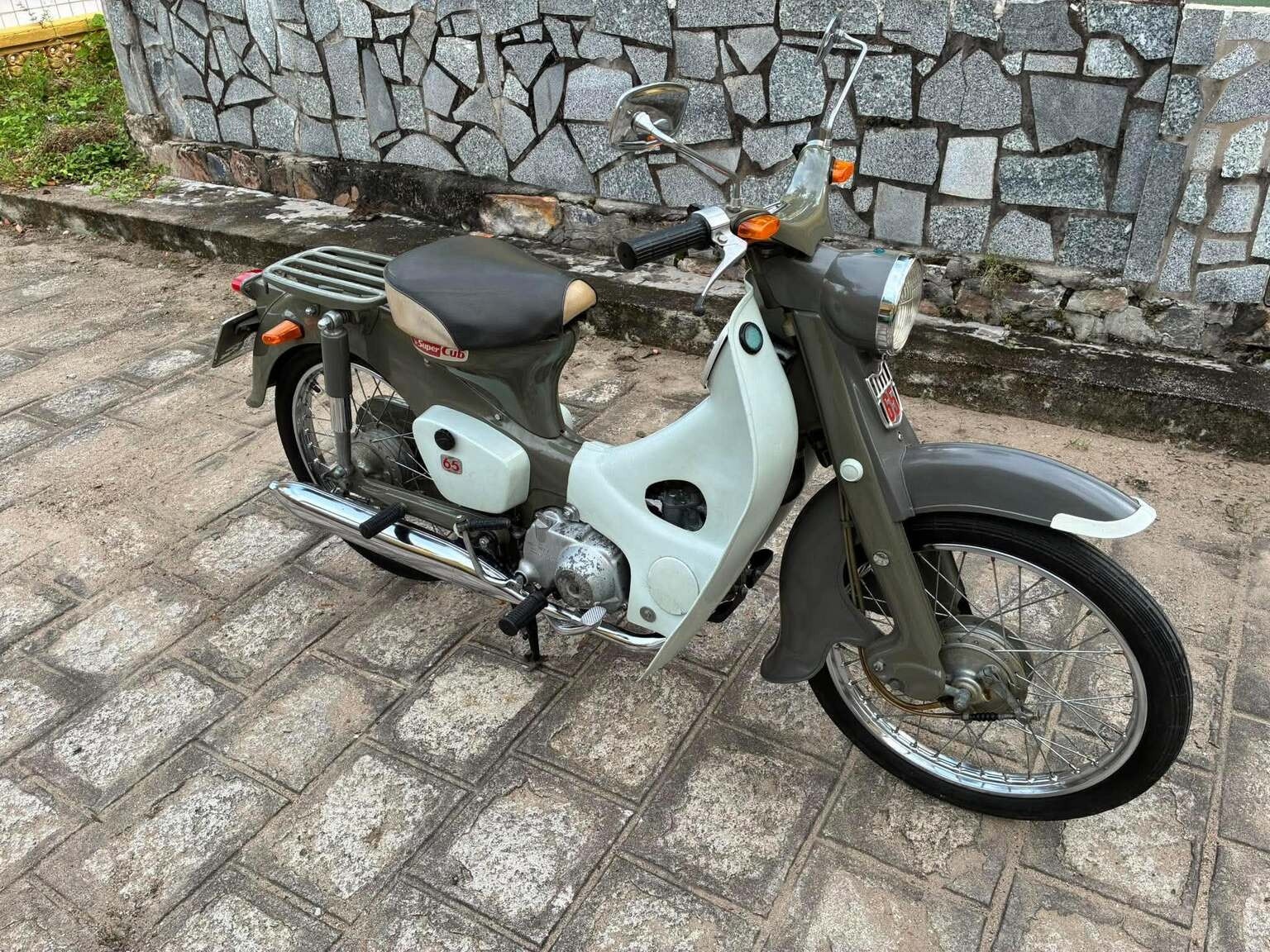
A closer inspection of the 1964 Super Cub C65 reveals a remarkable preservation of period-correct aesthetics. The motorcycle retains its characteristic two-tone color scheme from the early 1960s, featuring a deep grayish-blue body paired with an aged off-white molded plastic leg shield. This specific color palette remains an unmistakable visual signature of early Cub variants, sharply distinguishing them from mass-produced utility models that arrived in later decades.
The exterior hardware has been meticulously cared for over the years. The signature round headlamp assembly, front and rear turn signal housings, rearview mirrors, ignition switch, and both side cover locking latches remain fully present and functional. Notably, the vintage "65" emblem affixed directly to the side cover is completely intact, accompanied by the classic Super Cub script graphics positioned just beneath the saddle.
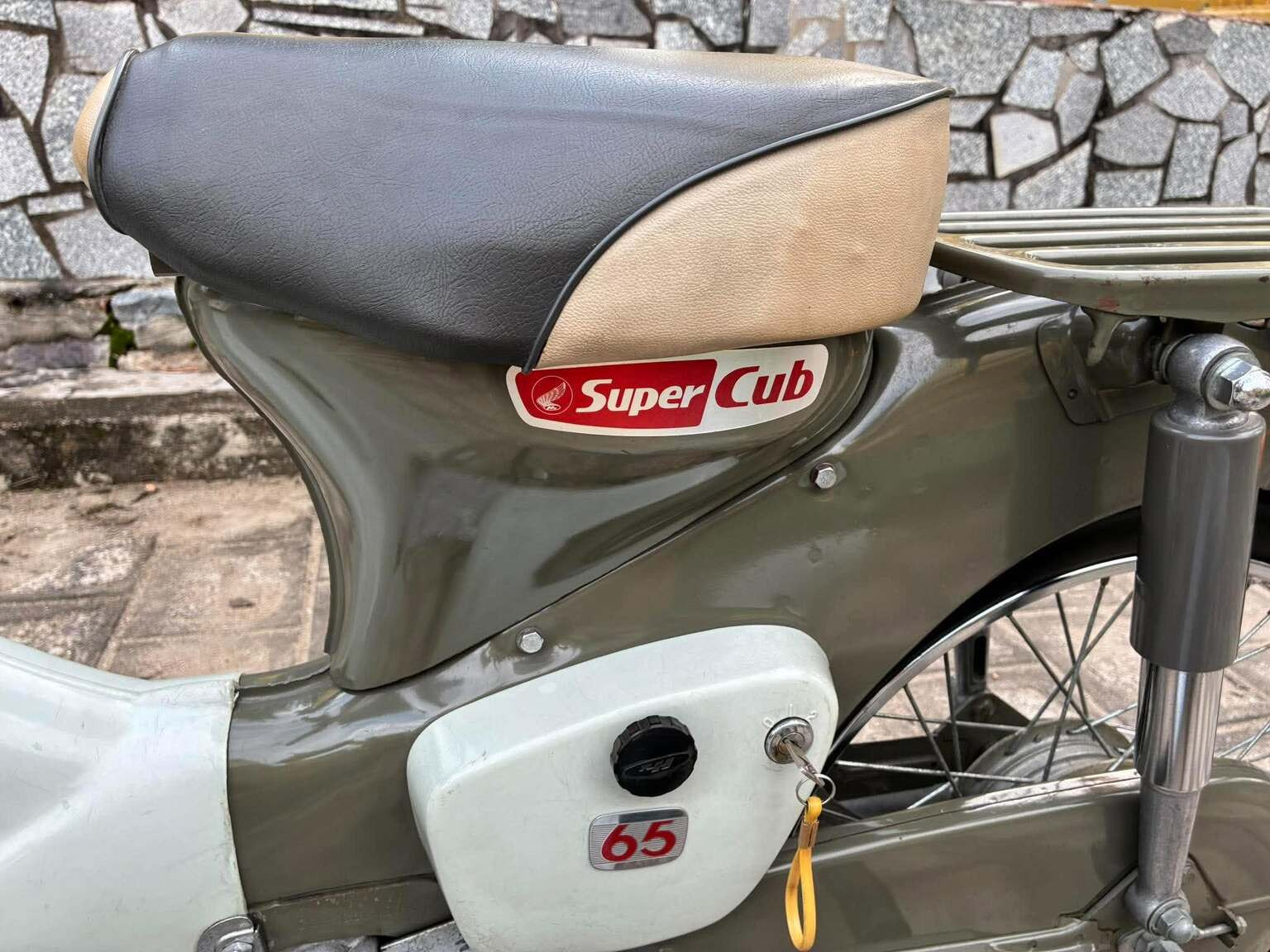
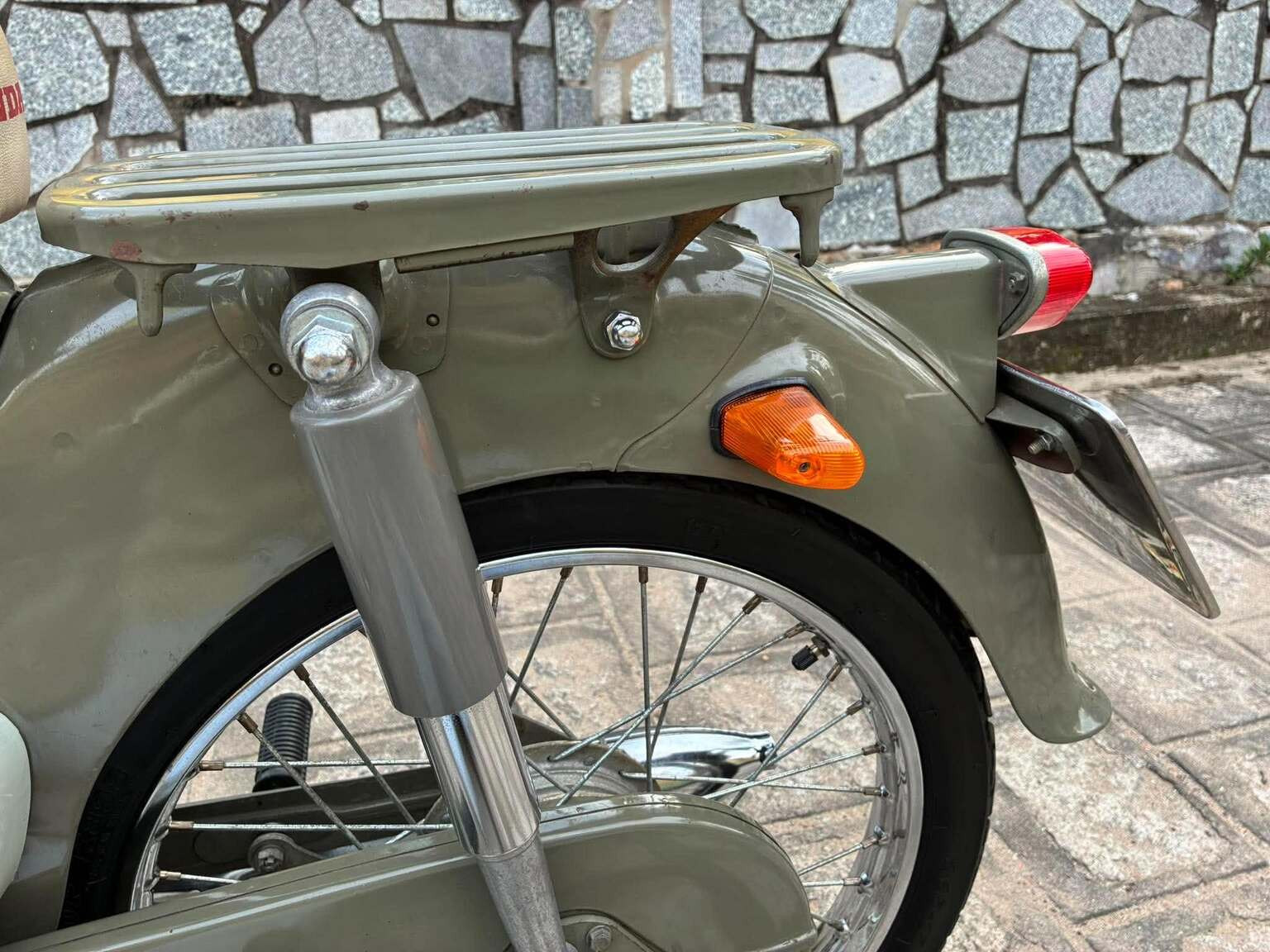
The dual-tone saddle—finished in a tasteful combination of dark gray and cream—complements the overall aesthetic. Critical structural areas, including the front and rear floorboards, suspension linkages, and the rear luggage rack, retain their original grayish-blue protective coating. While the paintwork exhibits authentic signs of aging, minor surface blemishes, and natural fading accumulated over multiple decades of existence, these cosmetic imperfections enhance rather than detract from the machine’s historical authenticity.
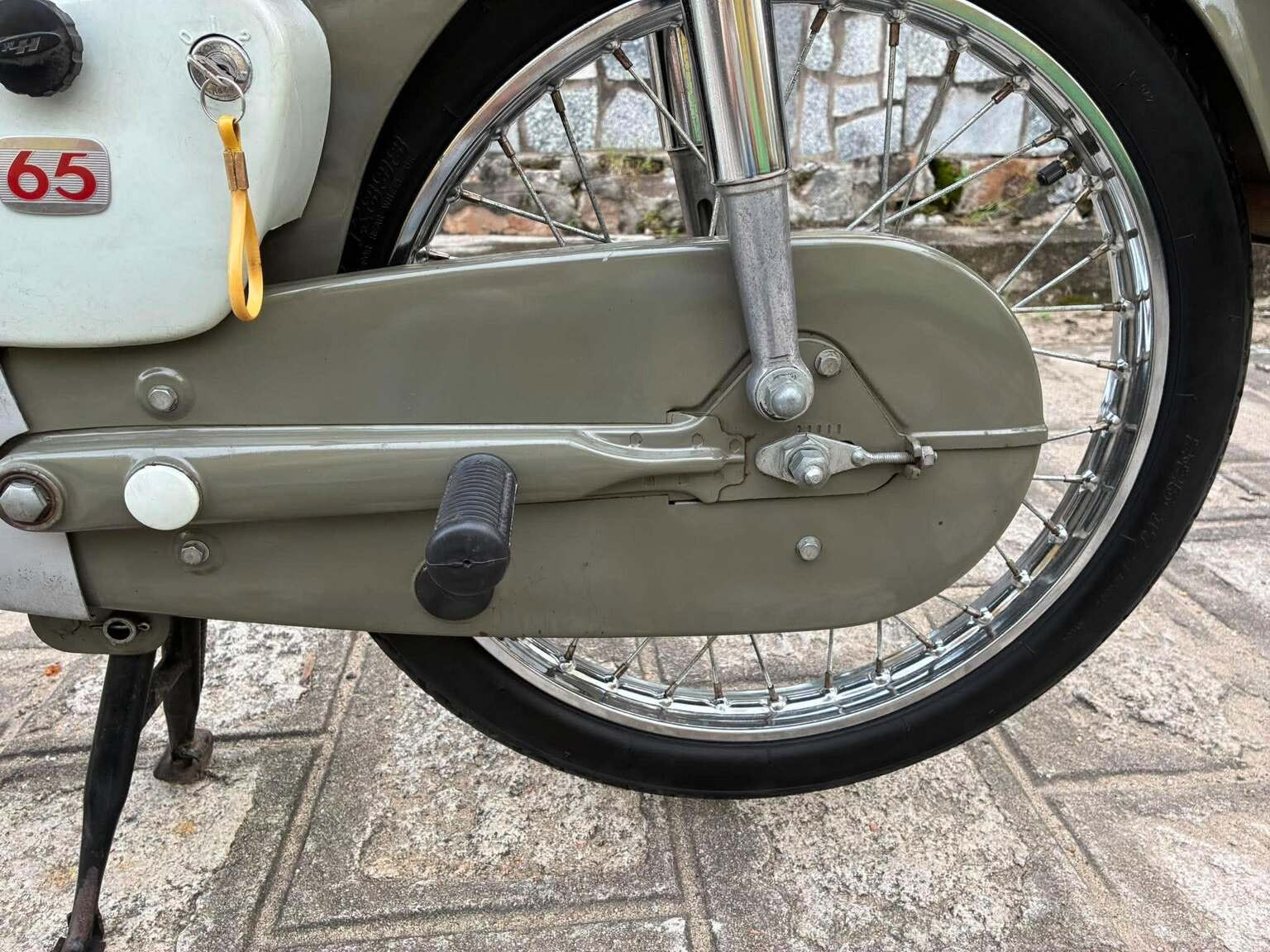
Mechanically, the engine bay reflects an extraordinary level of preservation. The crankcase retains its factory surface finish, displaying natural peeling and gentle discoloration consistent with decades of atmospheric exposure. Technical specifications stamped directly into the aluminum crankcase—such as the 0.73-liter oil capacity and the recommended SAE 30/20 lubricant standard—remain perfectly legible. The cast-aluminum magneto cover bears the classic raised "HONDA" and "MADE IN JAPAN" lettering. Elements such as the carburetor, the dual-action gear shift lever, the kick-start pedal, rubber footpeg mountings, and engine fasteners have all been preserved in their authentic state.
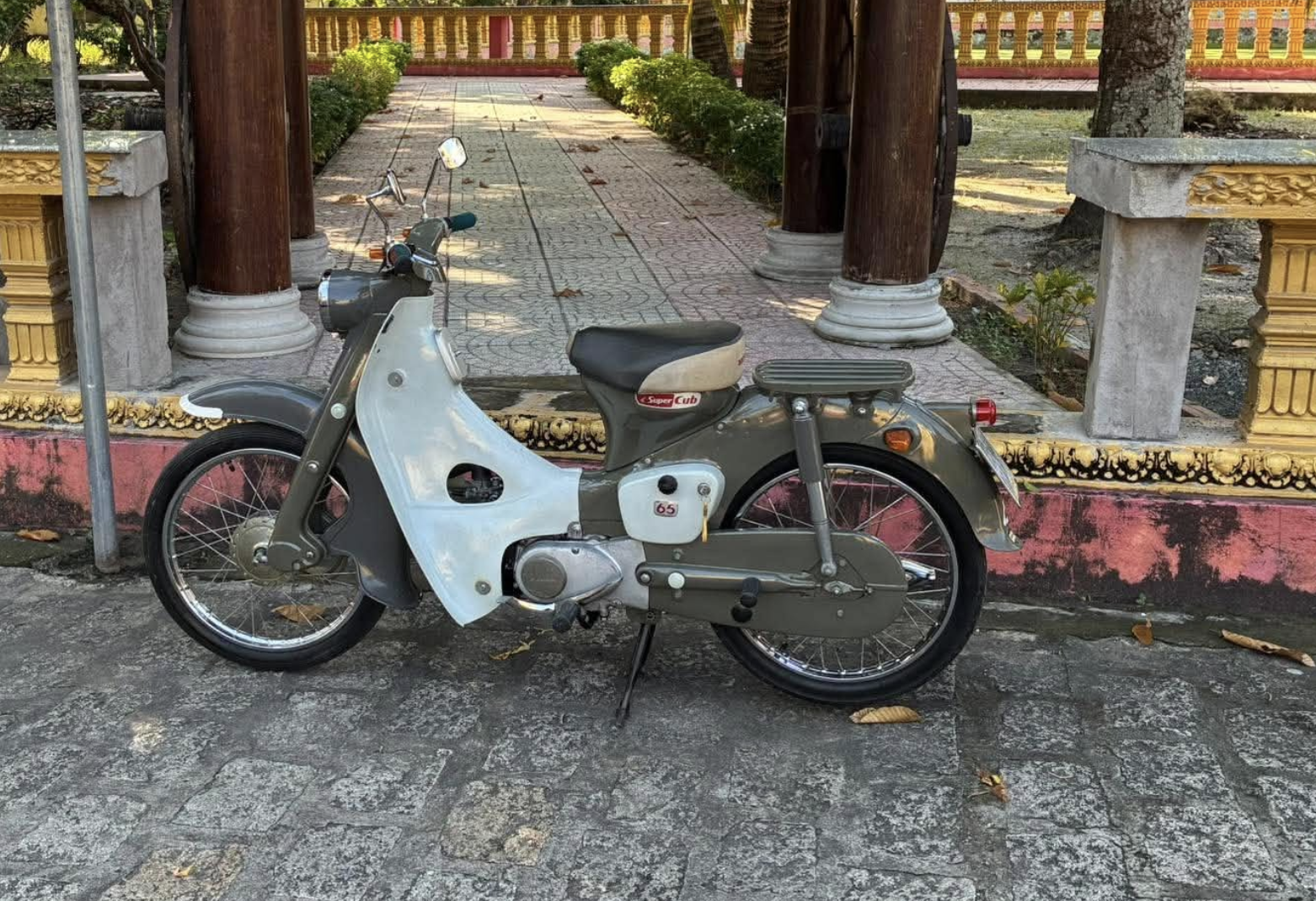
In keeping with standard maintenance practices of vintage vehicles over long periods, the exhaust system represents the primary non-original component. The factory header and muffler assembly were historically replaced with a classic "cigar-style" exhaust system borrowed from the later Cub 79 series. Meanwhile, the chassis maintains the classic configuration characteristic of early-generation Super Cubs, featuring a leading-link front suspension paired with traditional rear telescopic shock absorbers. The machine rides on chrome-plated steel wire-spoke wheels wrapped in vintage-spec tires, utilizing a Bridgestone tire up front and a Dunlop tire in the rear.
Market Implications and the Global Demand for Pre-1970 Japanese Motorcycles
The successful export of a 1964 Honda Super Cub C65 from Vietnam to the United States highlights a broader economic and cultural trend within the global classic vehicle market. Pre-1970 Japanese motorcycles, once viewed purely as utilitarian tools of transit, have evolved into highly sought-after alternative assets. Collectors worldwide are increasingly willing to pay premium prices for authentic, unmolested pieces of automotive history.
Industry analysts point out that the scarcity of early Honda models is compounded by the high attrition rate of commuter vehicles. Because motorcycles from this era were primarily built for daily commuting, delivery, and heavy utility work, very few survived decades of continuous use without undergoing severe structural modifications, engine replacements, or complete overhauls. Finding an un-restored survivor with its foundational components intact is increasingly difficult, driving fierce competition among international collectors.
This phenomenon is not isolated to small-displacement underbones. The global valuation of vintage Asian and European motorcycles has seen a steady upward trajectory. For instance, rare European classics—such as the 1936 BMW R2 motorcycle recently offered for public acquisition in Hanoi with a staggering price tag of 700 million VND—demonstrate that the appetite for pre-war and mid-century motorcycling heritage is exceptionally robust among collectors in Southeast Asia and beyond.
The Legacy of the Super Cub and Modern Interpretations
Decades after the introduction of the C65, Honda has continuously evolved the Super Cub lineage, updating its design, powerplants, and technological features to meet contemporary standards. Modern iterations, such as the contemporary Honda Super Cub C125, successfully bridge the gap between past and present. They retain the unmistakable silhouette and nostalgic character of early-generation Cubs while integrating modern electronic fuel injection, disc brakes, and refined ergonomics suited for modern urban riders.
Nevertheless, modern iterations serve a completely different market segment than the historical machines driving the collector ecosystem. For high-end enthusiasts and specialized museums, a 1964 Super Cub C65 represents a snapshot of industrial history—an era when post-war manufacturing ingenuity laid the groundwork for modern global mobility. The departure of this rare specimen from Vietnam to the United States underscores the borderless nature of classic vehicle preservation, ensuring that mechanical masterpieces from the mid-20th century continue to be cherished, studied, and protected for generations to come.