Driver of Heavy Tractor-Trailer Fined and Penalized After Blocking Emergency Police Convoy for Nearly Three Kilometers on Hanoi–Bac Giang Expressway
A tractor-trailer driver in northern Vietnam has faced strict legal penalties, including a substantial fine and the temporary suspension of their driving license, after persistently refusing to yield the right-of-way to an active emergency police convoy. The incident, which unfolded over a distance of nearly three kilometers on a major high-speed thoroughfare, has reignited public discourse regarding driver awareness, lane discipline, and the critical importance of clearing paths for emergency and law enforcement vehicles on national expressways.
Incident Overview and Chronology
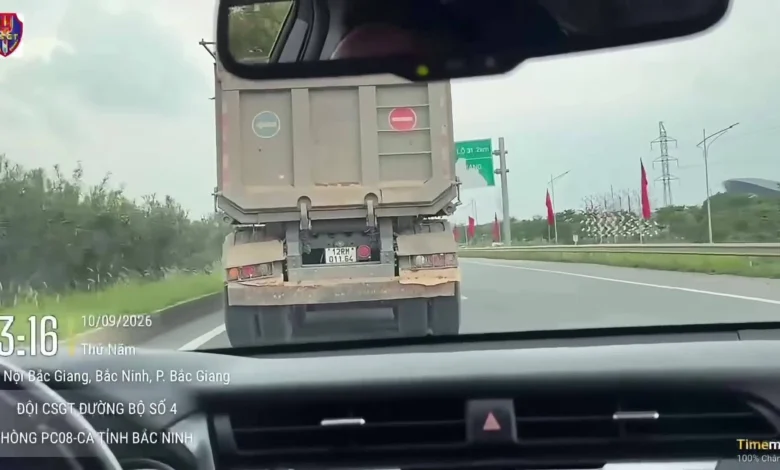
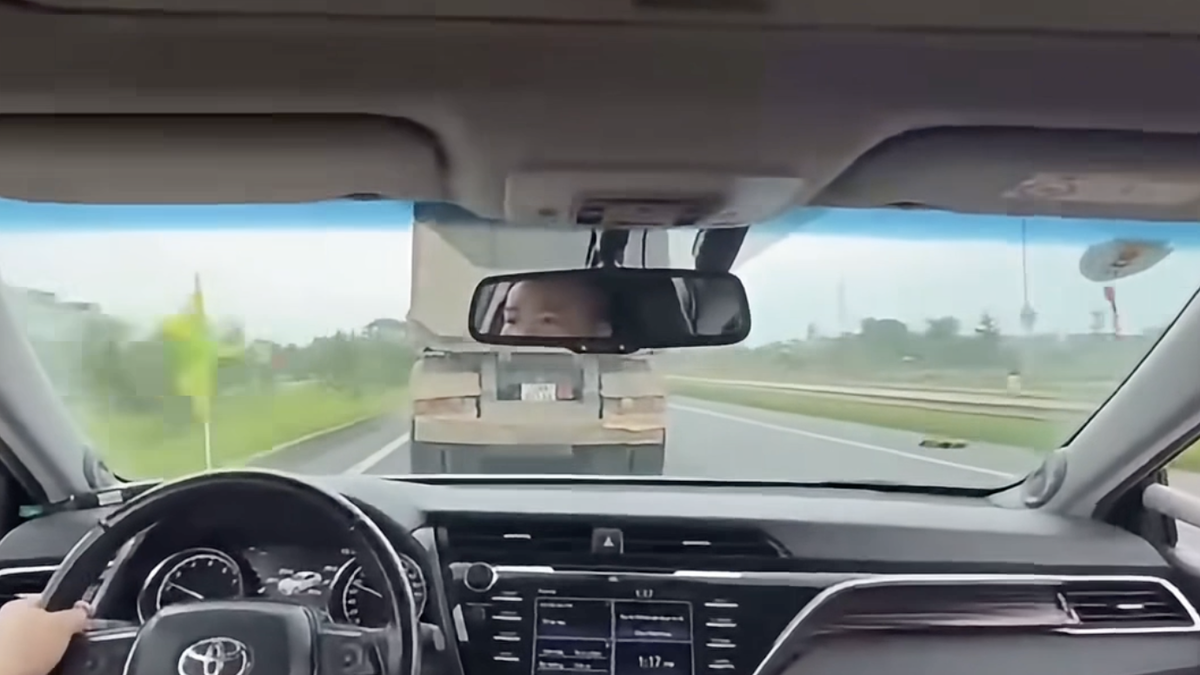
The confrontation occurred on the afternoon of September 10, as a specialized escort convoy operated by the Traffic Police Department of the Bac Giang Provincial Police Department was en route toward Lang Son. The convoy was actively utilizing emergency signals—including flashing lights and high-decibel sirens—to clear traffic while performing official duties.
According to initial reports from traffic authorities, a heavy tractor-trailer traveling directly ahead of the convoy refused to move out of the passing lane, despite continuous audio and visual prompts from the leading police vehicles. Traffic officers inside the escort unit repeatedly signaled the heavy vehicle to shift to the right lane and allow the convoy to pass safely. However, the driver of the tractor-trailer maintained their position in the left-hand lane for approximately three kilometers, directly impeding the progress of the official mission before finally executing a lane change.
Following the incident, law enforcement authorities tracked, intercepted, and formally penalized the driver. The individual was issued a fine of 7 million VND (approximately $280 USD) and assessed a deduction of 4 points on their driving license for the violation of failing to yield or obstructing vehicles exercising priority rights while actively transmitting emergency signals.
Legal Framework and Statutory Obligations for Drivers
Vietnamese traffic regulations explicitly mandate that all road users must immediately reduce speed, pull over to the far right side of the roadway, or strictly follow the instructions of traffic controllers upon encountering an emergency vehicle emitting priority signals. These protocols are designed to ensure that police, fire, ambulance, and rescue services can reach destinations without life-threatening delays.
On multi-lane expressways, standard protocol dictates that vehicles should generally maintain travel in the right-hand lanes to ensure smooth traffic flow, while the left lane—commonly referred to as the overtaking lane—is strictly reserved for passing maneuvers or critical transit scenarios. The prolonged occupation of the left lane by heavy commercial vehicles, particularly when failing to yield to faster traffic or emergency units, creates severe bottlenecks and safety hazards.
In recent years, transport authorities have intensified efforts on several major expressways to enforce lane discipline, encouraging commercial and private motorists to utilize the right lanes for cruising and reserve the left lane exclusively for passing. This operational strategy aims to minimize continuous driving in the fast lane, making it substantially easier for trailing vehicles to navigate and for emergency services to clear corridors when urgent interventions are required.
Broader Context of Highway Safety and Lane Discipline
The reckless or negligent obstruction of emergency vehicles is an ongoing challenge for highway patrols across Vietnam. As the country’s expressway network rapidly expands to connect major economic hubs and industrial zones, the volume of heavy freight traffic—including semi-trucks, container carriers, and tractor-trailers—has surged exponentially.
While commercial freight transport serves as the backbone of domestic supply chains, the coexistence of heavy commercial vehicles and high-speed passenger traffic frequently gives rise to friction on national routes. Instances of large trucks hogging overtaking lanes for extended periods not only frustrate regular motorists but also pose catastrophic risks when emergency responders are delayed. Public safety advocates emphasize that seconds can mean the difference between life and death during medical emergencies, major accidents, or urgent security operations.
Transportation experts and traffic safety analysts point out that many commercial drivers face immense pressure regarding delivery timelines, which can occasionally foster a culture of aggressive or dismissive driving behavior on long-haul routes. However, authorities maintain that commercial operators are held to a higher standard of professional responsibility due to the sheer size and weight of their vehicles.
Implications and Future Enforcement Measures
The strict penalty handed down in the Bac Giang incident underscores a broader institutional push toward zero tolerance for traffic violations that compromise public safety and emergency response capabilities. Traffic police departments nationwide have increasingly deployed automated monitoring systems, dashcam footage reviews, and dedicated patrol units to identify and penalize motorists who disregard lane regulations or fail to yield to priority vehicles.
In light of this event, transport departments are expected to amplify public awareness campaigns targeting commercial transport enterprises and independent truck drivers. These educational initiatives aim to reinforce fundamental traffic culture, emphasizing that yielding to emergency convoys is not merely a legal obligation, but a fundamental civic duty that protects community welfare.
As Vietnam continues to modernize its transportation infrastructure, the enforcement of stringent lane discipline and the uncompromising protection of emergency corridors will remain pivotal pillars of national highway management, ensuring that public safety and law enforcement agencies can execute their critical duties without unnecessary impediment.