Vụ việc người phụ nữ bám chặt trên nắp ca-pô ô tô kêu cứu ở Ấn Độ khiến dư luận bàng hoàng

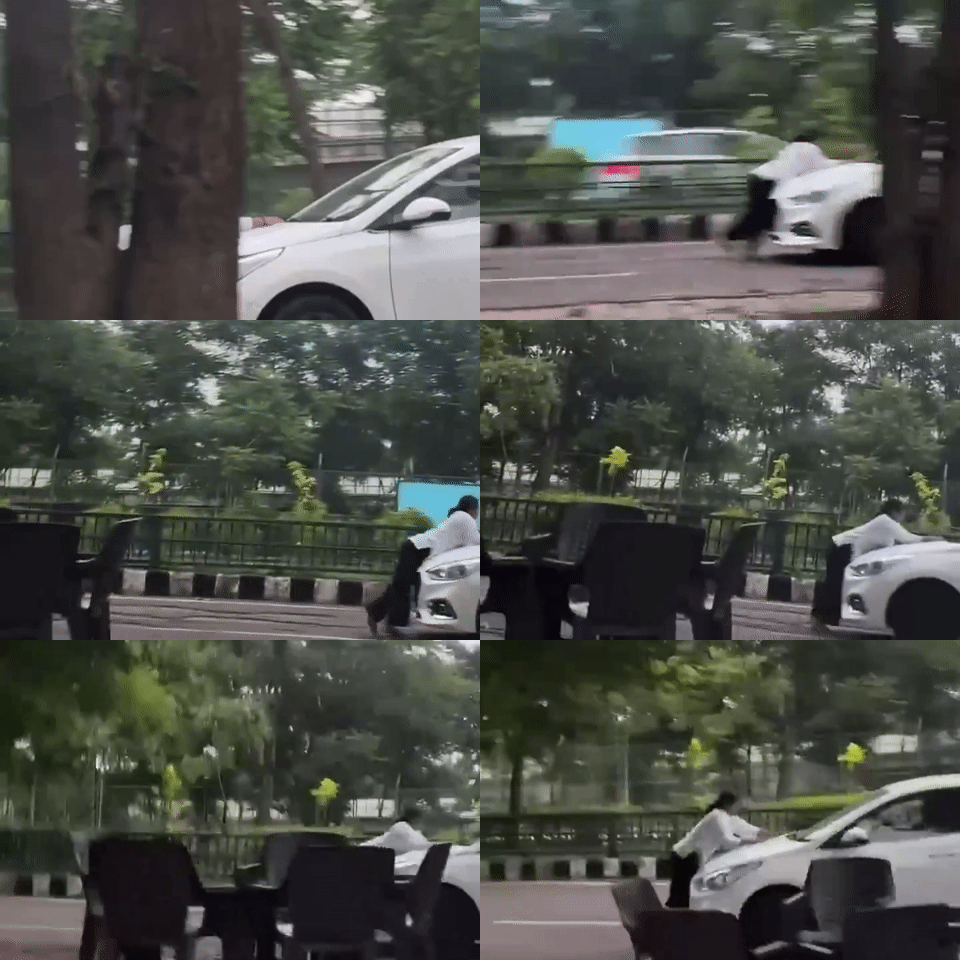
The quiet morning hours near Janeshwar Mishra Park in Lucknow, India, were violently disrupted by a scene that would quickly capture the attention of millions across social media platforms. What began as a personal dispute between two acquaintances escalated into a harrowing public ordeal involving a moving vehicle, a desperate plea for survival, and subsequent police intervention. The harrowing incident, which took place on the morning of September 16, has since sparked widespread discussions regarding public safety, interpersonal conflicts, and the rapid spread of viral video content in modern society.
According to preliminary details released by local law enforcement authorities, the incident centers around a 22-year-old woman identified as Anamika and a 26-year-old man named Shahnawaz Ali. Initial investigations indicate that the two individuals had shared a romantic relationship for approximately one year. However, the dynamics of their association soured dramatically after Anamika reportedly discovered Shahnawaz in the company of another woman inside a vehicle. This discovery served as the catalyst for a escalating series of confrontations that ultimately culminated in physical violence and reckless endangerment on a public thoroughfare.
Chronology of Events: From Verbal Dispute to Vehicular Assault
The sequence of events leading up to the viral video unfolded over the course of several hours on the morning of September 16. At approximately 6:30 AM, Anamika was reportedly present at a tea stall near Gate No. 4 of the sprawling Janeshwar Mishra Park, accompanied by a female friend. During this time, she reportedly spotted Shahnawaz arriving in a vehicle.
What started as an intense verbal altercation quickly intensified. According to eyewitness accounts and police filings, Anamika positioned herself directly in front of the car in an effort to prevent Shahnawaz from driving away and to continue the confrontation. Rather than de-escalating the situation, the driver allegedly attempted to maneuver past her. Feeling threatened and believing the vehicle was being driven directly toward her, Anamika was forced to take drastic evasive action, leaping onto the bonnet of the moving car and desperately clutching onto the windshield wipers to avoid being struck.
Witnesses reported that the vehicle initially moved at a slow pace before accelerating abruptly. The sudden change in velocity caused Anamika to lose her grip and fall directly onto the asphalt. Eyewitnesses confirmed that the car subsequently rolled over the fallen woman before fleeing the scene entirely. As a result of the impact and subsequent fall, the victim sustained visible injuries to her arms and reported losing consciousness momentarily after the collision.
Following the initial departure of the vehicle, Shahnawaz allegedly enlisted the help of another individual named Danish to continue operating and navigating the car away from the immediate area, according to police reports.
Conflicting Accounts and Counter-Allegations
As the investigation progressed, contrasting narratives emerged from both primary parties involved in the dispute, painting a complex picture of a troubled relationship marred by mutual accusations.

Anamika formally accused Shahnawaz of deliberately driving his vehicle at her, physically assaulting her, and subjecting her to verbal abuse and harassment on multiple previous occasions. She maintained that her actions on the bonnet were purely defensive, born out of an immediate fear for her life as the car advanced toward her. Furthermore, she stated that the physical trauma and psychological shock left her briefly incapacitated immediately following the crash.
Conversely, Shahnawaz vehemently denied all allegations of vehicular assault, asserting that he was the victim of false accusations and systematic harassment. Speaking through local authorities, the man—who works within the construction industry—claimed that Anamika had been stalking and continuously harassing him for a period spanning approximately six months. He further alleged that she had attempted to extort financial resources from him during their ongoing disputes. Law enforcement officials stated that these counter-claims are currently undergoing active verification to determine their validity.
Official Law Enforcement Response and Legal Actions
The handling of the case was swiftly overseen by local police command, notably involving senior officials such as Deeksha Sharma, Deputy Commissioner of Police for East Lucknow. Following preliminary investigations and the widespread circulation of the dashcam and smartphone footage capturing the incident, authorities moved quickly to establish the timeline and identify the culpable parties.
Law enforcement officers apprehended Shahnawaz later that same day. Formal charges were registered against both Shahnawaz and his associate Danish under stringent provisions of the newly enacted Bharatiya Nyaya Sanhita (BNS). Specifically, the suspects face charges under Section 109, which pertains to the attempt to commit murder, and Section 352, which addresses intentional insult with intent to provoke breach of the peace.
The decision to invoke serious criminal charges highlights the gravity with which Indian authorities are treating incidents involving reckless driving and gender-based violence, particularly when captured on digital media and brought to immediate public attention.
Broader Social Implications and the Role of Digital Media
The Lucknow incident serves as a stark reminder of the volatile nature of interpersonal disputes when compounded by modern vehicular access and the omnipresence of digital documentation. The rapid dissemination of the video across various social media networks ensured that a localized conflict transformed into a national talking point within hours.
Sociologists and legal experts point out that the case underscores several critical issues facing urban environments today. First, it highlights the increasing reliance on digital video evidence in criminal investigations, which often provides law enforcement with immediate, albeit sometimes contextually incomplete, visual records of unfolding crimes. Second, the incident brings to the forefront the complexities surrounding domestic disputes, stalking allegations, and the legal mechanisms available to protect individuals from escalating harassment before it results in severe physical harm.
As the judicial process moves forward, the courts will be tasked with untangling the conflicting testimonies provided by the victim and the accused, weighing the physical evidence, eyewitness testimony, and digital recordings. Meanwhile, the case continues to resonate across public forums, prompting renewed conversations regarding emotional regulation, road safety, and the boundaries of personal accountability in the digital age.