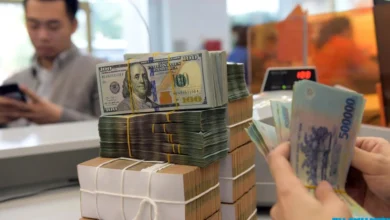
The credit landscape for Vietnam’s hospitality sector is undergoing a strategic shift, with approximately 30,000 billion VND in loans now directed toward tourism and resort real estate in Ho Chi Minh City. This figure, while representing a modest portion of the overall real estate credit on the city’s balance sheet, marks a pivotal moment in how banking authorities classify and incentivize capital allocation to support the nation’s burgeoning tourism economy.
As of late August, the State Bank of Vietnam (SBV), specifically the Regional Office II, reported that lending to restaurants, hotels, and resort developments accounted for roughly 1.9% of the total real estate credit outstanding in the city. This represents a notable 12% increase compared to the same period in the previous year, signaling a gradual thaw in capital flow toward infrastructure that supports long-term economic growth.
Strategic Reclassification of Credit
The recent regulatory move by the State Bank of Vietnam, announced on September 16, provides a significant buffer for credit institutions. Under the new guidelines, any incremental credit growth directed toward the construction, renovation, or acquisition of hotels, restaurants, and resort facilities will no longer be categorized under the restrictive "real estate credit" cap.
While these loans remain subject to the general credit growth limits assigned to individual banks, their exclusion from the specific real estate sector "ceiling" is intended to de-risk the sector for lenders while encouraging them to lend more freely to tourism-focused projects. This policy adjustment is a targeted effort to decouple essential tourism infrastructure from speculative real estate investments.
The Role of Tourism in Economic Recovery
Tourism has been identified as a core pillar of Vietnam’s economic future, a sentiment reinforced by the Politburo’s Resolution 26, which highlights the industry as a vital engine for national development. By easing the path for capital, the government aims to stimulate more than just building construction; the policy is designed to catalyze a ripple effect across the broader service economy.
The SBV notes that a robust hospitality sector inevitably drags along increased consumer spending, retail growth, and the adoption of modern digital payment systems. As hotels and resorts modernize their facilities, they are increasingly integrating cashless payment gateways and sophisticated financial services, which in turn benefits the banking sector’s digital transformation goals.
Supporting Data and Market Breakdown
The data provided by the SBV indicates that of the 30,000 billion VND in current outstanding credit, approximately 18,400 billion VND—or more than 60% of the total—is dedicated specifically to the development, upgrading, and acquisition of hospitality assets.
This capital concentration is not merely about bricks and mortar. It reflects a shift in investment priorities as developers pivot toward high-quality, operational assets that can generate immediate revenue in the post-pandemic tourism landscape. Despite the growth, the fact that this sector represents less than 2% of total real estate credit underscores that the banking system remains cautious, maintaining a balanced risk profile while supporting key national priorities.
Expert Perspectives on Regulatory Shifts
The banking industry has reacted with measured optimism to the recent regulatory adjustments. Mr. Dinh Duc Quang, Managing Director of Treasury at UOB Vietnam, clarified that while this move is a positive step, it should not be misinterpreted as a blanket lifting of credit caps or an endorsement of speculative real estate investment.
"The essence of this adjustment is the reclassification of certain loan types," Mr. Quang noted. "By separating loans that directly support the tourism industry from the general real estate credit pool, the regulator is acknowledging the unique utility of hospitality infrastructure. While this makes the monitoring process slightly more complex for banks, it is an essential path to ensuring that capital flows where it is most needed to support economic infrastructure."
Experts argue that this shift will likely lead to more competitive interest rates for developers who can demonstrate that their projects are primarily focused on tourism and service operations rather than property flipping. It places the burden of due diligence on financial institutions to prove that their lending is indeed facilitating the expansion of tourism capacity.
Chronology of Policy Developments
The road to this regulatory change has been marked by a series of incremental policy adjustments aimed at balancing financial stability with the need for growth:
- Early 2025: The State Bank of Vietnam initiates a review of the real estate credit ceiling, seeking to distinguish between "productive" real estate (hotels, industrial parks, social housing) and "speculative" real estate (luxury apartments, land plots).
- Mid-2025: Discussions intensify regarding the potential for tourism-linked debt to be exempted from the real estate credit cap to bolster post-pandemic recovery efforts.
- September 16, 2026: The SBV officially announces that incremental credit for hotels, resorts, and tourism facilities will no longer count against the specific real estate credit growth limit.
- September 18, 2026: Officials from the SBV Regional Office II provide a comprehensive briefing in Ho Chi Minh City, detailing the impact of the policy shift and the 30,000 billion VND in outstanding loans currently supporting the local hospitality market.
Broader Implications and Future Outlook
The long-term success of this policy will depend on the ability of banks to distinguish between genuine hospitality development and disguised speculative projects. If implemented effectively, the policy could lead to a surge in the quality of Vietnam’s tourism product, enabling the country to compete more effectively on the international stage.
However, challenges remain. The banking sector must maintain rigorous oversight to ensure that the liquidity freed up by these measures is not diverted back into unproductive land speculation. The "monitoring burden," as referenced by industry analysts, means that banks will likely implement stricter criteria for borrowers, requiring detailed business plans that prove the viability of the hospitality operations being funded.
Furthermore, the integration of tourism and banking is expected to accelerate the "cashless economy" trend. As hotels upgrade their systems to accommodate international travelers, they are increasingly adopting integrated financial management software that provides banks with better data transparency, potentially lowering the credit risk for these institutions in the long run.
Ultimately, the 30,000 billion VND currently circulating in the hospitality sector is a testament to the resilience of the tourism industry. By recalibrating how these loans are treated, the State Bank of Vietnam is effectively signaling that tourism is not just an industry, but a national asset that warrants a distinct, supportive regulatory environment. As the nation moves into the final quarter of the year and looks toward 2027, the focus will remain on whether this influx of capital translates into sustainable growth, improved service quality, and a strengthened national brand in the competitive global travel market.
This strategic alignment of financial policy and economic development goals represents a mature approach to regulation, prioritizing long-term structural improvement over short-term quantitative restrictions. While the numbers are modest in the grand scheme of the national economy, the shift in direction is significant, providing a blueprint for how other essential sectors might eventually receive tailored financial support to drive Vietnam’s future development.