Traffic Disrupted in Ho Chi Minh City as Individuals Cosplaying Journey to the West Characters Walk into Highway Lanes

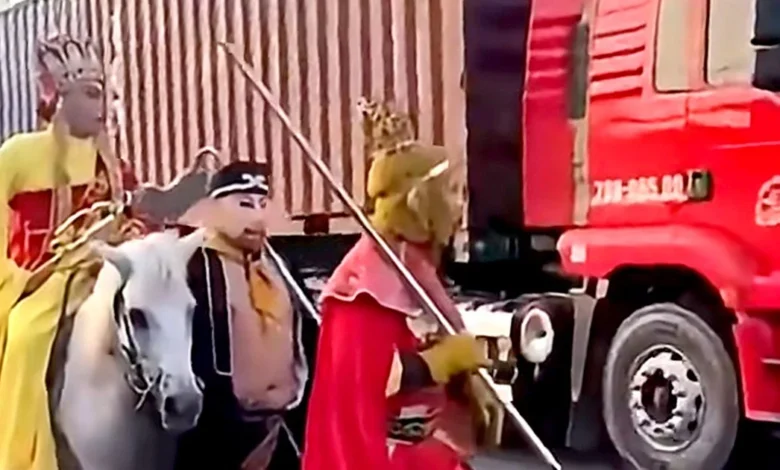
The bustling transport corridors of Ho Chi Minh City experienced an unusual and hazardous disruption on September 20, when a group of four individuals, dressed elaborately as the iconic characters from the classic 16th-century Chinese epic literature Journey to the West, chose to march directly along a major expressway. The spectacle, which quickly went viral across multiple social media platforms, captured the group leisurely strolling through active traffic lanes reserved for high-speed automobiles, heavy trucks, and freight-hauling container vehicles.
The incident unfolded on Phan Văn Khải Road, specifically along the stretch passing through Tân An Hội Commune, located within the suburban jurisdiction of Ho Chi Minh City. While roadside theatrical performances and public stunts are occasionally documented in various parts of the region, carrying out such an uncoordinated procession amidst heavy commercial traffic has ignited widespread public concern, regulatory scrutiny, and swift intervention by local law enforcement agencies.
A Theatrical Procession Amidst Heavy Freight Traffic
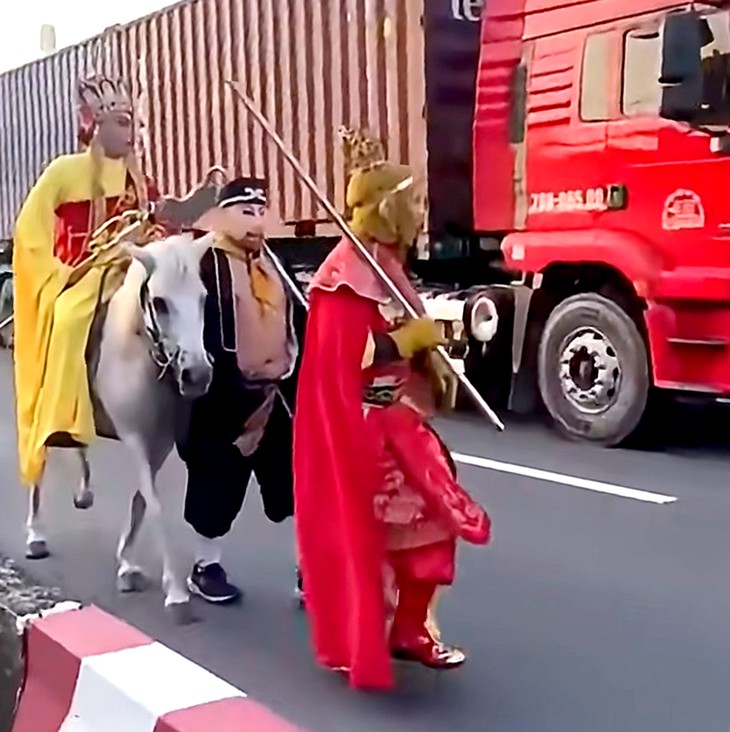
According to video footage shared widely online, the troupe meticulously recreated the legendary pilgrimage team featured in Wu Cheng’en’s timeless literary masterpiece. The quartet consisted of the devout monk Tang Sanzang (Tripitaka), the rebellious and clever Monkey King Sun Wukong, the gluttonous Zhu Bajie (Pigsy), and the steadfastly loyal Sha Wujing (Friar Sand).
In a faithful nod to the original narrative, the actor portraying Tang Sanzang was mounted on a real white horse, leading the procession. Meanwhile, the remaining three disciples—Sun Wukong, Zhu Bajie, and Sha Wujing—walked on foot. However, rather than traversing historical pathways or pedestrian walkways, the group chose to advance directly along the asphalt lane designated strictly for motor vehicles.
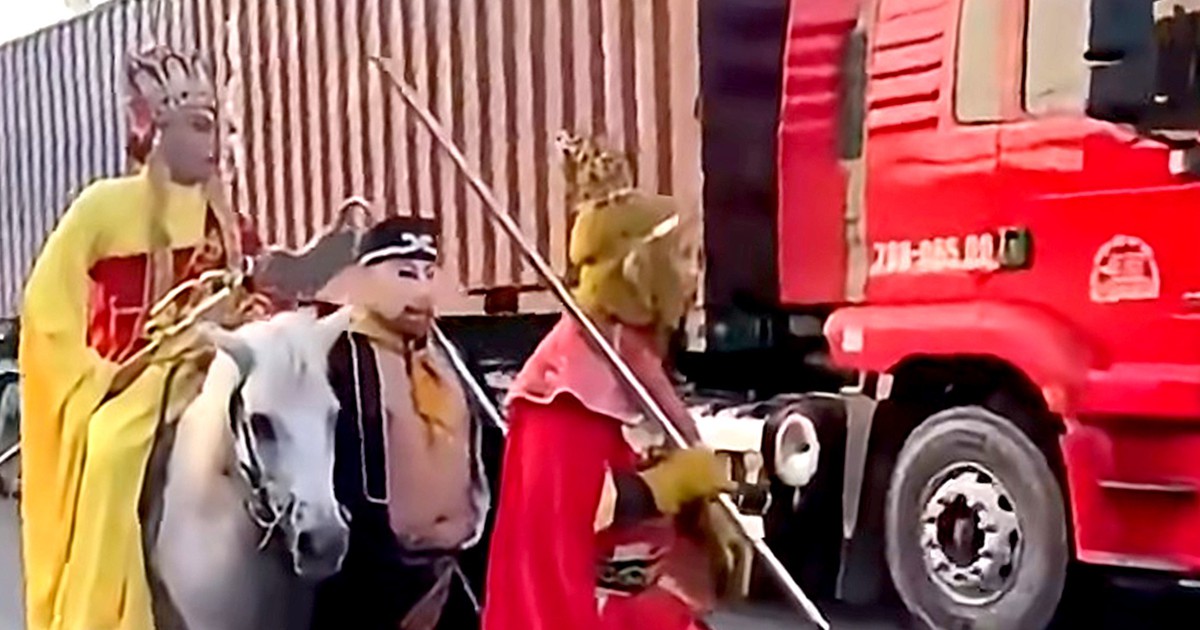
Eyewitness accounts and dashboard camera recordings from motorists indicate that the group was traveling in the direction leading from Tây Ninh Province toward downtown Ho Chi Minh City. The timing of their appearance coincided with peak transit hours on a notoriously congested route, which routinely accommodates a high volume of inter-provincial trade, logistics transport, and daily commuter traffic.
As the eccentric procession advanced down the center of the vehicular lane, commercial truck drivers and long-haul container operators were forced to brake abruptly. Many motorists had to maneuver carefully, reducing their speeds to a crawl and shifting steering angles to avoid colliding with the horse and the walking performers. The unexpected obstacle created an immediate bottleneck, disrupting the smooth flow of regional transit and placing both the performers and unsuspecting drivers in precarious circumstances.
Viral Outcry and Immediate Public Safety Concerns
Within hours of being uploaded to social media networks, the video attracted thousands of views, shares, and commentary. Public sentiment shifted rapidly from initial amusement at the creative costumes to genuine alarm over the blatant disregard for basic road safety regulations.
Many internet users expressed disbelief that individuals would willingly place themselves and others in mortal danger for the sake of online content creation or a performance art stunt. Commentators highlighted the extreme vulnerability of a live horse navigating a concrete highway surrounded by massive multi-axle freight trucks. Given the blind spots inherent in heavy commercial vehicles and the extended braking distances required for semi-trucks traveling at highway speeds, transport safety experts noted that the margin for error during the stunt was perilously narrow.
"This is not just a quirky cultural reference; it is a severe traffic hazard that could have easily resulted in a fatal multiple-vehicle pileup," noted a prominent urban safety advocate based in Ho Chi Minh City. "Highways are designed for high-speed, motorized transit. Pedestrians, livestock, and slow-moving theatrical groups belong entirely outside these corridors."
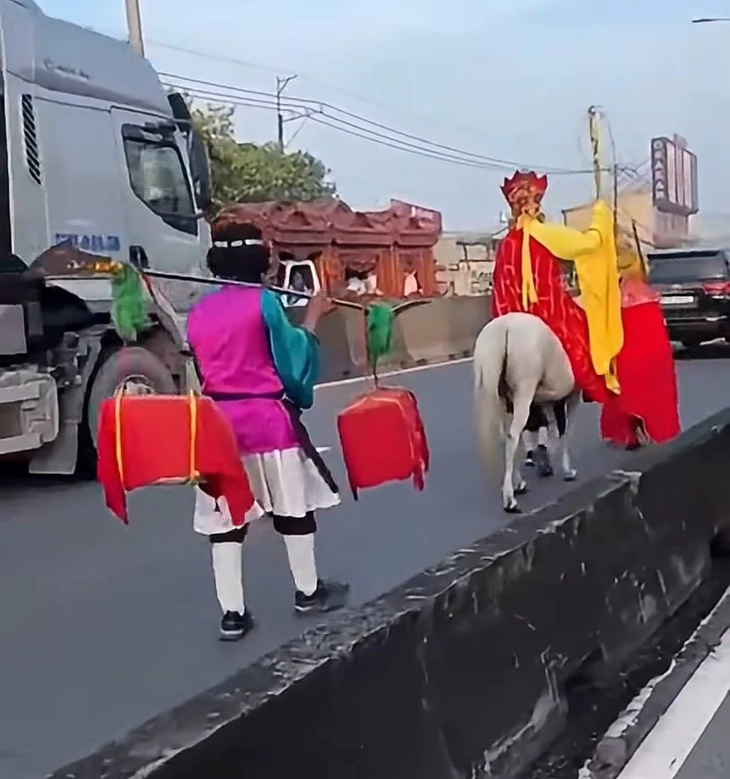
The incident has further fueled ongoing discussions regarding the regulation of content creation in public spaces. In recent years, civil authorities across Southeast Asia have grappled with a rising trend of individuals staging disruptive stunts, pranks, and theatrical performances on public roads to capture algorithmic attention and boost digital engagement. While social media platforms often reward novelty, law enforcement agencies are increasingly drawing a firm line where public safety and infrastructure integrity are compromised.
Official Response and Law Enforcement Investigation
Recognizing the gravity of the incident and the potential precedent it sets, local authorities moved quickly to identify the individuals involved. The Tây Bắc Traffic Police Station, operating under the Traffic Police Department (PC08) of the Ho Chi Minh City Police, confirmed that they have formally launched an investigation into the viral footage.
Investigators are currently collaborating with relevant local administrative units and communal authorities to determine the exact timeline, geographical coordinates, and identities of the four individuals depicted in the video. By examining traffic camera networks, dashcam archives, and digital footprints left by the uploaders, police aim to summon the participants for questioning.
Under current Vietnamese traffic regulations, pedestrians and slow-moving non-motorized entities are strictly prohibited from entering expressways, highways, and designated automobile-only lanes. Furthermore, leading livestock—such as a horse—onto high-speed transit routes without official permits or transport safeguards constitutes a direct violation of administrative codes governing road safety and public order.
Legal experts suggest that depending on the findings of the ongoing police investigation, the individuals involved could face substantial administrative fines for obstructing traffic, trespassing on restricted roadways, and causing public disorder. If the investigation reveals that the stunt resulted in serious disruptions to public services or posed a direct threat to human life, additional legal measures could be pursued.
Broader Implications for Road Safety and Public Awareness
The "Journey to the West" highway incident serves as a stark reminder of the challenges traffic authorities face in balancing modern digital culture with traditional public safety enforcement. As social media algorithms continue to incentivize viral visibility, civic education campaigns must increasingly emphasize that public infrastructure is not a stage for unapproved performances.
Transport authorities in Ho Chi Minh City have reiterated their commitment to maintaining strict discipline along major arterial routes. Officials have urged citizens and content creators to exercise common sense and respect the law, warning that reckless stunts on highways will be met with uncompromising legal penalties.
As the investigation by the PC08 department proceeds, motorists and commuters across the region are reminded to remain vigilant and report any future occurrences of unauthorized activities on high-speed transit corridors. The authorities hope that a decisive response to this incident will deter similar dangerous exploits, ensuring that public highways remain safe and navigable for all lawful users.