Nam Dinh General Hospital Resolves Water Leakage Issues Following Reports in Newly Inaugurated 1.775 Trillion VND Facility

Nam Dinh General Hospital, a major healthcare facility constructed with a total investment of approximately 1.775 trillion VND (around 70 million USD), has recently addressed significant infrastructure issues following media reports highlighting widespread water leakage and moisture accumulation. The modern medical complex, spanning a total land area of approximately 92,500 square meters and featuring five major meticulously designed blocks, was officially inaugurated in June 2025 after enduring several years of being stalled in development limbo. However, less than two years into its operational phase, the hospital faced severe maintenance hurdles that raised questions regarding construction oversight and long-term infrastructure resilience.
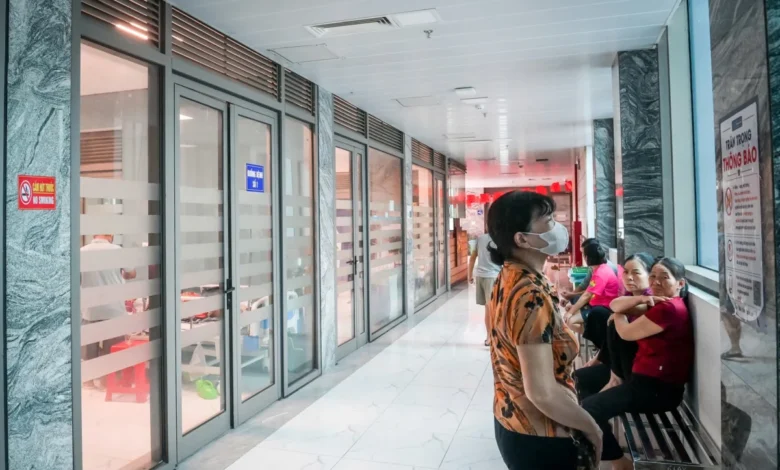
The structural defects first came to public attention when patients, medical staff, and visitors noticed persistent dampness, water seepage originating from ceilings, and pooling water across multiple departments and administrative rooms. In several critical areas, hospital personnel were forced to resort to placing buckets, basins, and makeshift mops on the floors to capture the dripping water, while cautionary wet-floor warning signs had to be strategically deployed to mitigate the imminent risk of slips and falls for vulnerable patients and elderly visitors.
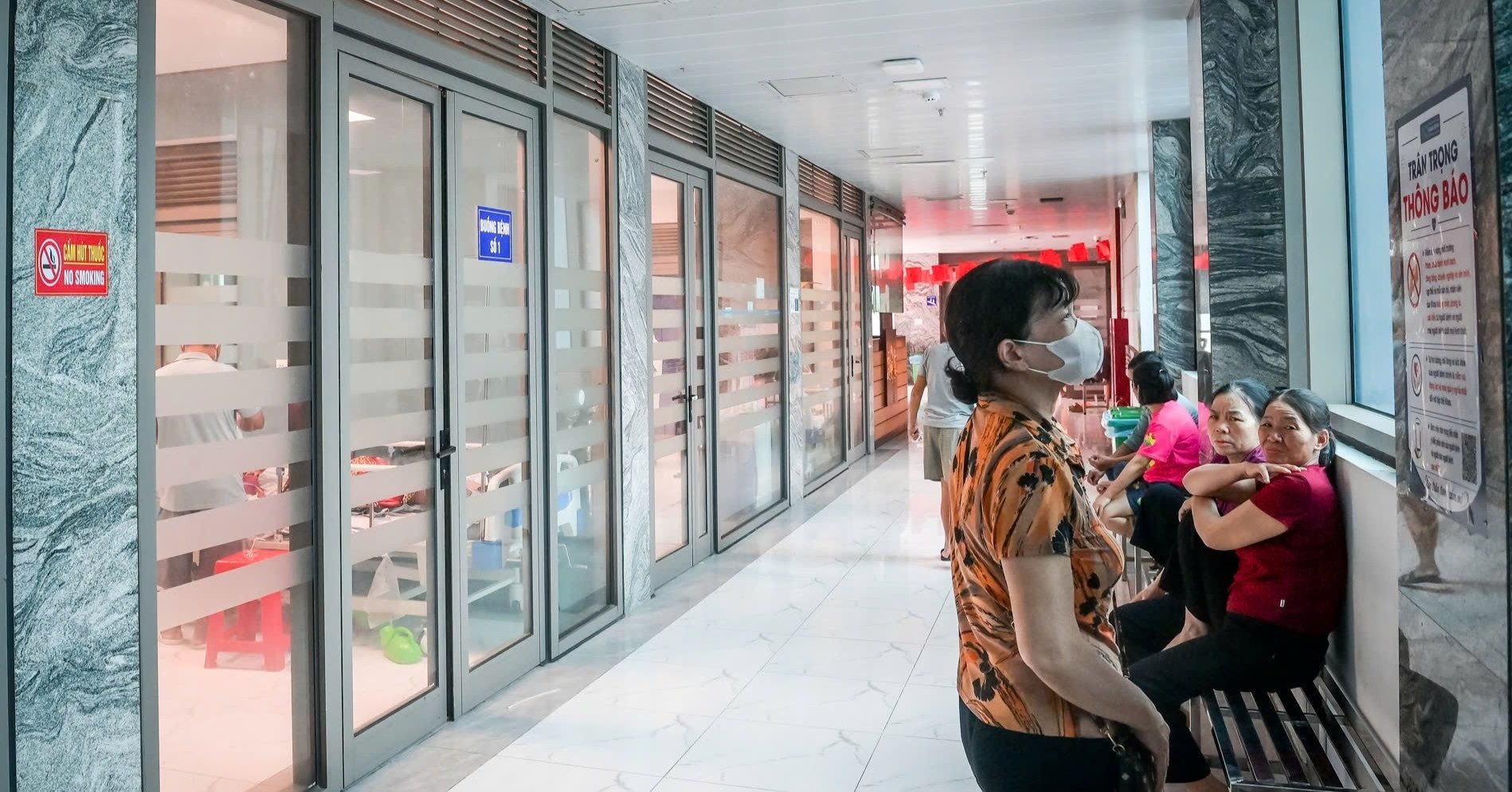
Following the widespread publication of these structural failures by VietNamNet, the project investor, in close coordination with the hospital administration and the primary construction contractors, launched an immediate emergency inspection and remediation campaign to resolve the crisis. The swift response aimed to restore normal medical operations and ensure a safe, sanitary healing environment for both inpatients and medical practitioners.
Chronology of the Infrastructure Crisis and Rapid Remediation
The construction of Nam Dinh General Hospital was managed by the Project Management Board for Civil and Industrial Investment Construction No. 2 of Ninh Binh Province (commonly referred to as Ban 2). After overcoming years of delays, the grand inauguration in June 2025 was met with high praise from the local community, who anticipated that the state-of-the-art facility would vastly improve healthcare access in the region.
However, by late September 2026, severe structural and mechanical flaws began to manifest internally. On September 22, field inspections revealed approximately 20 distinct locations across the hospital complex suffering from water infiltration, persistent dampness, and pooling water. The most heavily impacted areas included the Infectious Disease Department located in Building E, specifically on the third-floor hallway, and Room 4 of the Nephrology Department.
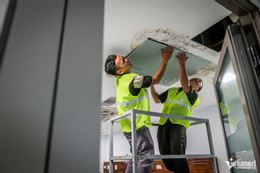
In response to the mounting pressure from media reports and public concern, Ban 2 mobilized approximately 16 specialized construction workers to conduct intensive, round-the-clock repair operations. By late September, significant progress had been made. Maintenance crews thoroughly cleaned and serviced the central air conditioning systems, cleared blocked condensation drainage lines, and patched up compromised ceiling boards. According to project representatives, the comprehensive overhaul of the remaining affected areas is scheduled for completion and total resolution by the end of October.
Identified Causes of Water Infiltration and System Failures
Technical assessments conducted by Ban 2 alongside engineering contractors pinpointed two primary catalysts for the widespread water leakage: failures within the complex climate control infrastructure and vulnerabilities in building expansion joints and exterior sealing.
The first major issue stemmed from the hospital’s extensive air conditioning network. Due to heavy operational usage and a lack of routine preventative maintenance, condensate drainage pumps associated with the cooling systems became obstructed. This blockage caused condensation to overflow, ultimately leaking through suspended ceilings and pooling onto the hospital floors. Furthermore, inspections revealed that roughly 30 percent of the facility’s air conditioning units required urgent cleaning and servicing in accordance with manufacturer warranty guidelines. Once these units were properly flushed, serviced, and recalibrated, the dripping phenomena ceased entirely, allowing the indoor climate to stabilize.
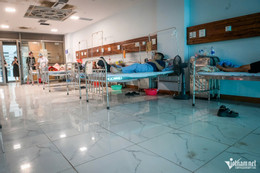
The second major vulnerability involved architectural expansion joints located between the sprawling blocks of the hospital complex. During heavy rainfall, water penetrated compromised sealant joints and degraded silicone window caulking on upper-level facades, trickling down into the wards below. Additionally, improper drainage capacity on large flat roofs and terrace areas exacerbated the pooling of rainwater.
Compounding these structural challenges, project managers highlighted a persistent issue regarding human behavior within the facility. Debris, food waste, and plastic packaging discarded improperly by patients and their families frequently clogged rooftop drainage grates and scuppers, causing localized overflows and stagnant indoor flooding during heavy downpours.
Stakeholder Responses and Patient Reassurance
The sudden emergence of infrastructure defects in a multi-trillion-dong public healthcare project naturally drew public scrutiny, prompting swift communications from project investors and reassuring testimonies from patients and their families.
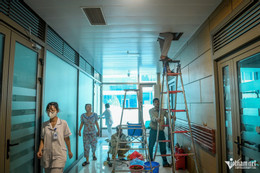
Representing the investor side, officials from Ban 2 acknowledged the severity of the findings and outlined a clear accountability framework. "Following our comprehensive technical checks, we identified roughly 20 specific points of water infiltration and leakage across the hospital. We immediately coordinated with the construction contractors and hospital management to implement robust corrective measures," a Ban 2 representative stated. The representative confirmed that as of late September, about 30 percent of the air conditioning infrastructure had been fully serviced under warranty guidelines, bringing an immediate halt to indoor water accumulation caused by mechanical overflows.
To address the issue of rainwater pooling near expansion joints, Ban 2 and the participating contractors initiated the installation of additional flashing, waterproofing sheets, and high-capacity drainage pipes on upper terrace levels. Simultaneously, the investor has collaborated closely with the hospital administration to step up public awareness campaigns. New internal regulations are being formulated to explicitly prohibit patients and visitors from littering or discarding waste indiscriminately, thereby protecting drainage systems from human-induced blockages.
Patients and their families, who initially expressed anxiety over the deteriorating room conditions, have noted noticeable improvements following the interventions. Mrs. V.T.C., a resident of Vu Ban commune whose relative was undergoing inpatient treatment at the Infectious Disease Department, shared her perspective on the rapid turnaround: "My family member is receiving inpatient treatment here at the Infectious Disease Department. A few days ago, the room where my relative was staying required us to use basins to catch water dripping directly from the ceiling. Fortunately, workers arrived promptly to handle the situation. Now, the room is quite dry, and we feel much more at ease."
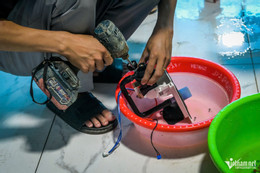
Similarly, in the Nephrology Department’s Room 4, where localized ceiling leaks had previously disrupted patient rest, construction crews successfully halted the water flow, scraped away water-damaged plaster, and restored the ceilings to their original condition once continuous monitoring confirmed the leaks were permanently resolved.
Broader Implications for Public Infrastructure Management
The incident at Nam Dinh General Hospital underscores broader structural and managerial challenges facing large-scale public investment projects in Vietnam. Valued at 1.775 trillion VND, the hospital represents a critical capital investment designed to alleviate overcrowding in provincial healthcare facilities and provide advanced medical services to residents of Nam Dinh and surrounding areas.
When newly constructed public infrastructure—especially high-standard medical facilities—experiences such operational setbacks shortly after handover, it triggers vital discussions regarding quality assurance, post-construction maintenance protocols, and the accountability of project management boards. Medical facilities require sterile, stable, and highly controlled environments; unmanaged moisture and water leakage not only compromise structural integrity but also pose biological and hygiene risks due to potential mold growth and electrical hazards.
Industry experts note that the rapid intervention by Ban 2 and the contractors demonstrates a responsible approach to warranty obligations and public safety. However, the episode serves as a cautionary tale emphasizing the necessity of rigorous pre-handover inspections, proactive maintenance scheduling, and stringent oversight during the construction phase of public works.
As the remediation efforts enter their final phase toward a definitive completion date in October, the focus for Nam Dinh General Hospital will shift toward establishing a permanent, institutionalized facility management protocol. By combining robust engineering solutions with proactive housekeeping and strict behavioral policies for hospital occupants, the facility aims to ensure that its modern infrastructure fully delivers on its promise of providing safe, high-quality healthcare for decades to come.