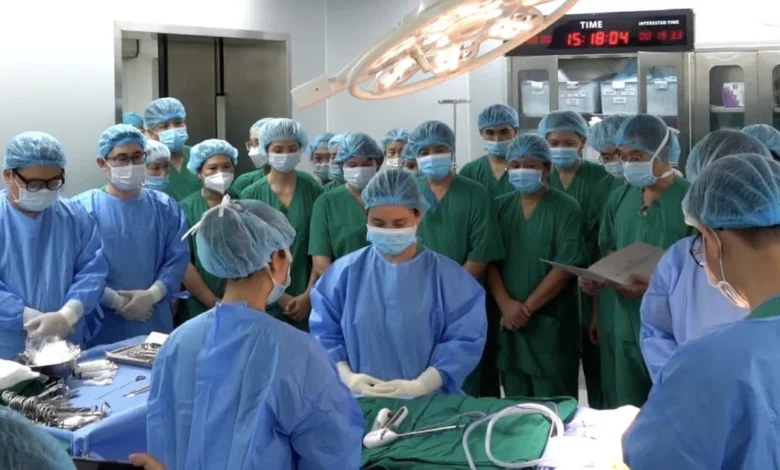
The medical corridors of Saint Paul General Hospital in Hanoi bore witness to an extraordinary moment of profound sorrow and transcendent humanity on September 24, as hundreds of healthcare professionals gathered in a tearful procession to honor one of their own. Bà B.H.A., a 52-year-old administrative and management officer who had dedicated over three decades of her life to the institution, was being wheeled toward the operating theater not as a healer, but as a donor. Following her tragic passing and the clinical confirmation of brain death, her family’s selfless decision transformed an irreplaceable personal loss into a miraculous second chance at life for three critically ill patients suffering from terminal organ failure.
The solemn farewell ceremony held on the afternoon of September 24 was unprecedented in its emotional weight. The donor was not merely a patient; she was a cherished colleague, a familiar face in the hospital’s administrative halls, and a vital part of the institutional fabric that keeps the major metropolitan hospital running. Standing shoulder-to-shoulder in the corridors were physicians, nurses, technicians, and administrative staff from nearly every department, their faces obscured by surgical masks that could not hide tear-filled eyes. As the hospital bed rolled past the honor guard of colleagues who had shared decades of service with her, the silence of the hallway was broken only by quiet sobs and the rhythmic chime of medical equipment—a fittingly poignant soundtrack for a final goodbye within the halls she served for 33 years.
A Life Dedicated to Healing and Public Service
To fully understand the magnitude of Bà A.’s final gift, one must look back at her enduring legacy within the walls of Saint Paul General Hospital. Her journey with the institution began in 1993, marking the commencement of a remarkable 33-year career characterized by unwavering dedication, meticulous attention to detail, and a deep-seated compassion for patients and staff alike.
For nearly 31 of those years, Bà A. served in the hospital’s Neonatology Department. In a high-pressure environment dedicated to the care of fragile newborns, she was a steadfast pillar of operational support, ensuring that clinicians could focus entirely on saving the most vulnerable young lives. Her colleagues remember her as a remarkably diligent, highly responsible, and cheerful professional who approached every administrative hurdle with a calm demeanor and a solution-oriented mindset. Even in later years, when she transitioned to the administrative and management office, her connection to the clinical mission of the hospital never wavered. She remained an integral part of the Saint Paul hospital family—a beloved figure whose institutional memory, warmth, and relentless work ethic left an indelible mark on generations of medical personnel.
A Rapid Decline and the Diagnosis of Brain Death
Bà A.’s sudden medical crisis unfolded with devastating speed. On September 20, she was admitted to Saint Paul General Hospital presenting with acute symptoms, including high fever, severe dizziness, lightheadedness, and persistent nausea. Given her medical history—she had previously been diagnosed with a cerebral arteriovenous malformation (specifically a cavernous malformation) and had undergone Gamma Knife radiosurgery treatment three years prior—the medical team immediately recognized the potential severity of her condition.
Despite intensive monitoring and aggressive therapeutic interventions administered by the hospital’s top neurology and emergency specialists, Bà A.’s neurological status rapidly deteriorated over the next 48 hours. Recognizing the critical nature of her trajectory, the hospital convened a multidisciplinary panel of medical experts to conduct rigorous clinical evaluations for brain death in strict accordance with national medical standards and legal protocols.
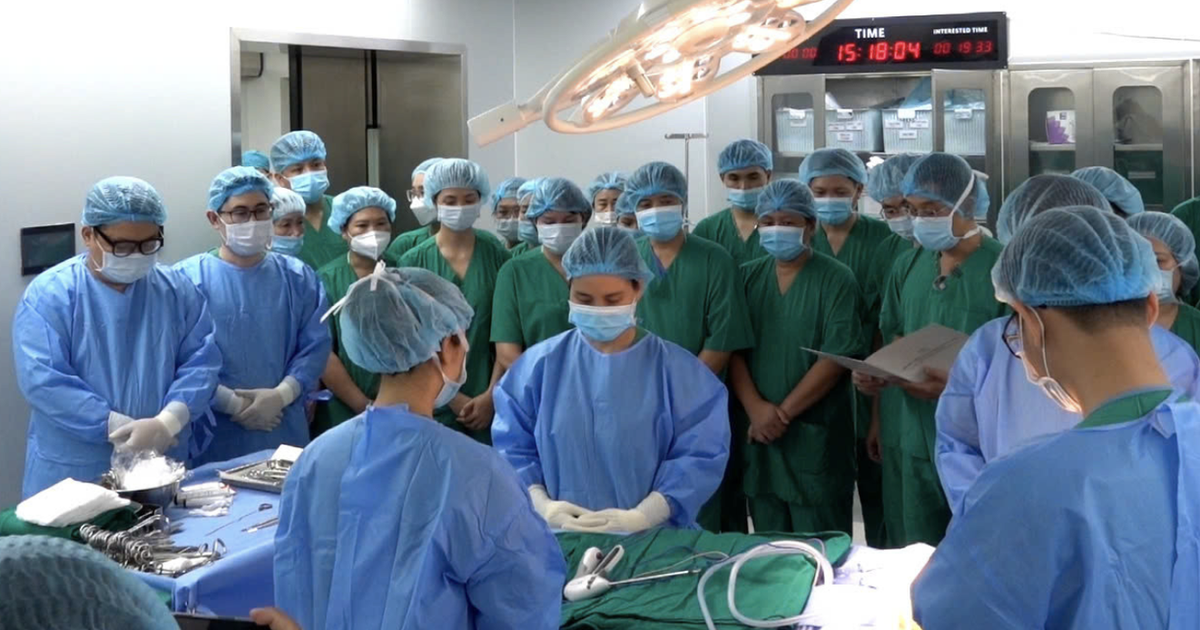
The evaluation process was conducted with the utmost precision and adherence to professional ethics. The panel performed three comprehensive brain death examinations: the first at 11:00 PM on September 23, followed by subsequent assessments at 5:00 AM and 11:00 AM on September 24. Following the completion of the third evaluation, the assembled specialists formally and unanimously concluded that the patient had suffered irreversible brain death with zero chance of neurological recovery.
The Ultimate Gift: Turning Tragedy Into Triumph
Faced with the profound devastation of losing their beloved wife and mother, Bà A.’s family was confronted with an agonizing reality. Yet, amid their immense grief, they made a decision of extraordinary nobility. Understanding the desperate plight of patients languishing on national organ transplant waiting lists—and perhaps reflecting on the lifelong healing mission that defined Bà A.’s career—the family elected to donate her viable organs.
Organ donation after brain death remains a complex and emotionally charged subject globally, and particularly within Southeast Asia, where cultural and traditional perspectives on bodily integrity can sometimes hinder public participation. However, the family’s decision stands as a testament to profound altruism. By choosing to donate her organs, they ensured that Bà A.’s physical journey would not end in finality, but would instead echo through the lives of others, translating personal tragedy into communal salvation.
The poignant irony of the situation was not lost on the hospital staff: the very medical professionals who had worked alongside Bà A. as peers were now the surgeons tasked with performing the multi-organ procurement procedures. Dr. Bùi Hoàng Thảo, head of the Social Work Department at Saint Paul General Hospital, captured the collective sentiment of the staff during the pre-surgery tribute: "Until the very last moments, our colleague and her family fulfilled the highest and most noble duty by donating precious parts of her body to save other critically ill patients. The image of our colleague with her radiant smile, positive spirit, and unwavering dedication to her work will forever remain etched in our memories."
Dr. Nguyễn Đức Long, Director of Saint Paul General Hospital, expressed profound gratitude during the farewell ceremony, emphasizing the far-reaching resonance of the family’s choice. "She is leaving us, but a part of her physical body continues to reside here, blending into the vital breath of other human beings," Dr. Long stated. "The entire hospital collective wishes to express our deepest gratitude for this supreme act of benevolence by our colleague and her family."
In a demonstration of institutional care and solidarity, the hospital administration announced comprehensive support measures for the grieving family. Saint Paul General Hospital has committed to managing all post-mortem logistics, ensuring the family receives all statutory benefits and welfare policies, and advocating for formal commendations from municipal and national health authorities. Furthermore, the hospital has pledged long-term accompaniment, career counseling, and support for Bà A.’s two children, ensuring that the family of a healthcare hero is never left to navigate the future alone.
A Complex Multi-Hospital Coordination and Surgical Triumph
Immediately following the commemorative tribute, a complex, high-precision multi-organ harvesting and transplantation procedure commenced. The operation was executed through a seamless collaborative effort involving Saint Paul General Hospital, Viet Duc Friendship Hospital (a premier surgical and transplant center in Vietnam), and the National Coordinating Center for Human Organ Transplantation.
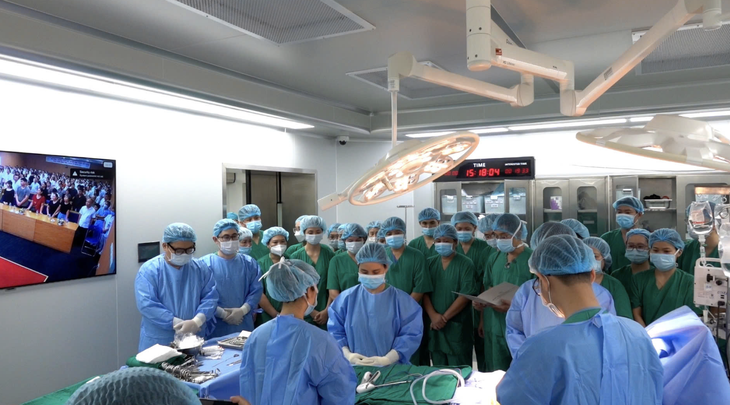
The logistics of organ transplantation require split-second timing, impeccable coordination, and advanced surgical skill. Bà A.’s organs were allocated to save the maximum number of lives possible:
- Her two kidneys were successfully transplanted into two patients suffering from end-stage chronic renal failure, who had been undergoing long-term dialysis at Saint Paul General Hospital. These procedures significantly improved the hospital’s growing regional transplant registry.
- Her liver was carefully preserved, packaged, and rapidly transported under police and medical escort to Viet Duc Friendship Hospital, where it was successfully transplanted into a patient facing imminent, life-threatening liver failure.
According to hospital statistics, this marks the sixth successful brain-dead organ donor case recorded at Saint Paul General Hospital. Since the beginning of 2026 alone, the facility has successfully coordinated multiple organ harvests from brain-dead donors, facilitating kidney transplants for 16 patients and bringing the hospital’s cumulative total of successful kidney transplant procedures to 82. These milestones underscore the hospital’s growing capability as a leading regional hub for organ procurement and transplantation medicine in northern Vietnam.
Broader Implications: The Cultural and Structural Evolution of Organ Donation in Vietnam
The heartbreaking yet inspiring story of Bà A. highlights several critical themes in the ongoing evolution of Vietnam’s healthcare landscape. First, it underscores the shifting societal perceptions regarding organ donation. Historically constrained by deeply ingrained cultural beliefs concerning bodily wholeness after death, public willingness to pledge organs has historically lagged behind Western nations. However, concerted public awareness campaigns, institutional transparency, and high-profile endorsements—including high-ranking government officials registering as organ donors—have gradually fostered a more receptive cultural climate.
When healthcare workers themselves—those who understand the agonizing scarcity of donor organs firsthand—choose to become donors, it exerts a powerful normalizing influence on public attitudes. It bridges the gap between clinical reality and civic duty, demonstrating that organ donation is the ultimate expression of professional and human solidarity.
Second, the successful execution of this multi-hospital procurement highlights the expanding capacity and infrastructural maturity of Vietnam’s coordinated transplant network. The ability to seamlessly transport a viable liver across metropolitan traffic to Viet Duc Friendship Hospital while simultaneously performing dual kidney transplants on-site demonstrates a high degree of inter-institutional trust, logistical efficiency, and adherence to international medical standards.
Finally, the narrative surrounding Bà A. serves as a poignant reminder of the unseen human sacrifice embedded within the medical profession. Administrative and support staff, though frequently out of the spotlight compared to frontline surgeons and physicians, form the indispensable backbone of healthcare delivery. Bà A.’s 33-year tenure at Saint Paul General Hospital—spent quietly ensuring that systems functioned and vulnerable newborns received care—culminated in a final act of public service that eclipsed her administrative title.
As her organs begin to function within the bodies of recipients across Hanoi, Bà B.H.A. leaves behind a legacy defined not merely by decades of diligent employment, but by a transcendent final contribution. Her story will undoubtedly endure in medical textbooks and institutional folklore, serving as an enduring beacon of altruism, professionalism, and the profound capacity of the human spirit to conquer death through the gift of life.