Reflect Orbital, a California-based aerospace startup, has ignited a global debate regarding the ethics, legality, and environmental impact of artificial light by announcing its plans to sell sunlight from space. The company aims to deploy a constellation of massive, highly reflective mirrors into low Earth orbit (LEO), designed to redirect solar radiation toward specific locations on the surface that are currently shrouded in darkness. While the company markets this technology as a revolutionary solution for energy efficiency and emergency response, the scientific community and environmental advocates have raised significant concerns regarding the consequences of interfering with the natural night cycle.
The Mechanism and Strategic Vision
The core of Reflect Orbital’s project revolves around the deployment of satellite-mounted mirrors, specifically the Earendil-1 model, which features a 18-by-18-meter reflective surface. The strategic intent is to provide illumination to solar farms after sunset to extend their operational hours, or to provide critical, high-intensity lighting for disaster relief zones where ground-based infrastructure has failed.
The company asserts that its technology is highly targeted. By utilizing advanced orbital mechanics and precise positioning, Reflect Orbital claims they can deliver a beam of light to a specific coordinate without affecting surrounding areas. However, this assertion has been met with skepticism from atmospheric scientists. Due to the scattering effect of the Earth’s atmosphere, light redirected from space does not behave like a laser; it interacts with aerosol particles and molecules in the atmosphere, causing the beam to spread significantly.
A Chronology of Controversy
The project reached a critical juncture in July, when the U.S. Federal Communications Commission (FCC) granted Reflect Orbital permission to deploy and operate the Earendil-1 satellite. It is important to note, however, that the FCC’s approval was narrow in scope, focusing primarily on the use of specific radio frequencies required to command and control the satellite, rather than a blanket endorsement of the environmental impact of the light reflection itself.
By August, the backlash began in earnest. A coalition led by the environmental legal organization Earthjustice filed a petition with the FCC, demanding a formal review of the project. The petition argued that the deployment of such technology would have cascading, negative effects on biological systems. The scientific community notes that many nocturnal species, including insects and birds, rely on natural circadian rhythms and the contrast between day and night to hunt, mate, and navigate. Any disruption to this cycle could have disastrous consequences for biodiversity.
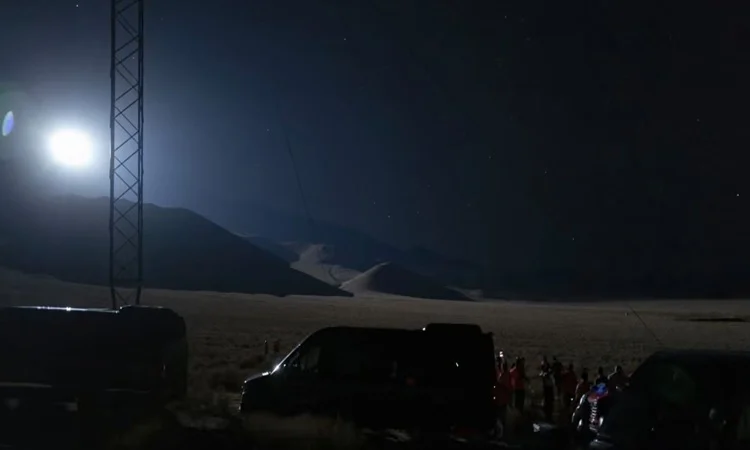
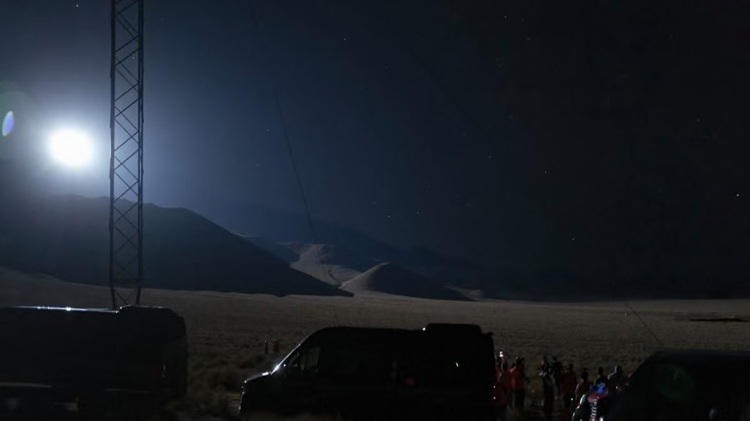
In October, the tension escalated as Reflect Orbital conducted ground-based simulations near Lone Pine and the Sierra Nevada mountain range in California. The company utilized high-powered, mobile spotlights to mimic the potential beam intensity of their orbital mirrors. Local residents and observers described the test as "blinding," fueling further public outcry and strengthening the arguments of those who view the project as an exercise in "light pollution on steroids."
The Scientific Reality: Atmospheric Scattering
The primary contention between the company and the scientific community lies in the physics of light diffusion. In a study published in the journal IOP Science last year, researchers modeled the behavior of solar radiation reflected through the atmosphere. The findings suggested that the atmospheric scattering effect is far more pronounced than Reflect Orbital’s promotional materials imply.
When a beam of light from a 54-meter mirror (a larger version currently in the design phase) hits the atmosphere, the particles and aerosols act as a prism, scattering the radiation across a vast area. According to the modeling, a region as far as 34 kilometers away from the target zone could still experience significant brightness, potentially rendering the sky as luminous as a full moon or brighter. This effectively eliminates the "targeted" nature of the product, potentially impacting vast swaths of land that did not request or desire such illumination.
International and Regulatory Complexities
The project’s logistical framework adds another layer of complexity. Reflect Orbital has partnered with the Indian aerospace company Skyroot Aerospace for the launch of its satellites, specifically using the Vikram-1 and Vikram-1U launch vehicles. This international collaboration brings the project under the jurisdiction of the Indian National Space Promotion and Authorization Centre (IN-SPACe).
IN-SPACe regulations are rigorous, mandating strict adherence to environmental impact assessments and safety protocols. Because the satellites are launched from India, they must comply with both Indian space law and international treaties regarding the use of space. This creates a regulatory "gray area": if a U.S.-based company uses an Indian-launched satellite to shine light on a third-party country, which nation’s regulatory framework takes precedence? Currently, there is no international consensus on the "right to darkness" or the governance of space-based illumination, leaving a significant gap in global policy.
Broader Implications for Astronomy and Ecology
The project has drawn sharp criticism from the astronomical community, which is already struggling to maintain dark skies in the face of the massive increase in LEO satellite constellations. Astronomers argue that even a small number of these reflective surfaces will increase the baseline light pollution, making deep-space observation increasingly difficult.
Furthermore, the public health implications of disrupting human circadian rhythms cannot be overlooked. For decades, the medical community has warned about the health risks associated with excessive exposure to artificial light at night (ALAN), including sleep disorders, hormonal imbalances, and increased risks of certain metabolic conditions. The introduction of a "second sun" in the night sky, even intermittently, presents an unprecedented challenge to the biological equilibrium of the planet.
The Path Forward: Data vs. Public Perception
Reflect Orbital has attempted to address these concerns by framing the project as an experimental endeavor. They argue that the Earendil-1 mission is, first and foremost, a data-gathering exercise. By operating the satellite, they hope to measure actual light diffusion, the efficacy of the reflection, and the precise control mechanisms required to minimize collateral illumination.
"We are committed to working with the scientific community, local populations, and regulatory bodies as we scale our testing," a company spokesperson indicated in a recent statement. However, for many, the damage is already perceived as inevitable. The fundamental challenge for Reflect Orbital is to prove that a technology designed to alter the planet’s natural light levels can be controlled to a degree that satisfies international environmental safety standards—a threshold that, according to current atmospheric models, may be physically impossible to meet.
As the company prepares for its upcoming launches, the project serves as a stark reminder of the accelerating commercialization of space and the lagging pace of international law. Whether Reflect Orbital becomes a pioneer in green energy infrastructure or a cautionary tale about the unintended consequences of human ingenuity remains to be seen. For now, the global debate over the night sky is just beginning, and the pressure on regulators to define the limits of orbital interference has never been greater.
Related posts: