Israel Faces Political Paralysis Following Inconclusive Election Results and Looming Regional Tensions

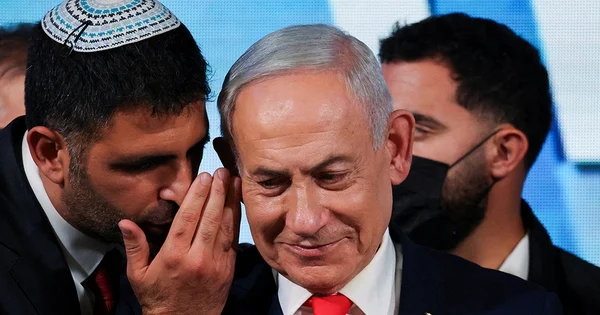
The political landscape in Israel has plunged into a state of profound uncertainty following the parliamentary elections held on October 27, 2026. As the final ballots are tallied, the results have confirmed a fragmented Knesset, leaving no single political bloc with a clear mandate to form a stable government. Prime Minister Benjamin Netanyahu, leading the Likud party, finds himself at a critical juncture, struggling to bridge the divide between his nationalist allies and the opposition, neither of which has secured the necessary majority to command the 120-seat legislature.
According to projections from The Times of Israel, the Likud-led coalition currently holds 53 seats, while a loose alliance of opposition parties, spearheaded by former Chief of Staff Gadi Eisenkot, accounts for 48 seats. The Arab parties, representing a significant segment of the electorate—approximately 21 percent of the population—are projected to secure 19 seats. While the remaining votes are still being processed, analysts suggest the final outcome will not significantly alter the parliamentary arithmetic, ensuring that the stalemate persists as the primary feature of Israeli governance in the coming weeks.
A Chronology of the 2026 Election Cycle
The path to this impasse began months prior, marked by a volatile public mood shaped by lingering security concerns and internal social fissures. Since the October 7, 2023, attacks, the Israeli electorate has remained deeply polarized regarding the government’s security strategy and its approach to regional diplomacy.
The campaign season was characterized by heated rhetoric and a shift in traditional alliances. Netanyahu, a veteran of Israeli politics, campaigned on a platform of "security and strength," emphasizing his experience in managing the complex threats posed by regional adversaries. Conversely, the opposition, led by Gadi Eisenkot, focused on the need for "national renewal," criticizing the incumbent administration for its inability to provide long-term stability and for the economic fallout resulting from prolonged military mobilization.
On election day, October 27, 2026, voter turnout was significant, reflecting the high stakes of the contest. Despite the urgency, the exit polls immediately signaled a deadlock, mirroring the political fragmentation that has plagued Israel in several election cycles throughout the early 2020s.
The Mathematics of the Impasse
The current configuration of the 120-seat Knesset poses a significant challenge for any potential Prime Minister. To form a government, a coalition must command a minimum of 61 seats. The 53 seats held by the Likud and its right-wing allies fall short, and the 48 seats held by the opposition parties are equally insufficient.
The pivotal role, therefore, rests with the Arab parties. However, political analysts note that a formal alliance between the mainstream right-wing parties and the Arab factions remains highly improbable due to deep-seated ideological differences. Furthermore, Gadi Eisenkot has maintained a firm stance on potential partnerships, insisting that any coalition must explicitly recognize Israel’s status as a Jewish state and designate groups such as Hamas as terrorist organizations—a condition that creates significant friction with potential Arab partners.
Tel Aviv-based political commentator Aviv Bushinsky remarked that Israeli society remains deeply divided, noting that the political discourse has not yet matured to accommodate a cross-ethnic governing coalition. "The social fabric of Israel was fragile before the events of 2023, and the post-conflict reality has only deepened the mistrust between political camps," Bushinsky stated.
Presidential Intervention and the Path Forward
In the coming week, President Isaac Herzog is expected to hold formal consultations with the leaders of all parliamentary factions. Traditionally, the President tasks the leader of the party with the highest number of recommendations to form a government. Given the current numbers, it is likely that Netanyahu will be granted the first opportunity to attempt negotiations.
The failure to reach a consensus within the allocated timeframe could force Israel into yet another round of elections—a scenario President Herzog has publicly expressed a desire to avoid. Throughout this process, Benjamin Netanyahu will continue to serve as the caretaker Prime Minister, maintaining authority over the executive branch but lacking the legislative backing to implement long-term policy shifts.
Regional Security and the Iran Factor
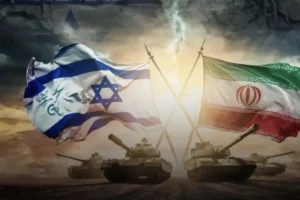
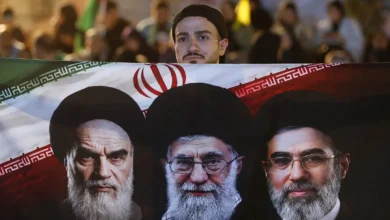
The election results are being viewed through the lens of regional security, particularly concerning the escalating tensions with Iran. Before the vote, Netanyahu frequently warned that he would take decisive action to neutralize the current leadership in Tehran. This rhetoric served as a campaign pillar, intended to consolidate his base by projecting an image of strength.

Simultaneously, international observers have noted behind-the-scenes efforts to mitigate the risk of a full-scale regional conflict. Reports indicate that U.S. Deputy Secretary of State JD Vance has been in communication with Mohsen Rezaei, the Secretary of Iran’s Supreme National Security Council, regarding the possibility of reviving diplomatic channels to prevent further escalation.
However, the threat of military action remains tangible. Following the U.S. midterm elections scheduled for November 3, there is speculation among regional experts that Israel might launch a tactical military operation against Iranian interests if diplomatic avenues remain closed. According to The Jerusalem Post, a conflict with Iran could, ironically, serve to consolidate domestic support for the government, as it would shift the national focus away from the current political gridlock toward existential national security concerns.
The Diplomatic Landscape
The international response to the Israeli political stalemate has been one of cautious observation. Foreign ministers from across the globe have urged all parties to prioritize stability, recognizing that a paralyzed Israeli government complicates ongoing negotiations in the Middle East.
Foreign Minister of Iran, Abbas Araghchi, recently addressed the situation, noting that Tehran has been in discussions with regional mediators regarding a potential seven-day ceasefire plan designed to end hostilities in the Middle East and stabilize the Strait of Hormuz. Despite these overtures, a high-level Iranian official speaking on condition of anonymity to Reuters dismissed current proposals from Qatar as "unacceptable," reaffirming that Iran’s core policies, particularly regarding its nuclear and regional defense strategies, remain non-negotiable.
Broader Implications and Future Outlook
The inability of the Israeli political system to produce a clear winner suggests that the country is entering a period of prolonged transition. Beyond the immediate task of forming a cabinet, the next government will face daunting challenges:
- Economic Stability: The long-term impact of military mobilization and political uncertainty has placed a strain on the Israeli economy. Investors are watching closely to see if the budget deficit can be managed without significant tax hikes or cuts to public services.
- Social Cohesion: The deep divides exposed during the election campaign indicate a need for a new social contract. Addressing the grievances of the diverse segments of the population will be essential to preventing future civil unrest.
- Regional Strategy: Regardless of who leads the government, Israel must navigate an increasingly complex regional landscape. The relationship with the United States, in particular, will be a critical factor in determining how Israel approaches its confrontation with Iran and its long-term security architecture.
As President Herzog prepares to initiate the formal process of government formation, the international community awaits a signal of stability. For now, however, Israel remains in a state of suspended animation, with its political future resting on a knife-edge of negotiation, compromise, and the looming shadow of regional instability. The coming weeks will not only determine the leadership of the state but will also set the tone for Israel’s domestic and international policy for years to come.