Vietnamese engineer develops autonomous rubber tapping robot to revolutionize sustainable latex production

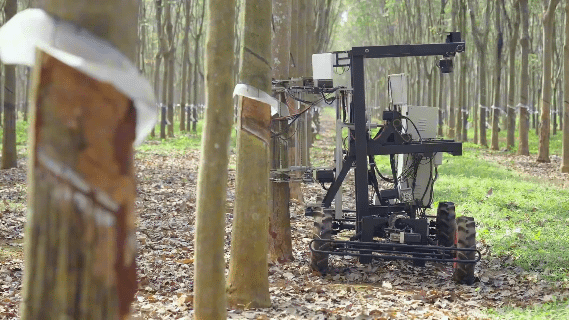
In a significant breakthrough for the agricultural sector, engineer Minh Tam from Dong Nai, Vietnam, has successfully developed an autonomous robotic system designed to perform the labor-intensive task of tapping rubber trees. This technological advancement, showcased at the 2026 Science Innovation Awards, promises to address long-standing labor shortages, health concerns for workers, and yield efficiency issues that have plagued the global rubber industry for decades. By mimicking and refining the delicate human touch required for latex extraction, the robot represents a pivotal shift toward the digitalization of plantation management.
The Engineering Challenge: A Precision Operation
The traditional method of rubber tapping is a physically demanding task that requires workers to labor in the early hours of the morning—often between 2:00 AM and 5:00 AM. This timing is crucial because it aligns with the tree’s natural physiological cycle for maximum latex flow. However, the environment is harsh: workers face high humidity, poor lighting, low oxygen levels, and exposure to carbon dioxide. Furthermore, the repetitive, precise motion required to cut the tree bark without damaging the cambium—the layer responsible for tree growth—is difficult to maintain over long shifts.
If a worker cuts too deeply, the tree is permanently damaged; if the cut is too shallow or inconsistent, the latex yield drops significantly. The robot developed by Mr. Tam, the founder of Tan An Rubber and Robot Company, utilizes a rigid frame that clamps onto the tree trunk to stabilize a specialized cutting head. Unlike human laborers who often rely on a "stop-and-start" motion to avoid over-cutting, the robotic system employs a continuous, fluid motion. This precision ensures a uniform cut depth of approximately 1.0 to 1.3 millimeters, which is the optimal depth for maximizing output while preserving the tree’s health.
Chronology of Development
The project traces its origins back to 2022, when Mr. Tam, an expert in precision mechanical engineering, began collaborating with rubber enterprises seeking automation solutions. The initial prototypes faced numerous obstacles, including difficulties in navigating uneven terrain, adjusting to trees with irregular shapes or tilts, and maintaining accuracy in variable weather conditions.
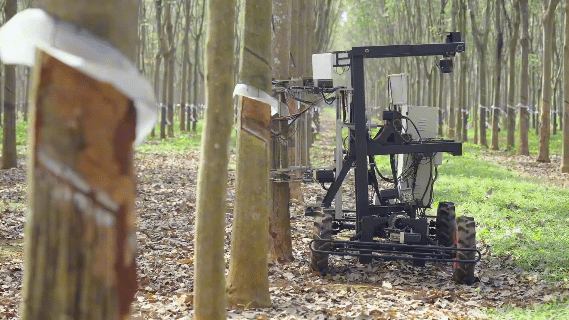
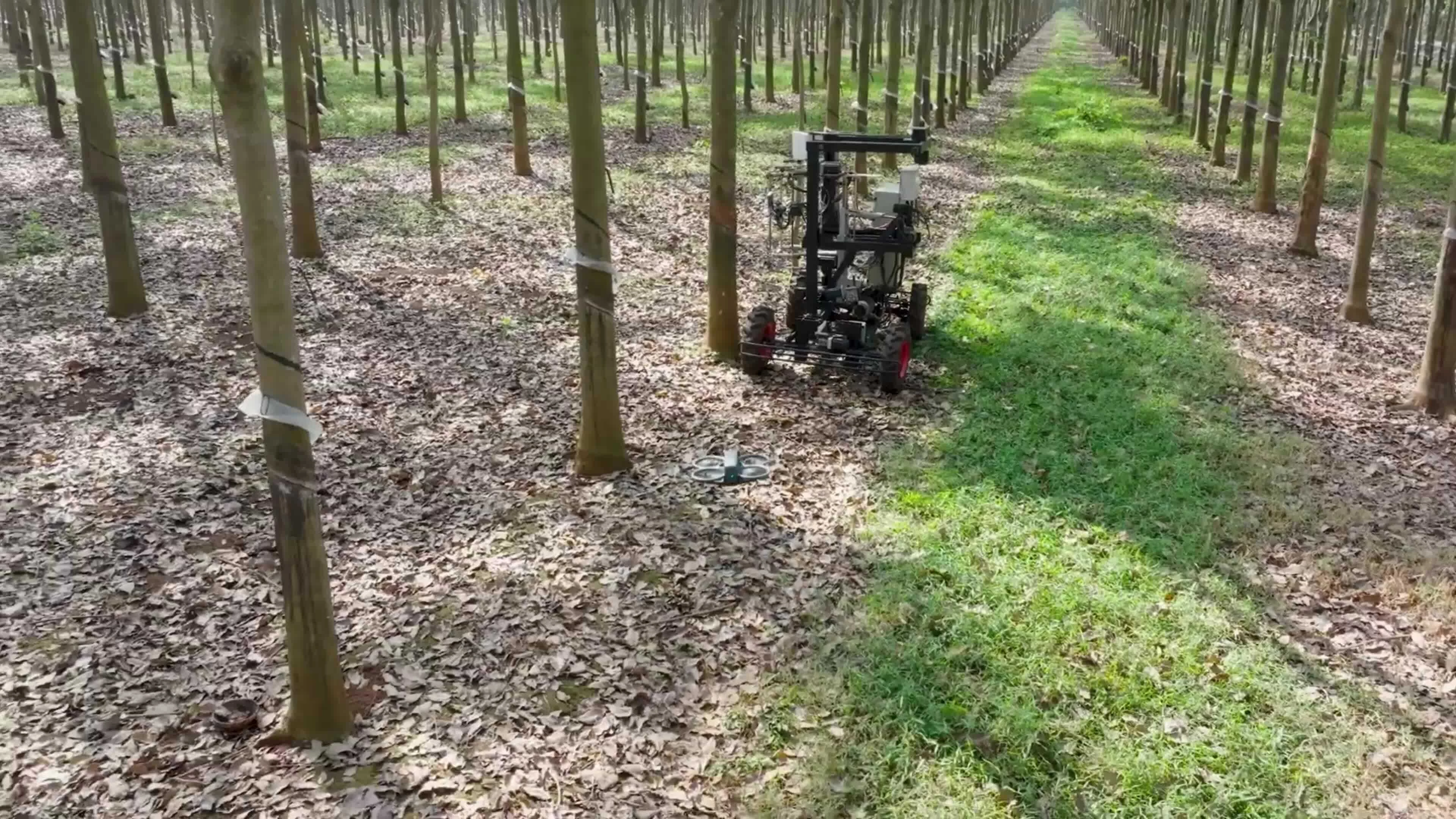
Between 2022 and 2024, the development team focused on refining the navigation and cutting mechanisms. A critical milestone was reached in mid-2026 when the robot’s cutting operation achieved full maturity. During trial runs at the Dong Nai Rubber Corporation, a test plot of 51 trees equipped with these robots demonstrated a 50% increase in latex yield compared to manually tapped control groups. The team successfully transitioned from relying on GPS—which proved unreliable in dense forest canopies—to a sophisticated LiDAR system. This laser-based sensor allows the robot to measure distance and scan the tree surface with a positional margin of error of less than three centimeters.
Technical Specifications and Operational Efficiency
The current iteration of the robot is a robust, metallic structure weighing less than ten kilograms. It is designed to operate independently during the night, typically from 8:00 PM until 6:00 AM. This extended operational window allows for greater efficiency than a standard human shift. One supervisor is currently required to monitor ten units, stepping in only if a mechanical malfunction occurs. During the day, the robots remain stationary for battery charging and maintenance, while workers perform the secondary task of collecting the latex and performing quality checks on the bark.
Despite these advancements, the robot still operates at a slower cycle time than a highly skilled human tapper. A single tapping cycle currently takes approximately 45 seconds, whereas a seasoned worker can perform the task faster. However, the consistency of the machine and its ability to operate for many consecutive hours without fatigue significantly offset this time gap. Mr. Tam and his team have set an ambitious goal to reduce the cycle time to 20 seconds, matching human speed while maintaining superior precision.
Economic and Industry Implications
The rubber industry in Vietnam currently employs approximately 300,000 workers, with global employment in the sector reaching an estimated 2.5 million. The industry is facing a demographic shift; younger generations are increasingly avoiding the arduous, low-paying, and health-hazardous nature of plantation work. The "specialized labor" classification of rubber tapping, combined with high rates of respiratory and skin conditions among workers, has led to a shrinking labor pool and premature retirement of skilled tappers.
From a financial perspective, the current unit cost of the robot is 420 million VND (approximately $16,500 USD). While this represents a significant initial capital expenditure, the team has calculated a return on investment (ROI) timeframe of approximately 2.7 years when deploying a fleet of ten robots supported by one human supervisor. This model is highly attractive to large-scale plantations that struggle with consistent labor availability.
Expert Analysis and Future Outlook
At the 2026 Science Innovation Awards, the panel of judges recognized the system as one of the top five most impactful enterprise innovations. The product is seen as a viable solution for large plantations of 100 hectares or more, where economies of scale can be fully realized.
"This is not merely an incremental improvement; it is a fundamental shift in the harvesting paradigm," noted one industry analyst familiar with the project. "By decoupling the yield from the physical limitations of human labor, companies can ensure consistent production quality and volume, regardless of seasonal labor migration or regional workforce shortages."
The broader implications extend to the sustainability of the rubber industry. Consistent, precision-cut bark allows trees to heal more effectively, potentially extending their productive lifespan. Furthermore, the automation of these tasks could lead to safer working conditions, as human involvement shifts from high-risk manual labor to high-tech supervision and systems management.
As the team prepares for the next phase, the focus is on securing additional investment to scale manufacturing and conduct larger field trials. Mr. Tam remains optimistic, noting that while the technology is ready, the challenge lies in shifting a traditional industry that has operated under the same manual principles for over a century. By providing a proven, data-backed alternative to traditional labor, the Tan An Rubber and Robot Company aims to establish a new standard for global natural rubber production, proving that even the oldest agricultural practices are ripe for a digital revolution.
Conclusion: A New Era for Agriculture
The success of this robotic system marks a significant milestone in agricultural technology. By solving the complex interaction between mechanical precision and biological variability, the team has demonstrated that the future of commodity production lies in the fusion of robotics and environmental monitoring. As the industry faces mounting pressures from labor shortages and the need for higher output efficiency, innovations like the one presented by Mr. Tam provide a clear roadmap for a more stable and sustainable future in the rubber industry. The next steps for the project will involve rigorous stress-testing under varied climate conditions to ensure the technology is robust enough for global adoption across diverse geography, from the humid forests of Vietnam to the sprawling plantations of South America and Africa.
Related posts: