Vietnam’s strategic ambition to achieve double-digit GDP growth by 2027 represents a pivotal transition in the nation’s economic trajectory. To reach this ambitious milestone, the government is prioritizing a comprehensive framework that hinges on the mobilization of approximately 300 billion USD in annual investment, coupled with significant structural improvements in productivity and capital efficiency. This objective, discussed extensively during the Autumn Economic Forum 2026 (AEF 2026), marks a departure from traditional growth models, aiming to propel Vietnam into the ranks of high-income nations by 2045 and avert the "middle-income trap."
The Strategic Imperative for Double-Digit Growth
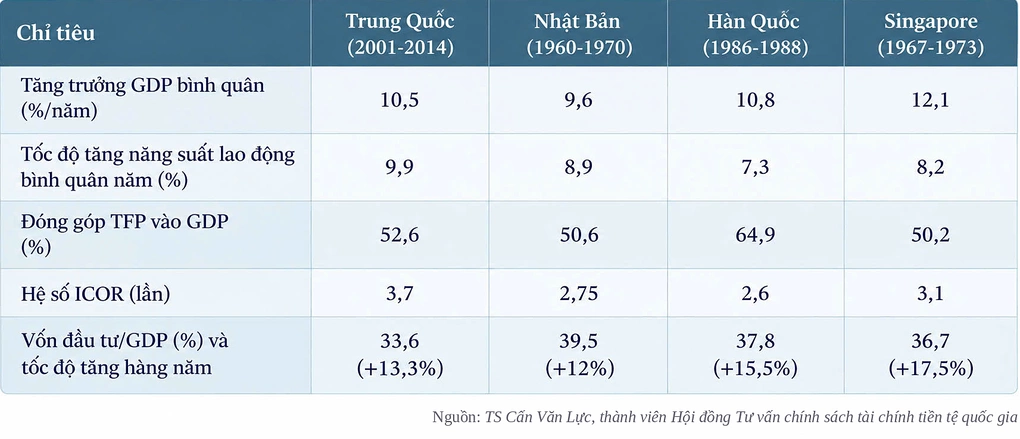
On October 17, the Vietnamese government formally presented to the National Assembly its target of achieving GDP growth of 10% or higher starting in 2027. This goal is inextricably linked to the necessity of maintaining macroeconomic stability and rigorous inflation control. Historical precedents from East Asian economies serve as the blueprint for this strategy: Singapore maintained an average growth rate of 11.3% between 1967 and 1973, while South Korea recorded 10.8% growth during the 1986–1988 period.
For Vietnam, sustained double-digit growth is not merely a quantitative target but a qualitative necessity to ensure the nation reaches high-income status within the next two decades. Experts at the AEF 2026 identified three fundamental pillars required to make this vision feasible: the ability to mobilize massive capital, the efficiency of resource utilization, and a dramatic increase in total factor productivity (TFP).
Capital Mobilization: The 300 Billion USD Challenge
Dr. Can Van Luc, a member of the National Financial and Monetary Policy Advisory Council, emphasized that a common denominator among the "Asian Tigers" during their rapid growth phases was a gross capital formation-to-GDP ratio of 35–40%. Based on this, Vietnam must sustain a total social investment volume at 40% of GDP, with investments contributing 40–42% to overall growth.
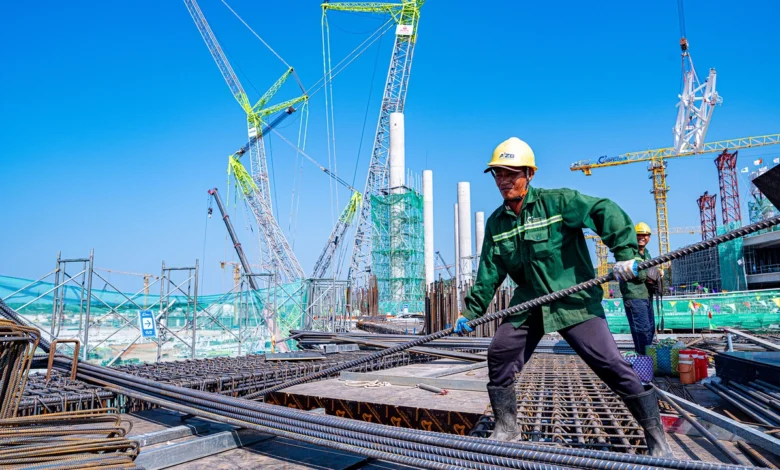
"To meet these targets, we estimate that Vietnam must mobilize between 280 and 300 billion USD annually, with an average year-on-year increase of approximately 14%," Dr. Luc stated. Currently, state-led investment accounts for roughly 20–22% of total social investment, with a ceiling at 30%. Consequently, nearly 70% of the required capital must be sourced from the private sector and foreign direct investment (FDI).
However, a significant structural concern remains: the economy’s heavy reliance on bank credit, which currently supplies 51% of total capital. While bank lending is expected to remain a critical engine, the current market structure is unbalanced, as capital mobilization via stock and corporate bond markets accounts for only 13–14% of the total. Dr. Luc highlighted the urgency of deepening the capital market to reduce the systemic pressure on the banking sector.
Addressing Structural Inefficiencies and ICOR
The Incremental Capital Output Ratio (ICOR)—a measure of the efficiency of capital investment—is a critical metric for Vietnam’s economic policymakers. While successful East Asian economies maintained an ICOR of 3 to 4 during their rapid development phases, Vietnam’s ICOR has consistently hovered above 6 over the past five years. A lower ICOR indicates higher capital efficiency, requiring less investment to generate the same unit of growth.
Dr. Luc has proposed a policy shift to bring the ICOR down to 4.5. Achieving this requires a fundamental restructuring of investment, particularly moving away from the current model where 80% of investment is allocated to infrastructure, toward a more balanced distribution that prioritizes science, technology, education, and healthcare.
Fazurin Jamaludin, Resident Representative for Vietnam and Laos at the International Monetary Fund (IMF), reinforced this view, stressing that Vietnam must ensure strict management of public investment. "The focus must be on high-quality projects that deliver tangible economic returns," he noted.
Global Perspectives: Beyond Simple Investment
Mariam J. Sherman, Country Director for the World Bank in Vietnam, Cambodia, and Laos, provided a sobering analysis of the current growth model. She noted that Vietnam’s TFP growth has been nearly stagnant since 1990, suggesting that past growth was driven primarily by capital accumulation rather than increased efficiency.
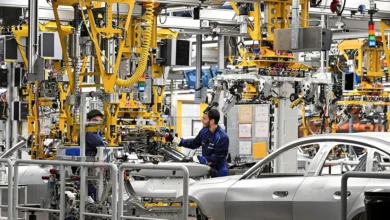
"Vietnam is currently at a turning point," Sherman remarked. She pointed out that a single worker in Vietnam currently generates approximately 6.7 USD in value-added per hour—less than half of the output generated by a worker in China. Furthermore, roughly 85% of employment in the export sector remains concentrated in low-value manufacturing, such as simple assembly.
To escape this cycle, the World Bank and other international observers advocate for a transition toward innovation-led development. The implementation of Resolution 57, which focuses on science, technology, and innovation, is viewed as a significant step in the right direction. However, the effectiveness of these policies will depend on the government’s ability to foster a "facilitating" rather than "controlling" economic environment.
The Role of International Integration and Green Finance
The recent upgrade of Vietnam’s stock market by FTSE Russell is expected to act as a catalyst for increased foreign capital inflow, provided that the underlying market infrastructure continues to modernize. Beyond traditional markets, experts suggest that Vietnam must tap into emerging financial instruments, including green bonds, carbon markets, and advanced asset management practices.
Wanming Du, Director of Asia-Pacific Investment Policy at FTSE Russell, acknowledged the immense need for medium- and long-term capital for infrastructure, high-tech sectors, and energy transition. "As the economy scales up, financing needs will inevitably become more diverse and complex. A deep and efficient capital market is not just a luxury; it is a vital safeguard for the entire financial system," she noted.

Government Commitment and Future Outlook
In a high-level dialogue with the World Economic Forum (WEF) on October 28, Deputy Prime Minister Le Minh Hung reaffirmed the government’s commitment to maintaining political and social stability. He emphasized that strengthening the macroeconomic foundation is a prerequisite for rapid, sustainable, and inclusive development.
"The government is transforming its role from a direct operator to an architect of the economy," Deputy PM Hung stated. This shift includes streamlining administrative procedures, enhancing the transparency of public-private partnerships, and fostering an environment where innovation can thrive.
As Vietnam moves toward the 2027 target, the synthesis of expert opinions points to a clear, albeit difficult, path forward. The challenge is no longer just about the volume of capital—the 300 billion USD—but about the quality of that capital and the speed of structural reforms. The transition from assembly-based manufacturing to a knowledge-driven economy will require synchronized action between the public and private sectors, a commitment to productivity-enhancing investments, and a resilient approach to global economic headwinds.
Ultimately, the goal of double-digit growth is a stress test for Vietnam’s institutional capacity. By shifting the focus from quantity to quality, and from reliance on credit to diversified capital markets, Vietnam aims to redefine its economic destiny, moving from the periphery of the global supply chain to becoming a hub of technological advancement and sustainable prosperity. The next five years will be decisive in determining whether Vietnam can successfully navigate this transformation and secure its place as one of the world’s leading emerging economies.