The Vietnamese automotive market is gearing up for a vibrant final stretch of the year, transitioning from a record-breaking October that saw roughly 15 new vehicle introductions—spanning budget-friendly mini cars to ultra-luxury marques—into a November characterized by high-stakes electrification and generational upgrades. As manufacturers accelerate their portfolio refreshes to capture the lucrative year-end shopping season, the spotlight has shifted decisively toward hybrid vehicles, battery-electric vehicles (BEVs), and heavily updated or newly introduced high-riding utility vehicles. Industry observers note that this wave reflects a broader, irreversible pivot toward sustainable mobility and heightened segment competitiveness, setting the stage for aggressive consumer choices as dealerships brace for peak foot traffic.
A Transitional Momentum: From October’s Surge to November’s Strategic Reinforcements
October established a high watermark for the Vietnamese automotive landscape, introducing roughly 15 fresh models across a remarkably diverse pricing spectrum. This aggressive roll-out demonstrated automakers’ urgency to stimulate demand during an economically sensitive period. Building upon this momentum, November introduces a curated yet powerful selection of products designed to capture niche and volume segments alike. Rather than sheer volume, this month’s arrivals emphasize technological sophistication, powertrain diversification—particularly through hybrids and range-extended electric vehicles (REEVs)—and generational redesigns of perennial best-sellers.
Market analysts point out that the strategic timing of these launches is no coincidence. Automakers are capitalizing on year-end bonuses, promotional credit rates, and a general consumer inclination toward major purchases during the fourth quarter. By introducing advanced powertrains and high-profile nameplates now, brands are attempting to cement their technological leadership and market share before the fiscal year concludes.
Volvo Expands Its Pure-Electric Portfolio with EX90 and ES90
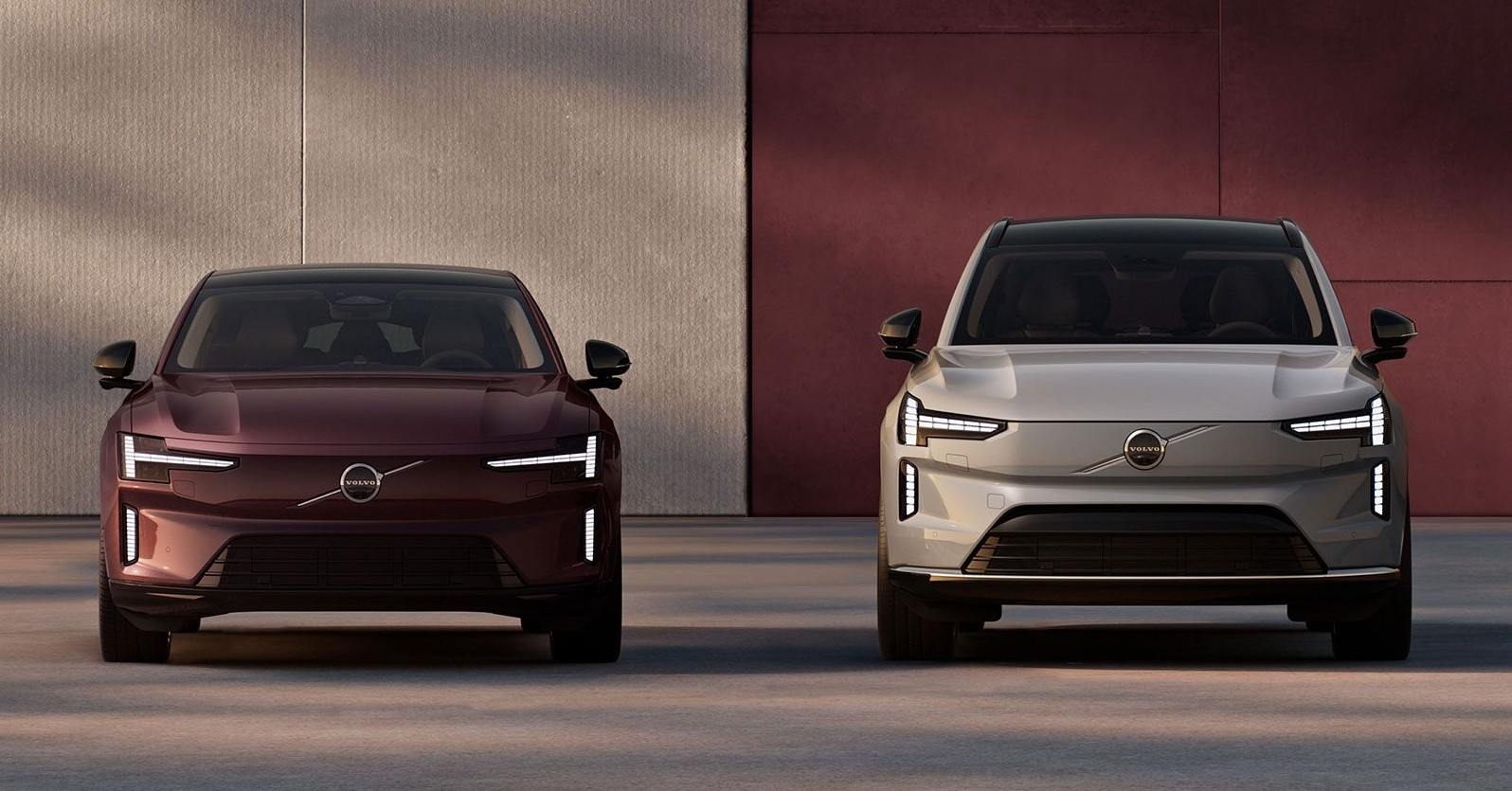
Leading the charge in the luxury segment, Volvo Car Vietnam is scheduled to introduce two pivotal battery-electric vehicles on November 6: the flagship EX90 SUV and the aerodynamic ES90 sedan. This launch marks a significant milestone in the Swedish automaker’s aggressive transition toward complete electrification, expanding its footprint in Vietnam’s nascent luxury EV market.
The Volvo EX90 represents a masterclass in large-scale electric SUV design and engineering. Built on the advanced SPA2 architecture, the vehicle utilizes a robust 800-volt electrical system and houses a substantial 111 kWh battery pack. Depending on the global market configuration, the EX90 delivers an impressive driving range of approximately 600 to 620 kilometers on a single charge. Performance-wise, the vehicle is offered in two dual-motor configurations: the Twin Motor variant, producing 408 horsepower, and the high-performance Twin Motor Performance variant, churning out 517 horsepower. Thanks to the 800V architecture, the EX90 supports rapid DC fast charging, allowing the battery to replenish from 10% to 80% in roughly 22 minutes under optimal conditions. Available in versatile six- or seven-seat layouts, it targets affluent families seeking uncompromised space and safety.
Complementing the SUV is the Volvo ES90, a sophisticated all-electric executive sedan underpinned by the same modular architecture. Internationally, the ES90 features power outputs ranging from 333 to 680 horsepower, paired with battery capacities of 92 kWh or 106 kWh. It boasts an exceptional WLTP-rated driving range of 650 to 700 kilometers. While the ES90 caters to traditional luxury sedan buyers desiring zero-emission elegance, the EX90 addresses the utilitarian demands of large families. Official pricing and local configuration details are anticipated to be the focal points of the upcoming launch event.
Subaru Forester Hybrid: Japanese Engineering Meets Fuel Efficiency
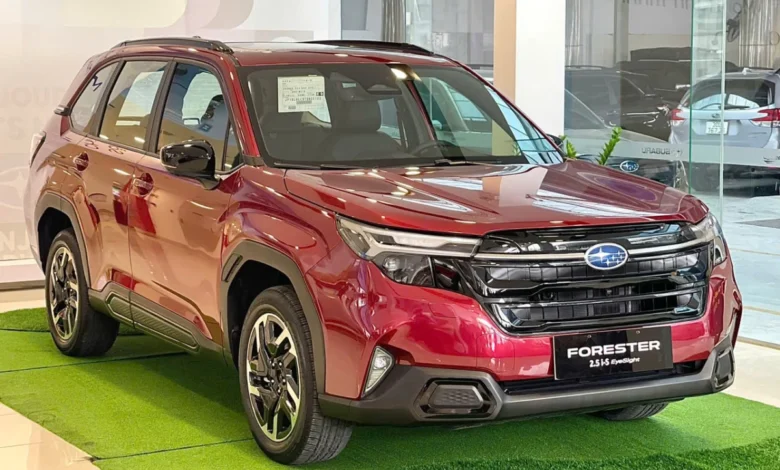
Shifting focus to the high-volume C-segment SUV market, Subaru is preparing to debut the Forester Hybrid on November 11. Continuing the brand’s tradition of robust engineering, this electrified iteration will be imported directly from Japan, promising heightened efficiency without sacrificing the rugged capability core to the Subaru identity.
Differentiating itself from the purely gasoline-powered variants currently populating dealerships, the Forester Hybrid pairs a signature 2.5-liter Boxer engine with an advanced electric motor, generating a combined system output of approximately 194 horsepower. Power is channeled through an e-CVT transmission and managed by Subaru’s trademark Symmetrical All-Wheel Drive (S-AWD) system.

While Subaru Vietnam has kept comprehensive specification sheets and pricing under wraps ahead of the debut, industry experts project a price tag positioned comfortably above the current gasoline trims, which range from 1.299 to 1.399 billion VND. Should this pricing strategy hold, the Forester Hybrid will enter a fierce battleground, directly challenging established electrified C-segment contenders such as the Honda CR-V e:HEV and Hyundai Tucson Hybrid, offering eco-conscious buyers an alternative equipped with legendary off-road pedigree.
Volkswagen Aggressively Restructures with ID. Era 9X, Tiguan, and Tayron
German automotive giant Volkswagen is orchestrating a multi-pronged assault on the Vietnamese market in November, highlighted by the introduction of an innovative range-extended electric vehicle alongside generational updates to its core SUV lineup.
Chief among these novelties is the Volkswagen ID. Era 9X, a large SUV utilizing Range-Extended Electric Vehicle (REEV) technology. Having already opened order books through its nationwide dealer network, Volkswagen has slated deliveries to commence this November, with estimated pricing staying under the 3 billion VND threshold. The ID. Era 9X employs an electric motor for primary propulsion, while a 1.5-liter turbocharged internal combustion engine acts strictly as an on-board generator to replenish the 65.2 kWh battery pack when needed. This configuration yields a staggering combined driving range of up to 1,651 kilometers under China’s CLTC testing cycle. By eliminating range anxiety while retaining the immediate throttle response and refinement of electric propulsion, the ID. Era 9X targets consumers seeking long-distance touring capabilities paired with multi-row seating and modern digital architecture.

Simultaneously, Volkswagen Vietnam has initiated deliveries for two imported nameplates: the third-generation Tiguan and the brand-new Tayron. The Tiguan enters its third iteration with comprehensive enhancements to its chassis platform, exterior design, and cabin technology. Offered in Style and R-Line trims powered by a 1.4-liter TSI engine, it carries estimated price tags of 1.339 billion VND and 1.499 billion VND, respectively.
Positioned above the Tiguan in the mid-size segment, the Volkswagen Tayron makes its historic Vietnamese debut as a dedicated 7-seater SUV. The Tayron lineup comprises two distinct configurations: the Style trim featuring a 1.4-liter TSI engine priced at 1.639 billion VND, and the flagship R-Line trim utilizing a punchy 2.0-liter TSI engine, commanding 1.939 billion VND. These strategic introductions underscore Volkswagen’s intent to capture a larger slice of the premium family SUV market.
Mazda CX-5 Generation Shift: Anticipation Builds Despite Launch Timeline Shifts
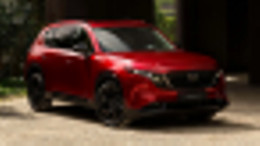
Rounding out the major developments for the period is the much-anticipated next-generation Mazda CX-5, a vehicle that commands significant loyalty within the fiercely contested C-segment crossover category. Although THACO Auto previously outlined plans to introduce and commercialize the new model around November, official confirmation regarding exact local trims, configurations, and pricing remains pending.
The third-generation Mazda CX-5 embraces the evolutionary Kodo design language, boasting a sharper exterior aesthetic, enlarged dimensions, and a heavily revamped interior. International specifications reveal a vehicle measuring 4,690 mm in length, 1,860 mm in width, and riding on a 2,815 mm wheelbase—dimensions that translate into a substantially more spacious cabin. Depending on the market, advanced iterations feature expansive central touchscreens measuring 12.9 or 15.6 inches.
While earlier generations assembled in Vietnam heavily relied on 2.5-liter naturally aspirated engines paired with 6-speed automatic transmissions and optional AWD, the exact powertrain lineup for the local market has not been finalized. The appearance of the new CX-5 on Mazda Vietnam’s official digital channels indicates that preparatory work for domestic assembly and distribution is well underway. However, industry insiders suggest that the commercial launch timeline may experience minor adjustments, potentially rolling out in early 2027 rather than late 2026. This slight delay keeps prospective buyers in suspense, though the model remains one of the most eagerly awaited product updates in the domestic automotive sphere.
Broader Industry Implications and Market Outlook
The concentration of high-profile launches during this period highlights a maturing Vietnamese automotive market where legacy automakers are no longer able to rely solely on traditional internal combustion engines. The coexistence of battery-electric flagships like the Volvo EX90 and ES90, sophisticated range-extenders like the Volkswagen ID. Era 9X, fuel-efficient hybrids like the Subaru Forester Hybrid, and thoroughly redesigned traditional stalwarts demonstrates a diversified approach to consumer demands.
As these models filter into showrooms, dealerships are expected to roll out aggressive incentive packages to clear legacy inventory while capitalizing on the marketing momentum generated by these November debuts. Ultimately, this influx of advanced technology and expanded segment options reinforces consumer purchasing power, offering unprecedented variety as the industry steers toward a technologically advanced and environmentally conscious future.