The landscape of Vietnam’s industrial and service sectors is undergoing a profound transformation as businesses pivot toward widespread automation. During the Autumn Economic Forum 2026, held in Ho Chi Minh City, the integration of robotics moved from theoretical discussion to tangible reality. On Nguyen Hue walking street, a vibrant display of humanoid robots, service units, and automated systems captivated thousands, signaling a new era of technological adoption in one of Southeast Asia’s fastest-growing economies.
The Autumn Economic Forum and the Robotics Showcase
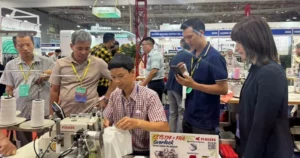
In late October 2026, the "Greco 2026" exhibition served as a focal point for the Autumn Economic Forum, showcasing the latest in global robotics. The event acted as a bridge between international manufacturers and Vietnamese enterprises eager to modernize their operations. Attendees were treated to demonstrations ranging from sophisticated service robots capable of mixing beverages to high-precision robotic arms designed for industrial manufacturing.
The event was not merely a ceremonial exhibition; it functioned as a marketplace. A notable highlight was the agreement signed by the Vietnamese firm AICAP, which committed to acquiring 1,000 advanced robotic units in partnership with the China Development Robot Alliance (CDRA) and the technology firm Aibrain. This deal underscores a growing trend where domestic companies are bypassing experimental phases and moving directly toward large-scale deployment to maintain competitive parity in the global supply chain.
Chronology of Automation Adoption in Vietnam
The journey toward automation in Vietnam has accelerated significantly over the past decade. While initial adoption was limited to simple repetitive tasks in the textile and footwear industries, the current wave focuses on "intelligent" automation.
- 2015–2020: Early adoption phase, characterized by the introduction of basic assembly line automation in the automotive and electronics sectors.
- 2021–2024: Post-pandemic recovery prompted a shift toward contactless service technology, leading to the first widespread testing of service robots in hospitality and retail.
- 2025: The market for robotics and automation in Vietnam reached an estimated $280 million, driven by government incentives and a focus on high-tech manufacturing.
- 2026: The current year, marked by the Greco 2026 exhibition, has seen a shift toward large-scale enterprise-level investments and the adoption of "Robot-as-a-Service" (RaaS) models.
- 2034 (Projection): Industry analysts project the market value to exceed $460 million as labor costs rise and the demand for high-quality precision manufacturing grows.
Supporting Data: The Industrial Gap and Growth Potential
Despite the recent surge, Vietnam still trails its regional peers in terms of robot density—a key metric representing the number of operational robots per 10,000 employees. Currently, Vietnam reports between 23 and 58 robots per 10,000 workers in the manufacturing sector. In contrast, Malaysia records 101, Thailand 84, and South Korea leads the world with 1,220 robots per 10,000 workers.
However, the trajectory is positive. According to data from the International Federation of Robotics (IFR), the global installed base of industrial robots has tripled over the last decade, reaching over 5 million units. In 2025 alone, 603,000 new units were installed globally, an 11% year-on-year increase. For Vietnam, Ken Research projects that the domestic industrial robot market, valued at $112 million in 2025, will climb to $230 million by 2031, representing a compound annual growth rate (CAGR) of 12.88%.
Expert Insights: The Strategic Approach to Investment
Vuong Quan Truong, Deputy General Director of Technology at AICAP, emphasized that the decision to purchase robots is no longer just about acquiring hardware; it is a complex financial and operational calculation. "We select products based on specific customer needs, assessing integration capabilities, safety standards, operating costs, and after-sales service," Truong stated.

The investment cost for a fully operational robotic station currently ranges from $30,000 to $80,000, with a projected return on investment (ROI) within three to five years, depending on the application and the efficiency of the operational environment.
Bui Hong Phan Adley, founder and CEO of AI Talent H&HIS, argues that the barrier to entry has never been lower, yet the risk of failure remains high if businesses treat robots as "plug-and-play" solutions. "I have witnessed many businesses spend millions on technology that fails to deliver results because they lack the human capacity to operate it, or because their internal processes were not streamlined prior to automation," Adley noted.
Strategic Recommendations for SMEs
For Small and Medium Enterprises (SMEs), which often lack the massive capital reserves of larger corporations, the experts suggest a more calculated approach to prevent "FOMO-driven" (Fear of Missing Out) spending:
- Total Cost of Ownership (TCO): Businesses must look beyond the initial purchase price. TCO includes software integration, facility modification, staff training, maintenance, and the potential costs associated with production downtime during implementation.
- Robot-as-a-Service (RaaS): For companies with high product variability, renting robots or adopting a service-based subscription model can reduce initial capital expenditure and allow for greater operational flexibility.
- Data and AI Infrastructure: Modern robots are increasingly reliant on AI. Success depends on the quality of data management and the ability of the workforce to manage the software that drives the hardware.
- Phased Implementation: Tang Zhisu, Deputy Secretary-General of CDRA, advises starting with specific, manageable tasks. Testing on a small scale allows companies to evaluate performance and ROI before scaling up, thereby minimizing financial risk.
Broader Implications: The Human-Robot Collaboration
The rapid integration of robotics into the Vietnamese economy brings the critical issue of human resource development to the forefront. PGS.TS Nguyen Thanh Phuong, Vice Rector of HUTECH University, highlights the urgent need for a workforce capable of solving real-world automation problems.
"Universities have been training students in electronics and robotics, but to meet industry standards, we need a collaborative effort. Enterprises must share their real-world experiences and resources with academic institutions so students are prepared to handle the complex challenges of modern manufacturing," Phuong said.
The consensus among industry leaders is that robots will not replace the human workforce in the near term but will instead shift the nature of labor. The future of the Vietnamese manufacturing sector lies in "cobots" (collaborative robots) that work alongside human operators, requiring a workforce that is skilled in systems integration, maintenance, and high-level process management.
As Vietnam continues to integrate into the global supply chain, the transition to automation is no longer a luxury but a necessity for survival. By focusing on strategic investment, human capital development, and a realistic assessment of operational requirements, Vietnamese businesses can navigate the complexities of this transition and emerge more competitive on the global stage. The "robot wave" hitting the streets of Ho Chi Minh City is a clear indicator that the nation is ready to embrace the challenges and opportunities of the Fourth Industrial Revolution.