How Silicon Valleys AI Millionaires Are Rewriting the Rules of Wealth Without Changing Their Lifestyles

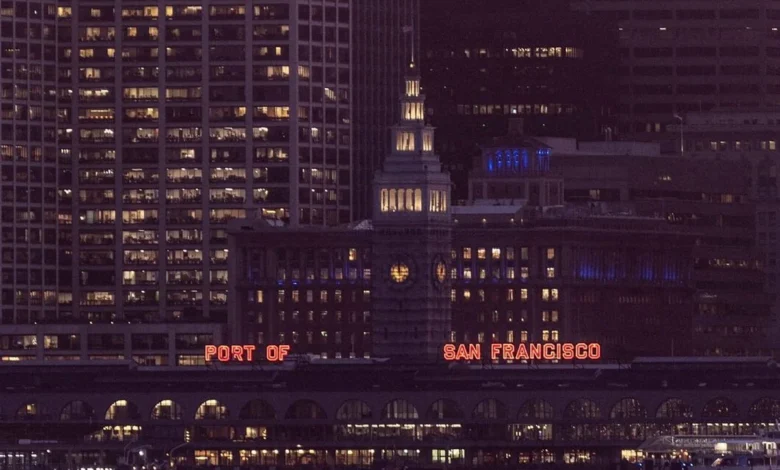
The explosive and unprecedented rise of artificial intelligence has catalyzed a profound socioeconomic shift across the San Francisco Bay Area, minting an entirely new class of multi-millionaires with a velocity never before witnessed in the history of the modern technology sector. At the epicenter of this seismic wealth generation are pioneering AI research and development companies such as OpenAI and Anthropic, where foundational breakthroughs in large language models and machine learning have unlocked astronomical financial rewards for their engineering and research talent. According to recent labor market data compiled by compensation tracking platform Levels.fyi, base salaries for senior artificial intelligence engineers frequently exceed $300,000 annually. However, base compensation represents merely a fraction of total earnings; lucrative equity grants and secondary share sales have transformed ordinary software developers into multi-millionaires almost overnight.
This hyper-accelerated wealth creation was underscored dramatically when OpenAI executed a massive secondary share sale valued at $6.6 billion. The transaction immediately propelled approximately 75 employees into the ultra-high-net-worth bracket, with individual payouts averaging roughly $30 million per person. Such colossal infusions of liquid capital have exerted an immediate and transformative effect on the regional economy, particularly within the housing and real estate markets of Northern California. Market data compiled by high-end residential real estate brokerage Redfin indicates that approximately 30% of all residential property transactions in San Francisco were purchased with 100% all-cash offers. Despite this unprecedented capacity to deploy millions of dollars into prime residential real estate, the newly minted artificial intelligence elite are remarkably indifferent toward traditional symbols of conspicuous consumption.
The Paradox of the AI Millionaire Lifestyle
Unlike the Gilded Age industrialists or the dot-com boom millionaires of the late 1990s, who famously gravitated toward luxury sports cars, designer wardrobes, yacht ownership, and sprawling country estates, today’s top-tier artificial intelligence technologists exhibit a striking aversion to ostentation. Industry analysts and private banking executives note that this generation of tech wealth operates under a fundamentally different psychological and temporal framework. Spiecker, a senior managing director of private banking at Citizens Bank, observes that these individuals simply do not like or have time for pageantry.

The root cause of this cultural pivot is rooted in the unrelenting intensity of the global artificial intelligence arms race. The competition between well-funded labs is so ferocious, fast-paced, and high-stakes that elite engineers barely have time to contemplate personal fashion stylists, private aviation memberships, or extravagant vacation properties. An anonymous OpenAI employee recently revealed that the most expensive purchase made following a substantial secondary share sale was a modest electric vehicle. Furthermore, the prevailing status symbol among these brilliant researchers is not a luxury timepiece or a vintage sports car, but rather an artisanal espresso machine.
Similarly, software engineers earning upwards of $1 million annually continue to work remotely from modest apartments, where the largest discretionary expenditure might be $10,000 invested in custom high-performance computer chips and circuit boards to facilitate remote work and personal research. For many of these elite practitioners, professional obligations consume virtually every waking hour, leaving little room for a conventional social life outside the office. Laura Smith Sweeney, managing director of the art advisory firm LSS Art Advisory, notes that while she frequently works with wealthy clients from traditional technology firms who eagerly invest in fine art, she has yet to observe a comparable influx of art market demand from the newly minted AI millionaire demographic.
Prioritizing Wellness and Hyper-Personalized Recovery
Rather than spending their newfound fortunes on haute couture or luxury yachts, the new technology elite prioritize physical wellness, longevity, and biological optimization. Daniel Kavanagh, owner of a boutique design and manufacturing firm specializing in residential saunas and cold plunges, reports that roughly half of his high-end clientele now originates from the San Francisco Bay Area. Custom residential saunas designed for these tech professionals typically range from $40,000 to $80,000, while specialized cold plunge tubs command between $10,000 and $20,000.
According to Kavanagh, the most frequently repeated phrase among his clientele is a desire to find a physical space dedicated to energy renewal. For individuals operating at the absolute cutting edge of cognitive labor, uninterrupted time has become the ultimate luxury. Furthermore, these clients increasingly demand analog, low-tech environments where they can completely disconnect from the hyper-connected digital infrastructure that defines their professional lives. Clients frequently request remote-control capabilities for their saunas to ensure that temperatures reach optimal therapeutic levels the precise moment they return home from work. Kavanagh notes the profound irony that while these technology leaders spend their days engineering complex digital systems, their personal sanctuary choices reflect a deep-seated longing for experiences completely devoid of modern technology.

The Broader Economic and Societal Implications
The emergence of this unique demographic of ultra-wealthy, austere technologists carries far-reaching implications for the broader macroeconomic landscape of the United States and the global technology sector. Historically, sudden infusions of wealth into regional economies trigger speculative bubbles characterized by luxury consumption, high-end hospitality spending, and rapid inflation in non-essential goods and services. However, the localized impact of the AI boom in San Francisco exhibits distinct characteristics that set it apart from previous technological revolutions.
While the commercial real estate and residential housing sectors have experienced localized price surges—particularly driven by all-cash purchases—the anticipated trickle-down effects into luxury retail, fine dining, and high-end services have been noticeably muted. Economists attribute this phenomenon to the unique demographic profile of AI researchers and engineers. Unlike sales executives or financial traders who historically drove luxury consumption in urban centers, AI practitioners are fundamentally rooted in academic research, computer science, and engineering methodologies. Their core motivations are frequently tied to intellectual curiosity, solving complex algorithmic problems, and achieving scientific milestones rather than accumulating traditional status symbols.
Furthermore, the extreme concentration of talent within a handful of leading artificial intelligence laboratories has created a competitive bottleneck. Companies like OpenAI, Anthropic, Google DeepMind, and Meta AI are locked in an unprecedented race to achieve artificial general intelligence (AGI). This existential corporate competition creates a high-pressure corporate culture where professional burnout is a constant risk. Consequently, the heavy investment in wellness infrastructure—such as residential saunas, cold plunges, and fitness regimens—is not merely an expression of luxury, but a strategic necessity for maintaining cognitive performance under extreme workloads.
As the artificial intelligence industry continues to mature and scale globally, the socioeconomic footprint of its primary architects will undoubtedly evolve. Whether the next generation of AI millionaires will maintain this austere, wellness-focused lifestyle or eventually succumb to traditional forms of conspicuous consumption remains an open question. For now, however, the intellectual elite driving the most transformative technological revolution in human history remain too busy writing the future of humanity to stop and buy a watch.
Related posts: