Pentagon Conceals Casualties in Iran-Jordan Confrontation Amidst Escalating Regional Tensions

The Pentagon has reportedly refrained from publicly disclosing the full extent of casualties sustained by U.S. service members during a recent series of Iranian attacks targeting American positions in Jordan. This deliberate omission of information, as reported by The New York Times on July 20th, citing an unnamed U.S. official, underscores the delicate strategic calculus at play as the United States navigates an increasingly volatile Middle East. The concealed information pertains to injuries and potential fatalities among American troops in the wake of escalating confrontations with Iran, a situation that has drawn significant international attention and raised concerns about a wider regional conflict.
A Week of Escalation: The Attacks on U.S. Forces in Jordan
The reported concealment follows a week of heightened aggression by Iran against U.S. military assets in the region. Prior to a significant Iranian assault on Jordan on July 17th, which resulted in the deaths of two U.S. service members and the disappearance of another, Iran had already conducted three separate rocket attacks targeting U.S. forces stationed in Jordan. These earlier strikes, while not resulting in fatalities, reportedly inflicted injuries on dozens of American personnel and damaged vital logistical infrastructure.
Despite the discernible impact of these attacks, the Pentagon has maintained a tight lid on specific casualty figures beyond the initial confirmed deaths. This decision, according to the unnamed official, stems from a desire to avoid providing Iran with actionable intelligence that could be used to identify future targets. The administration’s stated rationale is that full transparency regarding battlefield developments could compromise operational security and undermine the broader strategic objectives of ensuring troop safety and maintaining regional stability.
CENTCOM’s Strategic Silence and Shifting Narratives
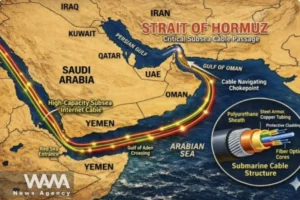
The U.S. Central Command (CENTCOM), responsible for U.S. military operations in the Middle East, has offered limited public statements in the aftermath of these incidents. Following earlier Iranian attacks directed at commercial shipping lanes passing through the Strait of Hormuz, CENTCOM had acknowledged intercepting Iranian attacks. However, they conspicuously avoided confirming or denying any Iranian strikes on bases within the region, including those in Jordan. This strategic ambiguity appears to have been a deliberate tactic to control the narrative and prevent Iran from leveraging any perceived successes for propaganda purposes.
One senior U.S. military official explained that CENTCOM is not obligated to disclose casualty information, particularly when such disclosures could potentially aid adversaries. The concern is that providing detailed reports on injuries could inadvertently reveal the vulnerabilities of unmanned aerial vehicles (UAVs) and other assets deployed in Jordan and other Middle Eastern bases where thousands of U.S. troops are stationed. The ongoing conflict, characterized by a series of retaliatory strikes and counter-strikes, has created a complex information environment where both sides are vying for strategic advantage, including through narrative control.
Broader Context: Iran’s Escalating Aggression and U.S. Deterrence Efforts
The recent attacks are part of a broader pattern of Iranian aggression aimed at destabilizing the region and challenging U.S. influence. For months, Iran-backed militias and the Islamic Revolutionary Guard Corps (IRGC) have been engaged in a campaign of harassment and attacks against U.S. interests, ranging from drone strikes on military bases to the seizure of commercial vessels. These actions are widely interpreted as Iran’s response to U.S. sanctions and its support for regional adversaries, particularly Israel.
The U.S. response has largely focused on a strategy of deterrence, involving increased military presence, enhanced intelligence gathering, and targeted strikes against Iranian-backed forces. President Donald Trump, in a statement on July 20th, characterized Iran’s actions as "very strong attacks" and indicated that U.S. military responses were aimed at deterring further aggression after three American service members were killed. This retaliatory posture is a delicate balancing act, intended to signal resolve without provoking a full-scale war.
The IRGC, in turn, has claimed responsibility for some of these attacks, asserting that they have fired on U.S. aircraft over Aqaba, Jordan, and targeted U.S. military facilities and equipment in Kuwait and Syria. These claims, while often difficult to independently verify, contribute to the escalating rhetoric and heighten regional anxieties.
The Human Cost: Beyond the Official Figures
While official figures may be deliberately downplayed, the human cost of this escalating conflict is undeniable. Reports suggest that as many as 17 U.S. service members may have lost their lives in the broader confrontation with Iran. CENTCOM’s data indicates that over 400 U.S. service members have been injured during this period of intensified hostilities. These figures, even if provisional, paint a grim picture of the sacrifices being made by American troops operating in a highly perilous environment.
The Pentagon’s decision to withhold specific casualty details, while understandable from a tactical perspective, raises questions about transparency and public accountability. In times of heightened conflict, the public has a right to know the full scope of the risks and costs associated with military engagements. The lack of complete information can lead to speculation and erode public trust, particularly when such sensitive details are omitted.
Diplomatic Undercurrents and the Threat of Wider Conflict
Adding another layer of complexity, Iran’s Foreign Ministry spokesperson, Esmaeil Baghaei, stated on July 20th that Tehran was open to diplomatic engagement with the United States, contingent on whether Washington demonstrated a willingness to de-escalate. This statement, made in the wake of intense military exchanges, suggests a degree of internal debate within Iran regarding the optimal path forward. However, the continued military provocations cast doubt on the sincerity of such diplomatic overtures, leaving the international community to question whether Iran genuinely seeks de-escalation or is employing a dual strategy of military pressure and diplomatic maneuvering.
The ongoing conflict between the United States and Iran, exacerbated by proxy engagements and direct confrontations in theaters like Jordan, carries significant implications for regional stability. The potential for miscalculation or escalation remains high, with the risk of a wider conflict that could draw in neighboring countries and further destabilize an already fragile geopolitical landscape. The international community watches with apprehension as the situation continues to unfold, with the Pentagon’s cautious approach to information disclosure reflecting the profound challenges of managing this volatile standoff. The true extent of the sacrifices made by American service members in this critical theater of operations remains, for now, a closely guarded secret.