Joint List of Arab parties in Israel maneuvers to block Benjamin Netanyahu from forming a new government


In a significant development that underscores the deep fragmentation of the Israeli political landscape, a senior member of the Joint List, a coalition representing Arab citizens of Israel, has announced that the alliance is prepared to engage in unprecedented cooperation with Jewish-led political factions to prevent Prime Minister Benjamin Netanyahu from securing a new term in office. This strategic pivot, communicated by legislator Ahmad Tibi, marks a potential departure from decades of political isolationism for Arab-majority parties, signaling a desperate attempt to curtail the influence of the right-wing bloc led by the incumbent Prime Minister.
The Political Impasse
The current political crisis follows the October 27 parliamentary elections, which resulted in a fractured Knesset where neither the incumbent Prime Minister’s coalition nor the opposition led by Gadi Eisenkot secured the 61-seat threshold required for a stable majority. According to official results, Netanyahu’s bloc garnered 53 seats, while Eisenkot’s alliance secured 48. The Joint List claimed 11 seats, and the Ra’am party—which historically broke the barrier by joining a government coalition in 2021—retained 8 seats.
The inability of either major camp to form a government has plunged Israel into a period of acute uncertainty. President Isaac Herzog is set to formally announce his decision on November 8 regarding which political figure will be tasked with the mandate to build a government. Preliminary consultations with party leaders revealed that 46 lawmakers support Netanyahu, 67 lawmakers favor Eisenkot, and 7 remain undecided or have abstained from declaring a preference. However, the path to a governing coalition remains fraught with structural and ideological hurdles.
Historical Context of Arab Political Involvement
For decades, Arab parties in Israel have maintained a stance of "opposition from the outside," refusing to join government coalitions to avoid legitimizing state policies they deem discriminatory, particularly regarding the Palestinian conflict and the expansion of settlements in the West Bank. The Joint List, a coalition of parties representing diverse ideologies within the Arab-Israeli sector, has consistently functioned as a pressure group rather than a governing partner.
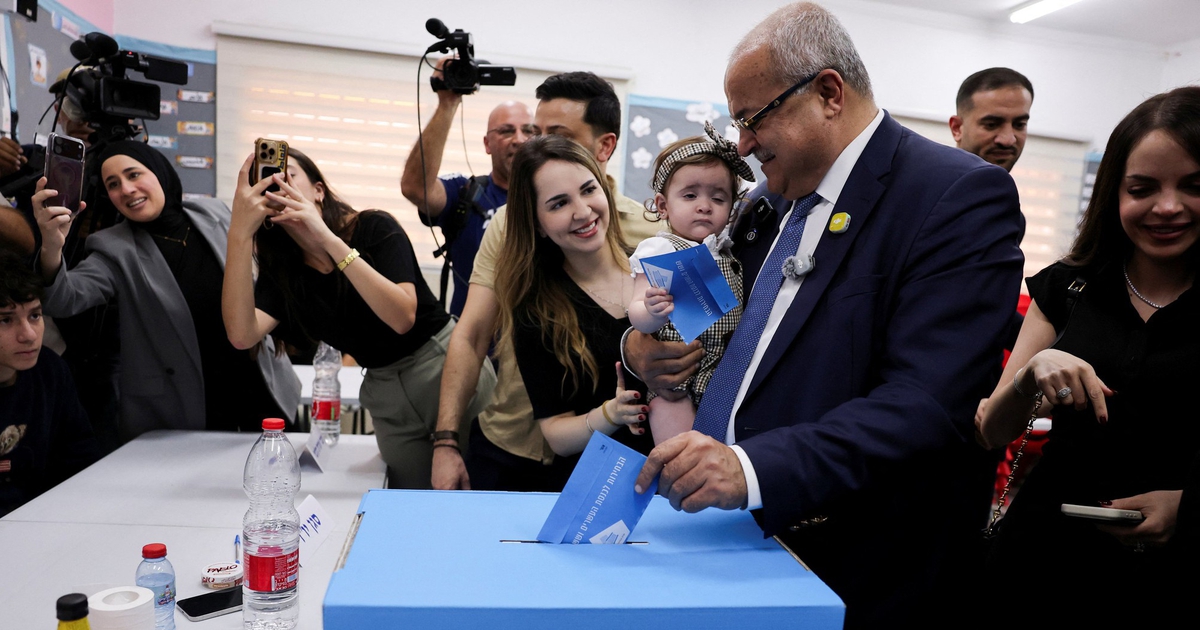
The year 2021 proved to be a watershed moment when the Ra’am party, under the leadership of Mansour Abbas, broke this tradition by joining a broad-spectrum government. Unlike the Joint List, Ra’am adopted a more pragmatic, civil-rights-oriented approach, focusing on socioeconomic development within Arab communities rather than exclusively on high-level security or geopolitical issues. The current willingness of the Joint List to consider cooperation is a dramatic escalation in their tactical approach to national politics.
The Strategic Calculus
The Joint List’s offer to collaborate with Jewish-led opposition parties is not without significant risks. For the Joint List, aligning with mainstream Zionist parties involves endorsing a government that is unlikely to fundamentally alter Israel’s military stance or halt settlement expansion in the West Bank. Critics within the Arab community argue that such a compromise could dilute their core principles.
Conversely, for the Jewish-led opposition, entering into a formal or informal alliance with the Joint List is equally precarious. Many of these parties, while opposed to Netanyahu, are wary of being associated with factions that openly challenge the fundamental Zionist nature of the state. Such an association could provide ammunition to Netanyahu’s camp, which has consistently painted any opposition alignment with Arab parties as an existential threat to the nation’s security and Jewish character.
Timeline of the Current Crisis
- October 27, 2026: Israel holds its latest round of parliamentary elections amidst a backdrop of three years of sustained political volatility and internal social division.
- Late October 2026: Official seat tallies are finalized, showing a deadlock between the Netanyahu-led bloc and the opposition coalition led by Gadi Eisenkot.
- Early November 2026: President Isaac Herzog conducts rounds of consultations with party leaders to assess who has the best chance of forming a viable governing coalition.
- November 6, 2026: Senior Joint List lawmaker Ahmad Tibi confirms the coalition’s willingness to cooperate with other parties to block Netanyahu, signaling a shift in the legislative power balance.
- November 8, 2026: Scheduled date for President Herzog to formally invite a candidate to attempt the formation of a new government.
Analytical Implications: A Fragmented Future
The political maneuvering underscores a deeper crisis of governance in Israel. The inability of traditional parties to command a clear majority reflects a society split not only by ethnic and religious lines but by fundamentally different visions for the country’s future.
The potential for a "blocking coalition"—an arrangement where smaller parties agree to vote down a Netanyahu-led government without necessarily being part of the executive cabinet—is a recurring phenomenon in recent years. However, the inclusion of the Joint List in this equation adds a layer of complexity that previous coalitions have struggled to navigate. If the opposition parties move forward with this strategy, they risk alienating centrist Jewish voters who are uncomfortable with the influence of Arab parties on national security policy.

Furthermore, the economic and security challenges facing the country—ranging from the ongoing regional tensions to the high cost of living—are being overshadowed by the scramble for political survival. Observers note that even if the opposition succeeds in preventing a Netanyahu-led government, the resulting coalition would be inherently unstable, composed of disparate groups with little common ground beyond their shared opposition to the Prime Minister.
Regional Context and Broader Challenges
The domestic political deadlock is playing out against a tense regional backdrop. Recent reports suggesting that the Houthi movement has proposed a multibillion-dollar deal to cease attacks on regional shipping lanes illustrate the high-stakes environment in which Israeli leaders are forced to operate. Such geopolitical pressures typically demand a unified government, yet the current electoral math suggests that the mandate for such unity is lacking.
As the November 8 deadline approaches, the pressure on President Herzog to navigate the constitutional requirements of the Knesset is immense. The legislative deadlock is not merely a matter of parliamentary arithmetic; it is a manifestation of the deeper, unresolved questions about Israel’s identity, its relationship with its Arab citizens, and the long-term sustainability of its current political system.
The coming days will be critical. If the Joint List follows through on its stated willingness to coordinate, the political landscape in Jerusalem will shift toward a highly unconventional, potentially short-lived, and volatile arrangement. Whether this shift will provide the stability needed to address the nation’s systemic challenges or merely exacerbate the existing fractures remains the central question facing the Israeli public.