Ministry of Finance proposes temporary suspension of exit bans for individuals impersonated in business registration

In a significant policy shift aimed at rectifying administrative hurdles for taxpayers, the Ministry of Finance has proposed a new draft resolution to the Government. This initiative seeks to provide immediate relief to individuals who have fallen victim to identity theft, specifically in cases where their personal information has been used without authorization to register business entities or tax accounts. Under the current regulatory framework, these victims often face severe travel restrictions, including involuntary exit bans, despite being entirely unaware of the fraudulent activities conducted in their names.
The Scope of the Crisis
The emergence of "ghost" companies—entities established using stolen or misused personal identification—has become a pressing issue for both the business community and tax authorities. According to data released by the Ministry of Finance, tax agencies have received 614 formal reports from citizens detailing instances where their personal information was exploited to register businesses, household business units, or cooperatives.
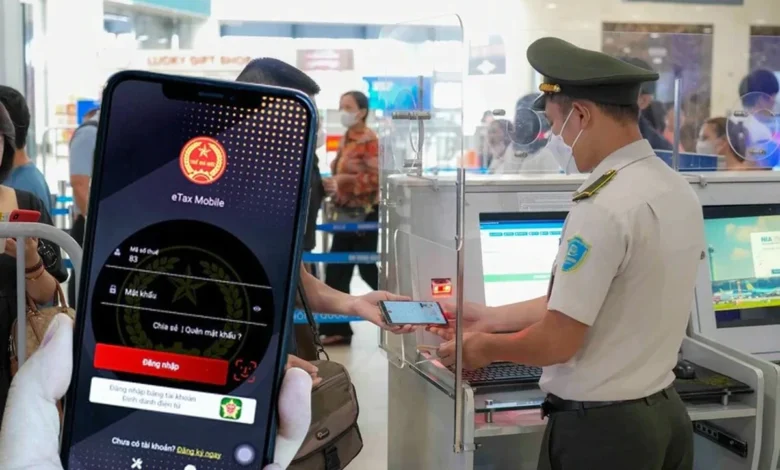
For many of these victims, the discovery of the fraud is both sudden and devastating. Often, they only realize their identity has been compromised when they arrive at an airport or border checkpoint, only to be informed by immigration officials that they are subject to an exit ban due to outstanding tax debts or legal irregularities associated with a company they never managed, owned, or even heard of.
Current Regulatory Limitations
Under the existing Law on Tax Administration, tax authorities are empowered to implement coercive measures against taxpayers who fail to fulfill their financial obligations. These measures include the temporary suspension of exit permits for business owners, legal representatives, or individuals authorized to represent companies that have failed to pay taxes or have ceased operations at their registered addresses.
While this mechanism is vital for curbing tax evasion, the system currently lacks a nuanced approach for handling cases where the "taxpayer" is a victim of identity fraud. Until now, tax agencies lacked the explicit legal grounds to lift or pause these coercive measures once they had been applied, even when presented with evidence of impersonation. This has left victims in a legal limbo, forced to navigate a labyrinth of bureaucratic processes while their personal and professional lives suffer due to restricted mobility.
Proposed Policy Adjustments
The Ministry of Finance’s draft resolution introduces a critical safety valve for such cases. Under the new proposal, if an individual presents evidence that their information was used illicitly, the tax agency would be authorized to temporarily stay the exit ban, provided specific conditions are met.
The primary requirement for this relief is a formal verification process involving law enforcement. The victim must submit an official request to the relevant business registration or tax authorities. Crucially, they must also provide a written confirmation from the police department acknowledging that a formal complaint has been filed and that an investigation into the impersonation case is currently underway. Once these documents are submitted and verified, tax authorities would have the legal mandate to suspend the exit ban while the investigation proceeds, effectively preventing the victim from being penalized for crimes they did not commit.
Chronology and Legislative Context
The proposal is part of a broader, ongoing campaign titled "Cleaning Tax Codes – Removing Bottlenecks in Business," which the Ministry of Finance has been spearheading to improve the domestic business climate. The need for this specific reform became urgent following a series of media reports, including investigations by various news outlets, which highlighted the plight of individuals who found themselves trapped in a cycle of "nominal directorships."
These victims reported having to travel repeatedly between tax offices, business registration departments, and police stations to prove their innocence. The current system requires a high level of inter-agency cooperation that is often not present in practice, leading to significant delays. The Ministry’s proposal seeks to formalize this coordination, ensuring that once a police investigation is confirmed, the tax authority is immediately notified to halt enforcement actions. The draft is expected to be implemented under the framework of Decree 252/2026/ND-CP, which aims to modernize and streamline tax management protocols.
Implications for Tax Administration
The proposed change represents a transition toward a more empathetic and efficient tax administration system. By addressing the "ghost company" issue, the Ministry hopes to restore public trust in the tax registration process.
However, experts note that the success of this policy will depend heavily on the efficiency of the digital integration between the Ministry of Public Security, the Ministry of Planning and Investment, and the General Department of Taxation. If the verification of identity theft remains a manual, paper-heavy process, the "temporary suspension" of exit bans might still take longer than necessary, causing continued frustration for victims.
Furthermore, there is a technical concern regarding the burden of proof. The Ministry of Finance has acknowledged that, currently, tax agencies do not have the legal expertise or the investigative tools to independently verify whether a person is a genuine victim of impersonation or an accomplice attempting to evade tax enforcement. Therefore, the reliance on police-confirmed documentation is a necessary safeguard to prevent potential tax evaders from using this policy as a loophole to avoid travel restrictions.
Broader Economic Impact
The economic implications of this reform are twofold. Firstly, it protects the reputation and rights of law-abiding citizens who are otherwise unable to travel for work, family, or personal reasons. Secondly, it helps in identifying and dismantling the networks that facilitate the creation of shell companies.
By encouraging victims to come forward and report these cases through a clear, established legal channel, the government can gather more intelligence on the syndicates responsible for identity theft. This could lead to a more targeted approach in cracking down on fraudulent business registrations, rather than casting a wide, indiscriminate net that catches innocent people.
Moving Forward: The Need for Digital Resilience
Looking ahead, the Ministry of Finance has indicated that it is looking into long-term solutions, such as implementing mandatory biometric verification for all new business registrations. By integrating the national population database with business registration systems, the government hopes to make the theft of identity for business purposes nearly impossible.
In the interim, the proposed temporary suspension of exit bans serves as a necessary stop-gap measure. It provides a legal "breathing room" for citizens caught in the crossfire of tax enforcement, ensuring that administrative errors or criminal impersonation do not result in the infringement of their fundamental rights.
The proposed resolution is currently in the public consultation phase. The Ministry of Finance is soliciting feedback from various stakeholders, including the business community, legal experts, and the general public, to ensure that the final regulation is both robust enough to prevent abuse and flexible enough to provide the intended relief to victims. As the digital transformation of Vietnam’s administrative sector continues, this policy shift serves as a reminder of the need to balance the state’s duty to collect revenue with its responsibility to protect the rights of its citizens.