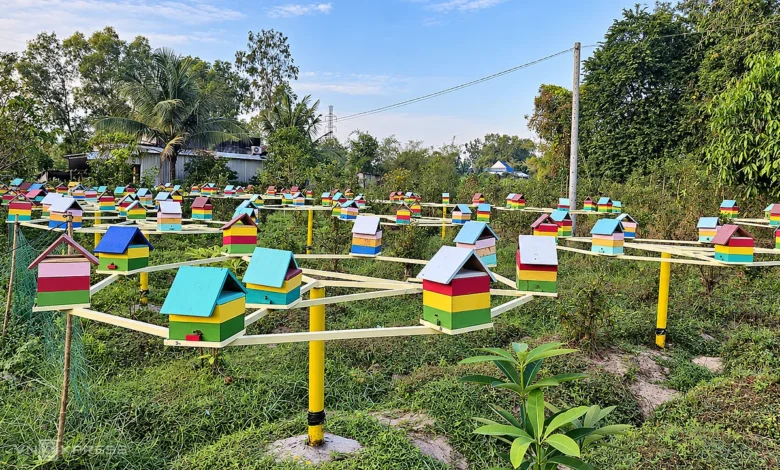
In the rugged, sun-drenched landscapes of the Seven Mountains (Thất Sơn) region in An Giang province, a technological and agricultural revolution is quietly taking root. Nguyen Trung Thanh, a 36-year-old entrepreneur and native of the area, has successfully scaled a specialized beekeeping model that integrates the cultivation of medicinal plants with artificial intelligence (AI) and Internet of Things (IoT) monitoring. What began as a modest endeavor with just 10 colonies has expanded into a sophisticated operation housing 1,000 stingless bee colonies, providing a sustainable economic blueprint for rural communities in the Mekong Delta.
From Traditional Farming to Technological Innovation
The journey of Nguyen Trung Thanh reflects the broader challenges and opportunities facing young people in the rural provinces of Vietnam. Raised in a traditional farming family in the Bay Nui (Seven Mountains) area, Thanh grew up witnessing the volatile nature of subsistence agriculture, where drought and erratic weather patterns often left families struggling to secure a stable income. Despite the hardships, he pursued higher education, eventually earning a degree in Business Administration in Ho Chi Minh City.
Upon graduating, Thanh faced a pivotal decision: remain in the urban center to pursue a corporate career or return to his roots to address the economic stagnation of his home region. Driven by a desire to revitalize the local economy, he began spending his weekends and holidays researching startup opportunities that could leverage the unique ecological advantages of the Thất Sơn region.
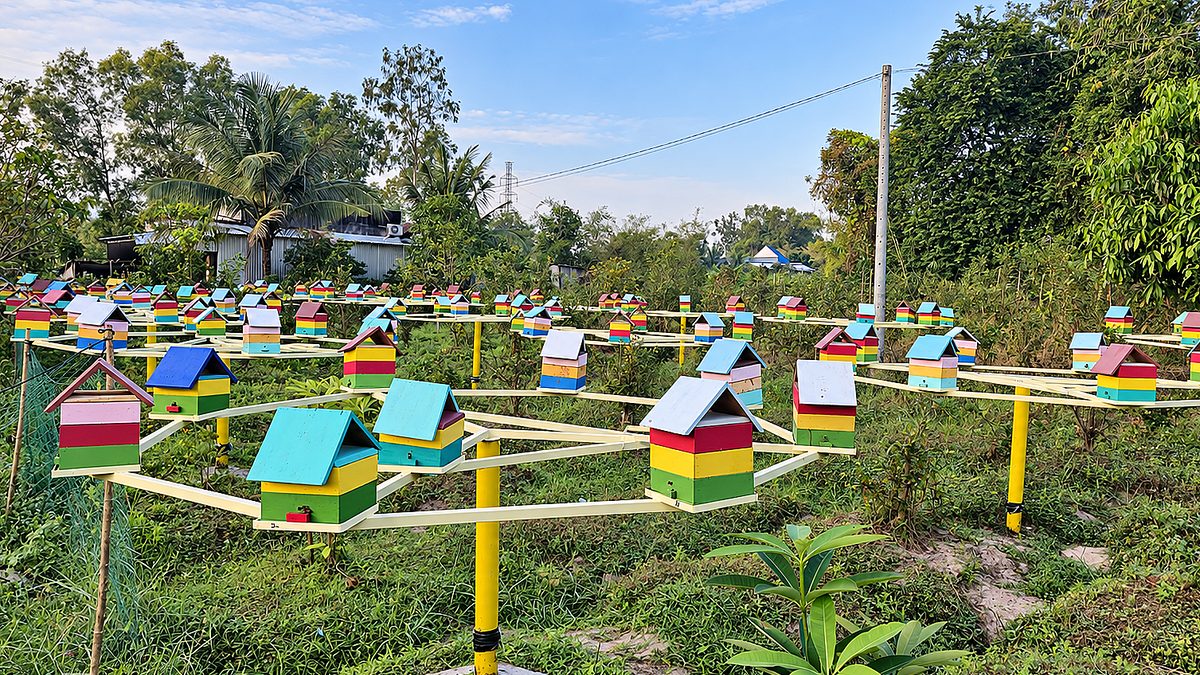
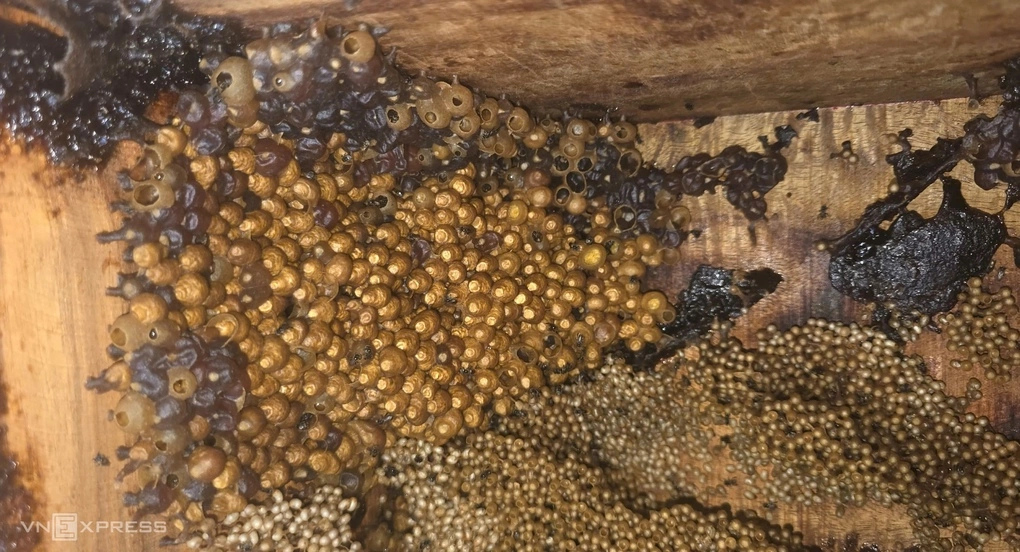
His initial foray into beekeeping was not without failure. In 2017, he shifted his focus toward Tetragonula—commonly known as stingless bees or "ong dú." Unlike traditional honeybees, these stingless species are highly resilient, inhabit natural crevices or hollow trees, and are remarkably docile. However, they are also characterized by lower honey yields and a distinct, acidic flavor profile, which previously limited their commercial viability. Undeterred, Thanh spent years studying their biology, learning the nuances of colony division, pollen collection, and environmental adaptation.
The Evolution of a Sustainable Model
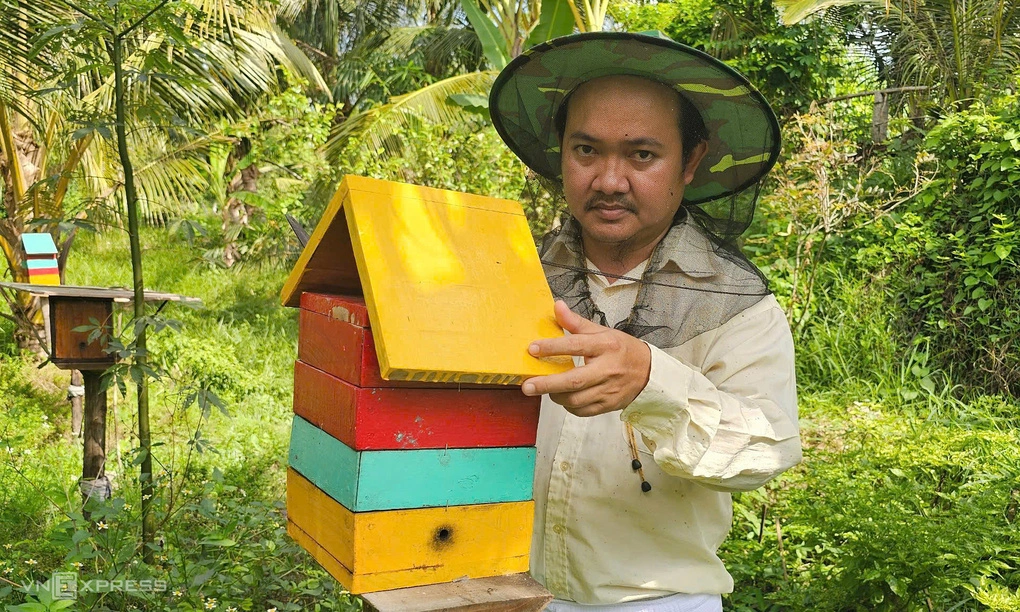
Thanh’s breakthrough came through a process of selective breeding and structural innovation. He spent three years designing a custom-built, three-tier hive. The two lower tiers are dedicated to brood rearing and colony growth, while the top tier is reserved exclusively for honey production. This "layering" approach allows for harvesting without disrupting the brood or causing undue stress to the colony, resulting in higher-quality honey.
To elevate the product, Thanh transitioned from relying on fruit orchard nectar to planting medicinal herbs native to the Seven Mountains region, such as Xuyên tâm liên (Andrographis paniculata), Cam thảo đất (Scoparia dulcis), and prickly amaranth. This strategic planting not only enhances the nutritional and medicinal value of the honey but also ensures a consistent, high-quality output that commands a premium price of approximately 2.5 million VND per liter.
The Role of AI and IoT in Apiculture
Perhaps the most significant advancement in Thanh’s model is the integration of digital technology. Collaborating with experts from universities in Ho Chi Minh City and Can Tho, Thanh has implemented an AI and IoT-based monitoring system. Each hive is equipped with a suite of sensors that track ambient temperature, humidity, and high-frequency sound signatures.
This data is processed by an AI algorithm designed to detect anomalies. For instance, the system can identify signs of food scarcity, predator attacks, or internal health issues, such as an impending colony split. This allows the beekeeper to intervene proactively, ensuring the health and productivity of the 1,000 colonies with minimal labor input. This precision agriculture model significantly reduces the risk of loss, which is a common barrier to entry for small-scale beekeepers.
Chronology of Growth and Recognition
The project has achieved significant milestones over the past decade:
- 2017: Initial research begins into stingless bee species (ong dú) after the failure of earlier agricultural models.
- 2022: Completion of the custom three-tier hive design, enabling non-invasive harvesting.
- 2025: The project receives formal approval and funding of approximately 1.5 billion VND from the An Giang Department of Science and Technology to conduct scientific research on the medicinal properties of stingless bee honey.
- 2025: The initiative wins first prize in the An Giang Provincial Startup Competition and receives the Luong Dinh Cua Award.
- 2026: The project secures third place in the National Rural Youth Startup Competition organized by the Central Youth Union.
Broader Economic and Environmental Implications
Thanh’s model is not intended to remain a proprietary secret; he is actively sharing his techniques with hundreds of households across the Mekong Delta, Central, and Northern regions of Vietnam. In the Thai Son ward of An Giang, the project has been integrated into the national poverty reduction program, supported by over 1.2 billion VND in funding.
Currently, more than 40 households have received support, including 10 initial starter colonies, technical training, and assistance with market access. The economic impact is tangible: many elderly participants, who might otherwise face limited employment opportunities, are now generating an annual income of approximately 30 million VND from their hives.
Beyond the financial gains, the ecological benefits are profound. The model encourages the protection of bee habitats and the maintenance of local floral sources, reducing the use of harmful chemical pesticides. The pollination activity of the bees also bolsters the growth of local crops, creating a symbiotic relationship between apiculture and traditional farming.
Official Assessment and Future Outlook
Phan Duy Bang, Secretary of the An Giang Provincial Youth Union, has lauded the project as a prime example of creative entrepreneurship. He noted that the integration of stingless beekeeping with medicinal plant cultivation aligns perfectly with the national shift toward "green agriculture." By adding value to local agricultural products and providing a stable livelihood, the model serves as a scalable solution for rural development.
As the project continues to evolve, the focus is shifting toward further scientific validation. The ongoing research funded by the provincial government aims to isolate and analyze the bioactive compounds within the honey. If successful, this research could pave the way for the branding of Thất Sơn stingless bee honey as a high-value medicinal product, further cementing the region’s position in the premium honey market.
In conclusion, Nguyen Trung Thanh’s work demonstrates that traditional agriculture, when infused with modern scientific rigor and digital tools, can serve as a powerful engine for economic transformation. By turning the rugged terrain of the Seven Mountains into a hub for sustainable apiculture, he has provided a roadmap for how rural communities can harness their natural resources to achieve both prosperity and environmental stewardship. The success of this 1,000-colony operation is not just a personal victory for an ambitious entrepreneur, but a testament to the potential for innovation to bridge the gap between ancient landscapes and the demands of the 21st-century global market.