All American Classics The Industrial Heritage and Preservation Crisis of a Legendary Washington State Muscle Car Sanctuary

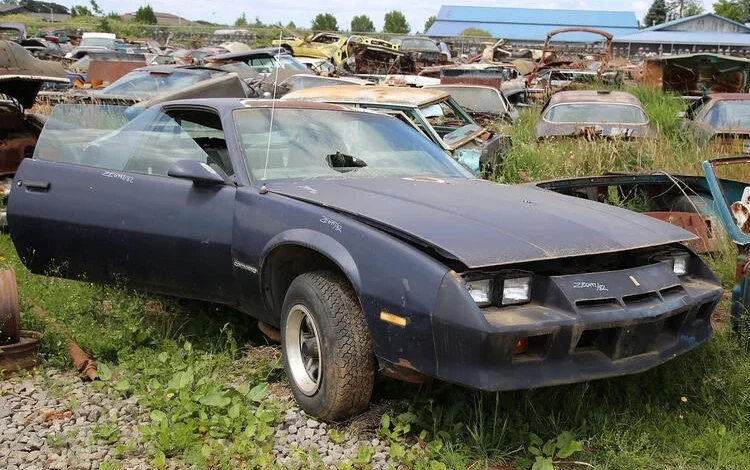
In the heart of Vancouver, Washington, tucked away from the modern glass-and-steel developments of the Pacific Northwest, lies a sprawling testament to the golden age of the American automobile. Known globally as All American Classics, this facility has long been recognized as one of the most significant salvage operations dedicated exclusively to domestic vehicles. It is far more than a mere junkyard; for historians, restorers, and automotive enthusiasts, it represents a living museum and a vital "treasure chest" of components that can no longer be found on any modern assembly line. The yard’s inventory spans nearly eight decades of industrial history, housing thousands of models ranging from the Art Deco-inspired designs of the 1930s to the high-performance electronic marvels of the early 2000s.
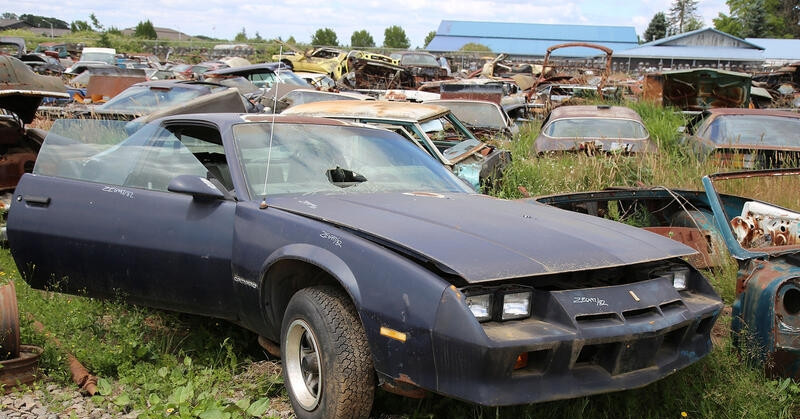
However, the sanctuary of steel has recently faced existential challenges that mirror the shifting economic landscape of Clark County. As property values in the Vancouver area have surged and real estate taxes have reached unprecedented heights, the operational costs of maintaining such a massive footprint became unsustainable. A few years ago, the owner of All American Classics was forced into a heartbreaking logistical retreat, selling off half of the facility’s land to settle tax burdens and rising overhead. This decision led to a mass automotive execution: approximately 1,200 classic cars had to be crushed to clear the land for its new owners. This loss sent shockwaves through the classic car community, highlighting the precarious nature of physical automotive history in an era of rapid urban expansion.
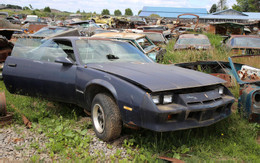
Despite this significant reduction in size, All American Classics remains a formidable entity in the restoration industry. Following a rigorous selection process, the yard managed to preserve over 1,000 of its most valuable and historically significant vehicles. The current inventory is a curated selection of American ingenuity, featuring everything from utilitarian family sedans and stylish coupes to rare muscle cars and high-end luxury icons that once defined the upper echelons of American society.
The Economic Reality of Automotive Preservation
The struggle at All American Classics is a microcosm of a broader trend affecting "automotive cemeteries" across the United States. In decades past, land on the outskirts of cities like Vancouver was inexpensive, allowing salvage yard owners to store vehicles indefinitely. Today, that same land is coveted for high-density housing and commercial warehouses. For a business like All American Classics, which relies on the slow turnover of vintage parts rather than the rapid sales of a modern dealership, the math often fails to add up.
The facility maintains a "one in, one out" policy necessitated by its reduced acreage. Currently, the yard continues to acquire "new" old stock at a rate of approximately two vehicles per day. These arrivals are often sourced from estate sales, insurance auctions, or private owners who can no longer maintain their projects. Because space is at a premium, the arrival of a fresh donor vehicle often means that a picked-over shell must finally be sent to the crusher. This creates a high-stakes environment where the most useful components must be salvaged before the vehicle’s physical footprint is sacrificed to make room for the next arrival.
A Half-Century of Performance: The Camaro Legacy
One of the most impressive concentrations of specialized inventory at All American Classics is dedicated to the Chevrolet Camaro. The facility currently houses more than 120 units of this iconic pony car, with production dates ranging from the inaugural 1967 model year to the modern 2017 iterations. This collection serves as a critical resource for restorers seeking period-correct body panels, interior trim, and mechanical components.
The owner notes that the demand for Camaro parts remains evergreen, but the business model faces internal threats from theft. Unlike modern salvage yards that use high-security shelving, the "pick-and-pull" nature of classic yards allows customers to interact directly with the cars. While many enthusiasts are respectful, the owner has reported frequent incidents of individuals attempting to conceal small, high-value components—such as emblems, knobs, or specialized switches—under clothing to avoid payment. This "shrinkage" adds another layer of difficulty to an already high-overhead business.
Engineering Marvels and Rare Survivors
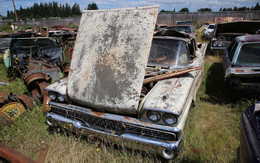
Among the rows of rusted steel are several pieces of genuine automotive history that exceed the value of simple parts donors. One such example is a 1959 Ford Fairlane 500 Skyliner. This vehicle was a marvel of its time, featuring the "Hide-Away Hardtop," an intricate electrical system that allowed the solid roof to fold and retract entirely into the trunk. In 1959, Ford produced only about 13,000 units of the Skyliner, and today, finding one in any condition is a rarity. All American Classics remarkably holds two of these complex machines.
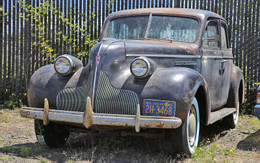
In the section of the yard reserved for potential full restorations, a 1939 Buick stands as a haunting reminder of a bygone era. This vehicle was reportedly kept in dry storage from 1962 until recently, when it was brought to the yard by the grandson of the original owner. The car remains largely intact, though a previous attempt at restoration—marked by the installation of fresh white-wall tires—was abandoned when the owner realized the sheer cost and expertise required to bring a pre-war luxury car back to life. It now waits for a collector with deep pockets and a commitment to preserving 1930s craftsmanship.
The Intersection of Modern Performance and Salvage
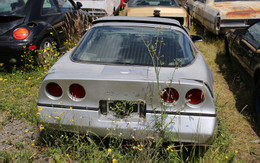
The yard does not strictly limit itself to the distant past. It also serves as a hub for late-model performance enthusiasts, specifically those focused on the Chevrolet Corvette. A notable resident is a 1990 Corvette ZR-1, a car that once represented the pinnacle of American supercar engineering with its Lotus-designed LT5 engine.
The owner of All American Classics emphasizes that acquiring wrecked or damaged Corvettes is a vital part of the business strategy. Corvette owners are notoriously meticulous about using original equipment manufacturer (OEM) parts for repairs. Because local supplies of these specialized components are often limited, the yard’s ability to provide genuine fiberglass panels, suspension components, and engine parts for various Corvette generations makes it a primary destination for the West Coast’s performance community.
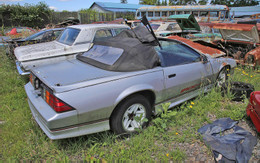
The tragedy of lost potential is also visible in vehicles like a 1988 Chevrolet Camaro IROC-Z convertible. The IROC-Z (named after the International Race of Champions) was the high-performance successor to the Z28 and remains a cult favorite among 1980s enthusiasts. The unit at All American Classics features a near-pristine rear body, but its engine bay was completely gutted by fire, rendering the car a "parts only" resource. Such vehicles illustrate the fine line between a restorable classic and a donor shell.
Rare Exports and Luxury Icons
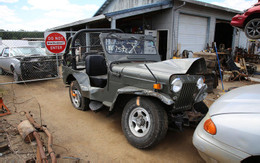
The diversity of the inventory at All American Classics is further evidenced by the presence of a 1979 Mitsubishi Jeep. This vehicle is a curiosity of international licensing; Mitsubishi produced these Jeeps under license from Willys-Overland from 1953 until 1998. While approximately 200,000 were produced in Japan, only a tiny fraction ever made it to American soil. The unit in Vancouver bears the scars of heavy use and collisions, but it remains a sought-after source of parts for the niche community of Japanese-built Jeep enthusiasts.
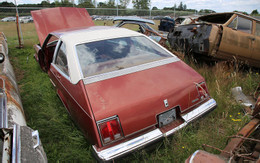
The luxury segment is represented by titans like the 1972 Cadillac Eldorado convertible. In its prime, the Eldorado was one of the most expensive cars in the Cadillac lineup, second only to the Series 75 limousines. Of the 40,000 Eldorados built in 1972, only about 8,000 were convertibles. Seeing one sitting in a salvage yard is a poignant reminder of the "planned obsolescence" that once dominated the industry. Similarly, a 1965 Cadillac DeVille convertible sits exposed to the elements, its roof long gone and its interior ravaged by years of Washington rain, yet its chrome trim and body panels remain valuable to those trying to keep other 1960s Cadillacs on the road.
The Global Impact of the Automotive "Graveyard"
While the term "junkyard" often carries a negative connotation of waste, operations like All American Classics are actually at the forefront of the circular economy. By salvaging and recirculating parts, they prevent the need for the energy-intensive manufacturing of new reproduction components. Furthermore, reproduction parts often lack the perfect fit and metallurgical quality of the original factory steel. For a high-end restoration, "new old stock" (NOS) or high-quality salvaged original parts are the gold standard.
The facility in Vancouver acts as a global supplier. Parts pulled from these cars are shipped to enthusiasts in Europe, Australia, and Asia, where American muscle cars have a massive following but zero local parts availability. In this sense, the 1,000 cars remaining at All American Classics are not just sitting in a field; they are being slowly redistributed across the world, piece by piece, to ensure that the global fleet of vintage American cars continues to function.
Conclusion: The Future of Physical History
The story of All American Classics is one of resilience in the face of modernization. The loss of 1,200 vehicles to the crusher was a blow to automotive heritage, but the preservation of the remaining 1,000 suggests that there is still a place for physical salvage in the digital age. As the world moves toward electric vehicles and computer-controlled manufacturing, the mechanical simplicity and raw aesthetic of the cars at All American Classics become increasingly precious.
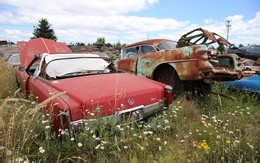
For the owner and the customers who frequent the yard, these cars are not just scrap metal. They are repositories of memories, engineering milestones, and cultural symbols. Whether it is a 1973 Dodge Dart with a still-functioning V8 engine or a 1979 Oldsmobile Cutlass with its original red paint still gleaming under the moss, each vehicle offers a final service to the community. They wait in the quiet fields of Vancouver, offering their components so that their counterparts elsewhere may continue to roam the streets, ensuring that the roar of the American V8 is not silenced by the passage of time or the pressure of rising taxes.