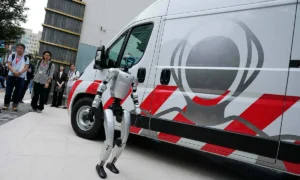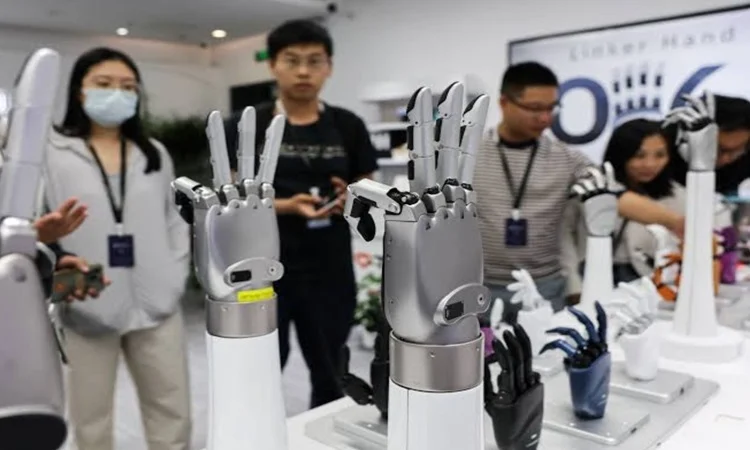
While modern humanoid robots have achieved remarkable milestones in mobility—such as performing backflips, running at high speeds, and navigating complex terrain—the seemingly trivial act of folding laundry or picking up a loose pen remains an elusive "holy grail" of robotics. The disparity between a robot’s ability to perform high-energy athletic maneuvers and its struggle with fine motor skills highlights a critical bottleneck in current engineering. As researchers push the boundaries of artificial intelligence, the human hand continues to serve as the gold standard for dexterity, presenting a complex challenge that involves biomechanics, sensory feedback, and real-time environment adaptation.
The Biological Supremacy of the Human Hand
The human hand is a masterwork of evolutionary engineering, comprising 27 bones, 30 muscles, and a dense network of tendons and ligaments that facilitate 27 degrees of freedom. Beyond its mechanical structure, the human hand is sensory-rich, housing over 17,000 tactile sensors and nerve endings in the palm alone. This biological system allows for "haptic intelligence"—the ability to instantly adjust grip strength based on the texture, weight, and fragility of an object without conscious thought.
In contrast, industrial robots are primarily designed for repetitive, high-precision tasks in controlled environments. These robots often rely on rigid grippers with a single degree of freedom. They operate within a world of "knowns": fixed lighting, predictable object placement, and repetitive movement cycles. When a robot is introduced to a domestic setting—a chaotic, unpredictable environment—its existing hardware often fails to cope with the fluidity of everyday life.
The Complexity of Domestic Manipulation
The fundamental challenge in domestic robotics is the transition from "hard" to "soft" manipulation. In a factory, a robot might assemble a mechanical part thousands of times with sub-millimeter precision. In a home, however, objects are rarely stationary. A shirt changes shape every time it is picked up; a plastic bag has no fixed form; a piece of fruit may bruise if handled with excessive force.
According to research from the University of Ohio, domestic robots struggle because they cannot easily separate their hand movements from the rest of their body or the surrounding environment. Unlike factory bots, household robots must balance, reach, and coordinate their movements while navigating human-inhabited spaces. This requires a level of sensory integration that current hardware and software struggle to synchronize in real-time.
Data Scarcity and the Training Gap
One of the most significant barriers to achieving human-like dexterity is the lack of high-quality, diverse training data. While AI models like ChatGPT can be trained on vast amounts of text, and vision models on millions of images, robotic manipulation data is notoriously difficult to capture.
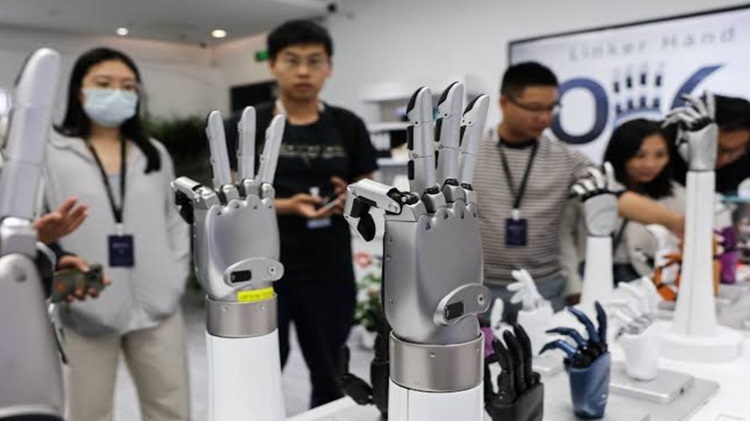
Training a robot requires synchronizing data from multiple sources: joint positions, camera feeds, torque sensors, and tactile feedback. As noted by the IEEE, tactile data is the "missing link." Without the ability to "feel" slippage or pressure, a robot cannot know if it is crushing an object or if that object is about to fall. Current research is shifting toward "teleoperation," where humans wear sensors to perform daily tasks, creating datasets that the AI can then imitate. However, even with this, teaching a robot to handle the infinite variability of household items remains a monumental computational hurdle.
Chronology of Recent Advancements
The race to bridge this gap has accelerated over the past few years:
- 2024: Industry leaders began prioritizing tactile sensors as a primary component of humanoid development, moving away from purely visual-based navigation.
- 2025: Significant breakthroughs in "sim-to-real" training, where robots learn in a virtual environment before being deployed, showed a 60% improvement in basic object interaction.
- Early 2026: A landmark study from the University of Chiết Giang, published in Science Robotics, demonstrated a new method of combining visual and haptic information. Their system successfully completed 85% of complex tasks involving 25 distinct objects, marking a significant leap forward in AI-driven manipulation.
- Late 2026: Companies like Unitree and Shadow Robot began testing advanced grippers (such as the DEX-EE) that offer multiple degrees of freedom and real-time feedback loops.
Industry Responses and Emerging Technologies
Major players in the robotics sector are approaching the problem from different architectural philosophies. Unitree’s G1 robot, for instance, utilizes a three-finger design that focuses on force control, allowing it to adapt to varying object shapes. Meanwhile, the partnership between Shadow Robot and Google DeepMind has produced the DEX-EE, a sophisticated three-finger hand that uses cable-driven mechanisms to reach 12 degrees of freedom. Each fingertip on the DEX-EE is equipped with high-resolution tactile sensors that provide 3D data in real-time.
Despite these advancements, Alex Zhou Yong, founder of LinkerBot, notes that the complexity of a hand is exponentially higher than that of the rest of the body. "The level of dexterity required is ten times higher than other body parts, yet the physical space available for actuators is only one-tenth," Yong explained. This spatial constraint forces engineers to prioritize either durability or agility, rarely achieving both in a cost-effective package.
Broader Implications for the Future of Robotics
The implications of mastering manual dexterity extend far beyond household chores. If robots can learn to handle delicate or deformable objects, the potential for applications in healthcare (such as robotic surgery or patient assistance), disaster relief, and complex manufacturing will grow exponentially.
However, the transition from lab-based research to real-world application remains the ultimate test. While the DEX-EE and similar prototypes have shown promise in controlled settings, they have yet to be deployed in environments where human safety and unpredictable variables are constant factors.
Analysts suggest that the next decade will likely be defined by "embodied AI"—systems that do not just process data, but actively interact with the physical world. The challenge is no longer just about building a stronger arm; it is about building a "smarter" touch. As data collection methods improve and sensor technology becomes cheaper and more precise, the gap between machine and human dexterity will continue to narrow. Until then, the simple act of folding a shirt remains a profound reminder of the sophisticated interplay between brain, nerve, and muscle that we often take for granted.
Related posts: