The story of Airi Hirase, a young Japanese woman who underwent a radical physical transformation through extensive cosmetic surgery, has ignited a profound public discourse in Japan regarding the intersection of beauty standards, mental health, and the societal pressures placed on young individuals. After spending approximately 27.5 million yen—equivalent to over 4.5 billion Vietnamese dong—on comprehensive facial reconstruction, Hirase has transitioned from a victim of severe bullying to a professional actress, recently securing a role in a Netflix production titled "Down Time."
A Traumatic Foundation
The roots of Hirase’s decision to undergo such extreme surgical measures lie in a childhood marked by persistent, systemic verbal and psychological abuse. According to public disclosures made by Hirase, the criticism began within her own household. At the age of five, she was reportedly told by her own mother, "It would have been better if you had never been born," a statement that served as the catalyst for a lifetime of self-loathing and a fractured sense of identity.
Throughout her formative school years, Hirase was a frequent target of peer harassment. Her classmates consistently mocked her facial features, creating an environment of isolation. This hostility was not confined to her peers; she recalled instances where male classmates demanded she stop wearing makeup, and teachers offered critical remarks, suggesting that she possessed an "unpleasant appearance." Even after completing her education, the cycle of abuse continued in professional settings, where colleagues frequently made derogatory comments about her looks.

Chronology of a Transformation
The journey from a victim of bullying to an emerging actress was a long-term, calculated effort. Recognizing that she needed to escape the environment that constantly diminished her worth, Hirase began working at the age of 16 to save for her transformation.
- 16 Years Old: Hirase began working multiple jobs, including roles in logistics and security, to accumulate the necessary capital for surgery.
- 18 to 24 Years Old: Over the course of eight years, she maintained a rigorous work schedule, successfully saving 10 million yen as initial capital.
- The Surgical Phase: She invested the entirety of her savings into a series of surgical procedures, eventually totaling 27.5 million yen. The interventions included major structural facial surgery, which fundamentally altered her appearance.
- The Present Day: Hirase has leveraged her transformation to gain public recognition, now boasting over a million followers on social media and securing professional acting roles, most notably the project on Netflix.
Clinical Perspectives: Body Dysmorphic Disorder
Medical experts observing Hirase’s case have pointed toward Body Dysmorphic Disorder (BDD) as a potential psychological underlying factor. BDD is a mental health condition characterized by an obsessive focus on perceived flaws in appearance—flaws that are often minor or entirely invisible to others.
"The decision to invest such a significant sum of money and undergo such invasive, full-face structural surgery often reflects a deep-seated need for validation and a psychological reaction to chronic external rejection," says Dr. Kenji Sato, a cosmetic surgeon based in Tokyo.
Clinical psychologists warn that surgery alone cannot heal the emotional trauma caused by long-term bullying. While physical changes can provide temporary relief from social anxiety, they do not resolve the internal narratives formed during childhood. Patients suffering from BDD often find themselves in a "surgical loop," where no amount of physical alteration is sufficient to satisfy the internal need for perfection, leading to potential long-term psychological dissatisfaction.

The Risks of Radical Surgical Intervention
The physical risks associated with multiple, repetitive, and radical surgeries are substantial. Experts in reconstructive surgery emphasize that frequent, high-stakes procedures pose significant health hazards, including:
- Nerve Damage: Extensive facial surgery increases the risk of damaging sensory nerves, which can lead to permanent facial numbness or paralysis.
- Tissue Necrosis: Repeated incisions and modifications to the facial structure can compromise blood supply to the skin, causing tissue death.
- Anesthesia Complications: The cumulative effect of multiple surgeries requires repeated exposure to general anesthesia, which carries inherent risks, particularly when performed over a condensed timeline.
- Structural Integrity: Altering bone structure too frequently can lead to facial collapse as the patient ages, as the skin and underlying tissues lose their natural elasticity and structural support.
The Broader Societal Impact
Hirase’s case has become a lightning rod for discussions regarding Japan’s rigid beauty standards. The country’s social fabric often places immense pressure on individuals to conform to specific aesthetic ideals. When individuals deviate from these standards, they are frequently subjected to "looks-based" discrimination, which can be as damaging as racial or gender-based prejudice.
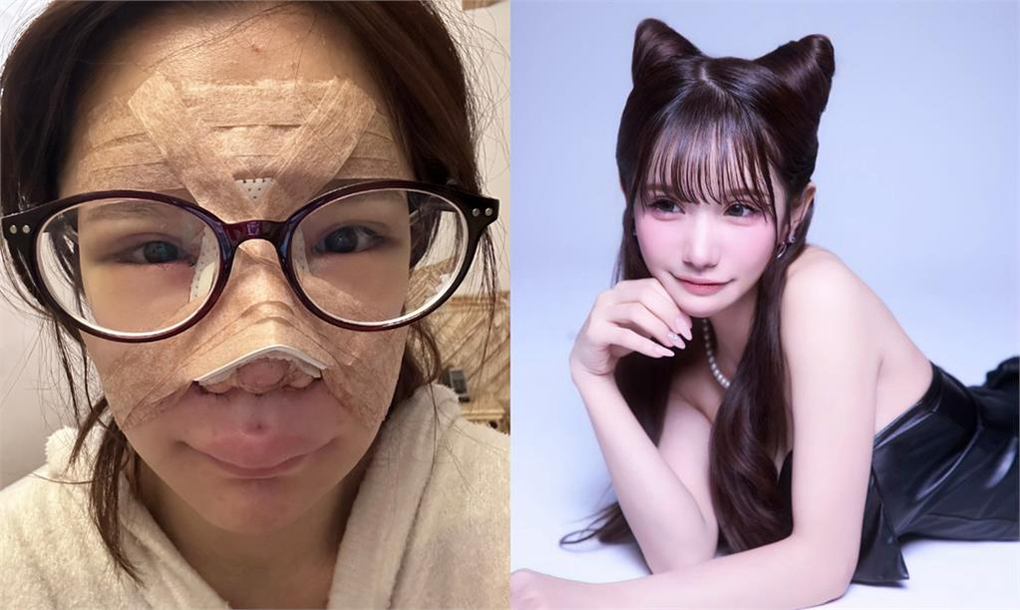
By documenting her journey—including posting "before and after" photographs—Hirase has gained a massive, loyal following. While she initially sought attention to validate her new identity, she has since pivoted to using her platform to encourage others who suffer from body image issues. "Having overcome everything that happened to me, I feel that no future difficulty can be insurmountable," she stated in a recent social media post.
However, some sociologists argue that her public success may inadvertently normalize extreme surgical practices among younger, more vulnerable demographics. By framing a 27.5-million-yen transformation as a "success story," there is a risk that others may view surgery as the only viable path to self-worth, rather than seeking mental health support or systemic changes in societal attitudes toward beauty.
Comparison with Global Trends
Hirase’s narrative is not isolated. Globally, there have been several high-profile cases of individuals undergoing extensive surgery as a response to psychological distress. For instance, the case of model Pixee Fox, who had six ribs removed to alter her silhouette, or Rodrigo Alves, known as the "Human Ken Doll," who underwent dozens of procedures, serve as stark warnings of the "addiction" to cosmetic surgery.
In many Asian clinics, surgeons are now implementing stricter screening processes. Patients expressing high levels of psychological distress are often required to undergo a psychological evaluation before they are cleared for elective, non-reconstructive surgery. This represents a shift in industry ethics, moving away from purely profit-driven practices toward a more patient-centered approach that prioritizes long-term well-being over immediate physical results.
Conclusion and Future Implications
Airi Hirase’s journey is a complex tapestry of resilience, trauma, and the pursuit of autonomy. While she has successfully rebranded her public image and achieved professional success as an actress, the medical community remains cautious. Her story underscores the necessity for a more integrated approach to beauty-related medical procedures, one that acknowledges the deep psychological pain that often drives individuals to "reconstruct" their lives from the outside in.
As society continues to navigate the pressures of image-centric culture, Hirase’s experience serves as a reminder that while one can alter their physical form, the healing of the mind remains a much more arduous and essential task. Whether or not her story will serve as a cautionary tale or an inspiration remains to be seen, but it has undoubtedly forced a conversation that is long overdue in the public sphere.