Quick-Thinking Driver Executes High-Speed Reverse Maneuver to Escape Careening Truck on Steep Slope

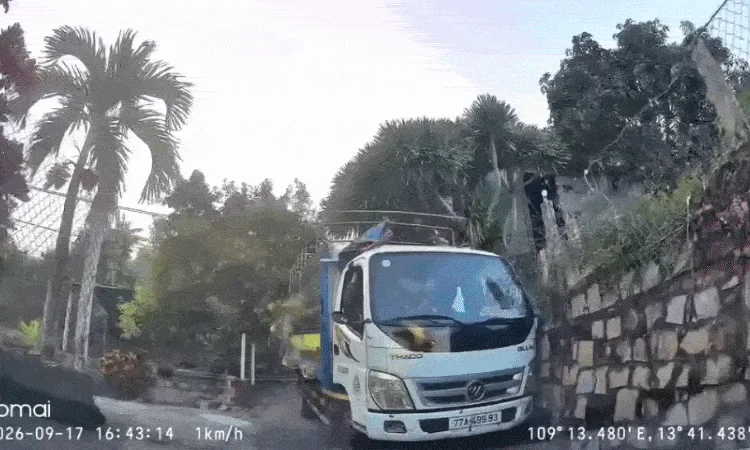
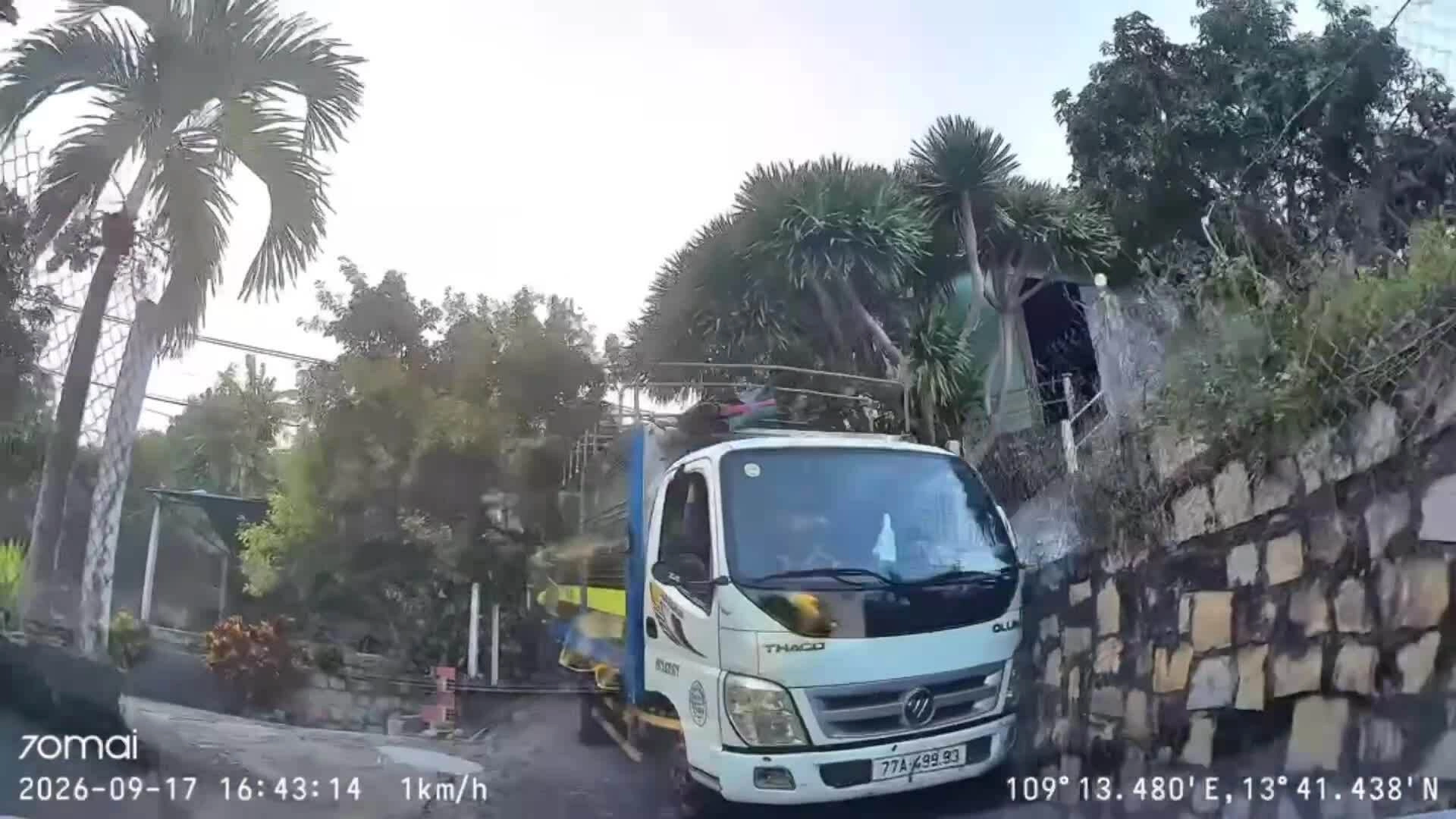
The critical importance of situational awareness and rapid decision-making on mountainous terrain was underscored recently following a heart-stopping traffic incident captured on a vehicle’s dashcam. On September 17, 2026, a quick-thinking motorist in Gia Lai province narrowly avoided a catastrophic collision by executing a swift, high-speed reverse maneuver. The evasive action successfully protected the driver from a runaway truck that had completely lost control while descending a steep incline, careening violently between both sides of the narrow residential alleyway.
Incident Overview and Chronology
The harrowing sequence of events unfolded on a narrow downward slope located within the Quy Nhon Nam ward. According to dashcam footage recovered from the scene, the incident began during the afternoon hours when a heavy freight truck was navigating the steep, confined roadway. For reasons that remain under preliminary review—suspected to involve either a sudden mechanical failure or brake fade—the truck abruptly lost all steering control.
As the multi-ton vehicle gathered momentum, it began to sway dangerously from side to side, scraping against roadside structures and walls as it plummeted down the hill. Directly in its path, traveling upward along the same narrow lane, was a passenger car equipped with an active dashcam.
The timeline of survival unfolded in mere seconds:
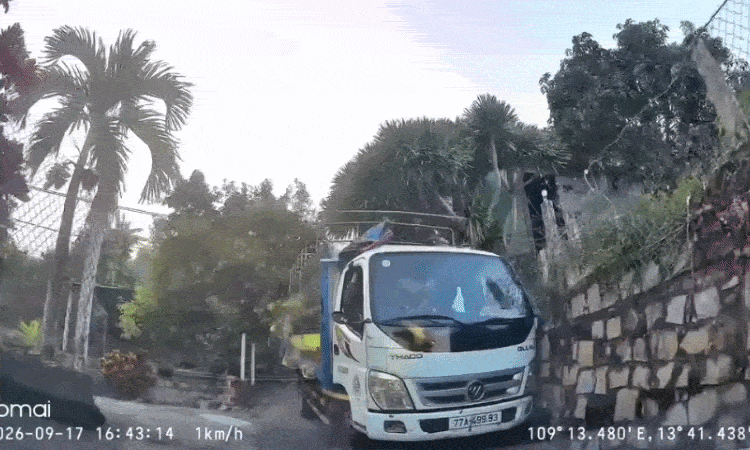
- 00:00 – 00:03: The passenger car ascends the slope at a moderate, legal speed while the runaway truck breaches the driver’s field of view from above, fishtailing wildly.
- 00:04 – 00:07: Recognizing the imminent danger of a head-on collision on a road with zero lateral clearance, the car’s driver makes an instantaneous split-second decision to shift into reverse.
- 00:08 – 00:15: Utilizing exceptional spatial awareness, the motorist accelerates backward down the slope, steering the vehicle safely out of the path of the out-of-control vehicle just as the truck careens past the exact spot the car had occupied seconds prior.
- Post-Incident: The truck continues its erratic descent into the lower roadway, eventually coming to a halt without causing any reported fatalities or severe injuries to pedestrians or other motorists.
The Physics of Mountain Driving and Brake Failure
Traffic safety experts and automotive engineers frequently emphasize the severe hazards associated with steep inclines, particularly for commercial vehicles carrying heavy loads. When operating in dense residential wards or winding rural paths, trucks are subjected to immense gravitational forces that can easily overwhelm standard braking systems if drivers fail to utilize proper gear deceleration—often referred to as engine braking.
Brake fade occurs when excessive friction generates intense heat within the brake pads and rotors, significantly reducing their stopping power. In narrow alleyways, such as the one in Quy Nhon Nam, the absence of dedicated emergency run-off ramps or safety shoulders leaves drivers of runaway vehicles with virtually no safe trajectory, turning ordinary streets into high-risk zones.
Statistical analyses from regional transportation bureaus indicate that heavy vehicle malfunctions on sloped terrain account for a measurable percentage of property-damage and injury accidents annually. While infrastructure improvements—such as warning signage, convex mirrors, and weight restrictions—help mitigate these risks, human error and mechanical degradation continue to pose persistent challenges for local traffic authorities.
Expert Driving Techniques for Emergency Reversing
In the wake of the incident, driving instructors and road safety organizations have highlighted the specific defensive driving techniques that saved the motorist’s life. Executing a high-speed or reactive reverse maneuver is generally discouraged in standard driving manuals due to reduced rear visibility and vehicle stability; however, under extreme life-or-death circumstances, mastering advanced control can mean the difference between survival and disaster.
Safety specialists recommend the following protocol when facing an oncoming, out-of-control vehicle on a single-lane slope:
- Rapid Threat Assessment: Immediately scan the immediate environment for escape routes, including driveways, wide shoulders, or flat structural recesses.
- Comprehensive Mirror and Blind-Spot Check: Before engaging reverse gear, drivers must rapidly assess side mirrors and rearview monitors to ensure the backward path is temporarily clear of pedestrians, children, or hidden obstacles.
- Controlled Acceleration: Reverse maneuvers under duress must balance speed with stability to prevent the vehicle from jackknifing or losing traction on loose gravel or wet pavement.
- Preparedness to Yield: Drivers executing emergency backups must remain ready to brake immediately if an unexpected pedestrian or secondary obstacle enters the blind path behind them.
Broader Implications for Infrastructure and Urban Planning
Local municipal leaders and law enforcement agencies in Gia Lai and surrounding provinces have faced renewed calls from residents to review traffic safety measures in hilly residential sectors. As urban populations expand and commercial delivery vehicles frequently access narrow residential corridors, the potential for catastrophic encounters between heavy trucks and passenger cars increases.
Transportation analysts suggest that municipal authorities should consider implementing stricter zoning and transit ordinances for heavy commercial vehicles. Potential policy adjustments include restricting large trucks from utilizing residential shortcuts during peak hours, installing physical speed-reduction barriers, and mandating advanced maintenance checks for commercial fleets operating in topographically complex regions.
Ultimately, while infrastructure modifications play a vital role in accident prevention, the Quy Nhon Nam incident serves as a powerful testament to the value of defensive driving vigilance. The unnamed motorist’s composure under immense pressure averted a tragedy, offering a textbook example of how quick thinking and situational mastery can conquer unexpected roadway crises.