Ho Chi Minh City is accelerating its ambitious urban rail development strategy, with local authorities confirming plans to initiate the construction of three major metro lines by the end of the fourth quarter of this year. The Management Authority for Urban Railways (MAUR) in Ho Chi Minh City announced on September 21 that it is currently finalizing feasibility studies and completing necessary administrative procedures to secure formal approval for these projects. This strategic expansion is designed to address the city’s burgeoning transportation needs, mitigate chronic traffic congestion, and align with the metropolitan area’s long-term master plan to achieve a comprehensive 255-kilometer metro network by the end of the decade.
The three upcoming projects—the Thu Dau Mot – Tao Dan line, the Tan Son Nhat – Phu Huu segment (part of Metro Line 6), and the Ho Chi Minh City New City – Suoi Tien line—represent a combined investment of over 254 trillion VND. These projects are intended to serve as the backbone of a multi-modal transport system, linking the city’s residential hubs, industrial zones, and international transit gateways.
Strategic Overview of the New Metro Lines
The proposed expansion includes three distinct lines, each serving as a critical artery for regional connectivity:
1. The Thu Dau Mot – Tao Dan Line
As the most ambitious project in the current pipeline, the Thu Dau Mot – Tao Dan line is projected to span approximately 33 kilometers, with an estimated investment of 113 trillion VND. This line is designed with 24 stations—13 underground and 11 elevated—and will feature a central depot in Hiep Binh Phuoc. The route is planned to originate from the Hung Vuong area in Binh Duong province, traversing major transit corridors such as Pham Ngoc Thach, the Binh Duong Boulevard, and National Highway 13, before entering the heart of Ho Chi Minh City. The terminus at Tao Dan Park will serve as a vital interchange point, connecting with the Ben Thanh – Tham Luong line, thereby streamlining passenger movement within the central business district.
2. The Tan Son Nhat – Phu Huu Segment (Metro Line 6)
Representing a critical infrastructure link, the Tan Son Nhat – Phu Huu segment is estimated to cost 86 trillion VND and cover a distance of 23 kilometers. This line is slated to include 17 stations, comprising 13 underground and 4 elevated facilities, with a supporting depot in Binh Trieu. By passing directly through Tan Son Nhat International Airport, this line will serve as a primary link between the aviation hub and the eastern urban zones. Upon completion, it will facilitate a seamless transit corridor connecting Tan Son Nhat to the Thu Thiem – Long Thanh rail project, significantly enhancing accessibility for international and domestic travelers.
3. The Ho Chi Minh City New City – Suoi Tien Line
With an investment of approximately 55 trillion VND, this 31-kilometer line will connect the burgeoning Ho Chi Minh City New City to the existing Suoi Tien hub. The route starts near the A1 roundabout in Binh Duong and services several key industrial and residential zones, including Phu Loi, Thuan Giao, An Phu, and Dong Hoa. Featuring 17 stations, the line is specifically engineered to integrate with existing metro networks and regional rail lines heading toward Dong Nai and the future Long Thanh International Airport, effectively acting as a catalyst for regional economic integration.
Context and Chronology of Development
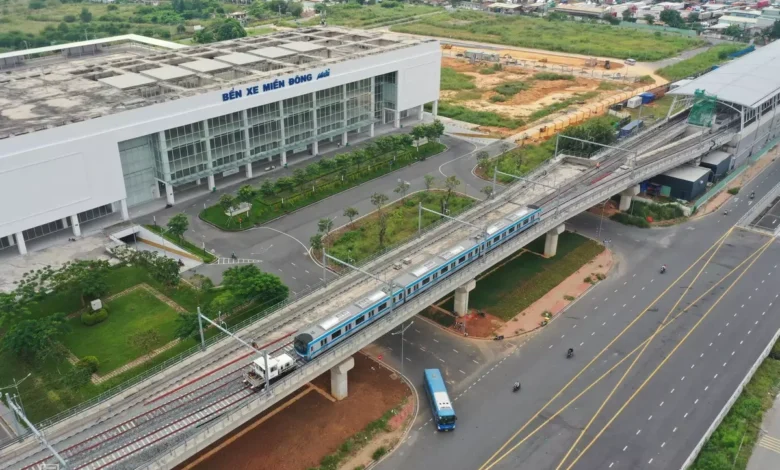
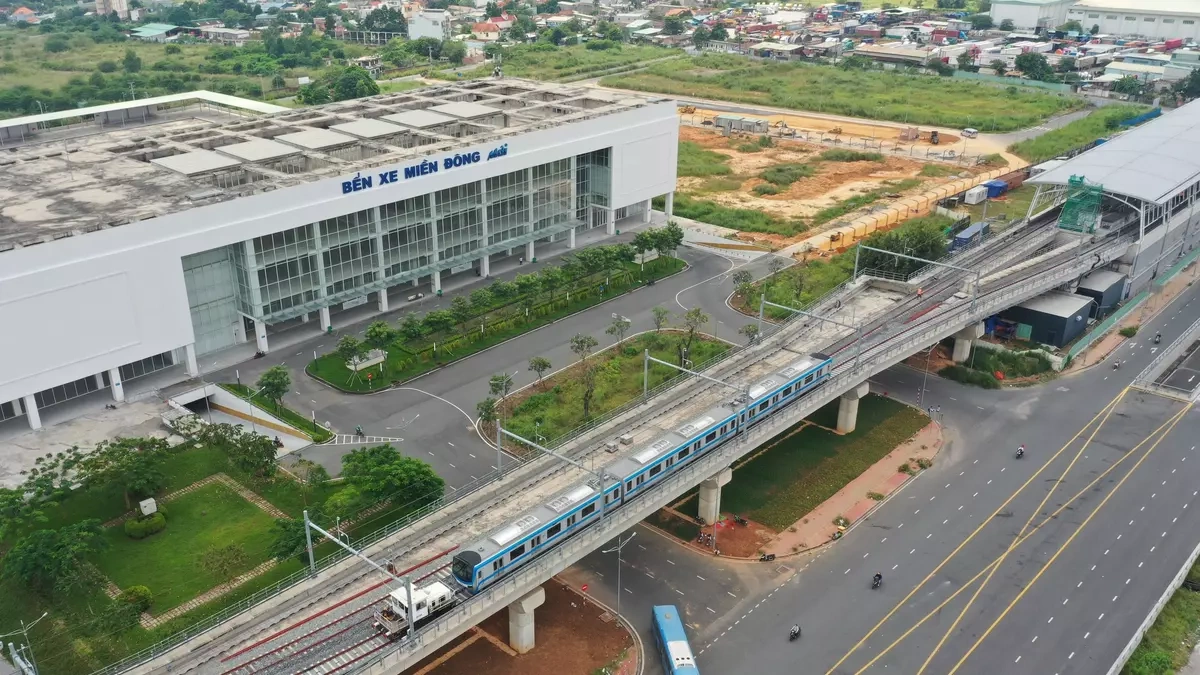
The expansion of the metro network follows years of intense preparation and the recent, hard-won operational success of the Ben Thanh – Suoi Tien line, which currently operates roughly 20 kilometers of track. Historically, Ho Chi Minh City has faced significant challenges in implementing large-scale infrastructure, ranging from land acquisition delays to financing hurdles and technical complexities.

The current momentum is part of a broader "acceleration phase" that began earlier this year. Since the start of the year, the city has successfully initiated or moved forward with several major projects, including the Ben Thanh – Tham Luong, Ben Thanh – Thu Thiem, and Ben Thanh – Can Gio lines. Authorities have signaled that the projects scheduled for late 2024 are being fast-tracked through a combination of enhanced administrative efficiency and prioritized budgetary allocations.
Supporting Data and Financial Strategy
The financial commitment required to reach the 255-kilometer goal by 2030 is substantial. While the current three projects account for 254 trillion VND, the city is exploring diverse funding models, including public-private partnerships (PPP) and central government infrastructure grants.
| Project Name | Estimated Length | Estimated Investment | Key Hubs/Features |
|---|---|---|---|
| Thu Dau Mot – Tao Dan | 33 km | 113 trillion VND | 24 stations; Interchange at Tao Dan |
| Tan Son Nhat – Phu Huu | 23 km | 86 trillion VND | Airport link; 17 stations |
| HCMC New City – Suoi Tien | 31 km | 55 trillion VND | 17 stations; Regional rail integration |
The inclusion of these lines is expected to increase the total length of the city’s urban rail system to approximately 255 kilometers by 2030. This expansion is essential for maintaining the city’s competitiveness as a regional economic powerhouse, as the current reliance on road-based transport has reached a saturation point.
Official Responses and Administrative Coordination
MAUR has confirmed that inter-agency cooperation is at an all-time high. Officials are working closely with the Ministry of Transport and regional authorities in Binh Duong and Dong Nai to ensure that the transit lines align with inter-provincial planning.

"We are currently in the final stages of the feasibility review," a spokesperson for the management board stated. "The goal is to ensure that these lines are not just isolated segments but are fully integrated into a wider, more efficient transport web that supports the growth of the Southern Key Economic Zone."
Experts suggest that the success of these projects will depend heavily on the city’s ability to maintain a consistent construction pace and handle the complexities of underground excavation in high-density urban areas. The integration of "Transit-Oriented Development" (TOD) models—where commercial and residential real estate is built around these transit hubs—is expected to be a key feature in maximizing the economic return of these massive investments.
Broader Impact and Implications
The shift toward a robust metro network carries significant socioeconomic implications for Ho Chi Minh City. Beyond reducing travel times for millions of commuters, the project is expected to:
- Environmental Benefits: By shifting a significant percentage of commuters from private vehicles and buses to electric-powered rail, the city anticipates a measurable decrease in carbon emissions and urban air pollution.
- Real Estate and Commercial Growth: The development of stations, particularly in the Binh Duong and Thu Thiem areas, is likely to drive property value appreciation and stimulate new commercial activity in previously under-serviced districts.
- Regional Connectivity: The connection to future projects like the Long Thanh International Airport is crucial. By creating a unified rail corridor between the city center, the existing airport, and the future international gateway, Ho Chi Minh City is positioning itself to handle the increased logistical and passenger demands of the next three decades.
As the city approaches the end of 2024, the focus remains on securing the necessary approvals to transition from the planning phase to active construction. While the timeline is ambitious, the political will and the economic necessity of these projects suggest that Ho Chi Minh City is entering a transformative era in its urban infrastructure history. If the current trajectory holds, the city will move closer to realizing its vision of a modern, interconnected metropolis capable of sustaining its rapid growth and improving the quality of life for its residents.