BYD Megawatt Flash Charger sabotage incident highlights growing tensions in China’s electric vehicle infrastructure ecosystem


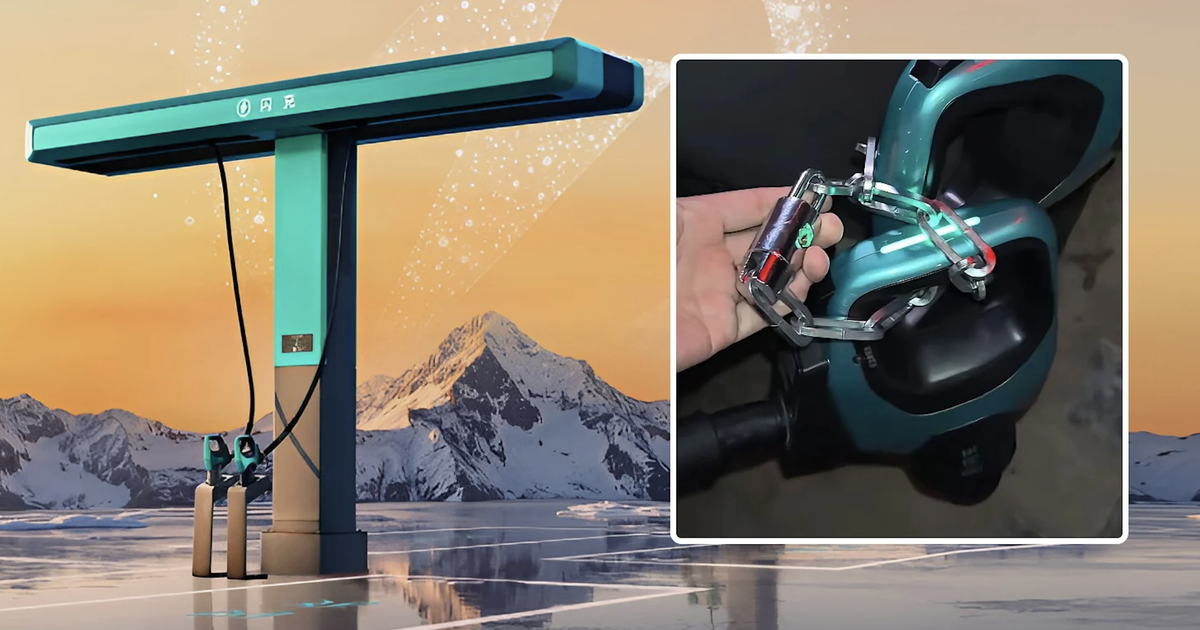
A recent, highly unusual incident involving the deliberate sabotage of a BYD Megawatt Flash Charger has sent shockwaves through China’s burgeoning electric vehicle (EV) charging network. Images circulating on Chinese social media platforms show two high-power charging cables physically chained and padlocked together, effectively rendering the station inoperable for motorists. This act of vandalism has prompted widespread speculation regarding the motives behind such an aggressive intervention, raising questions about market competition, the management of public infrastructure, and the growing pains of a rapidly expanding EV sector.
Chronology and Initial Findings
The incident, which surfaced in late October 2026, involves a high-output BYD Megawatt Flash Charging station—a cornerstone of the automaker’s push to provide ultra-fast, convenient energy replenishment for its users. Photographic evidence confirms that the charging heads were bound together using a heavy-duty metal chain.
For the average BYD owner, the implications were immediate and frustrating: the station was effectively "locked," and any attempt to force a connector into a vehicle would result in the remaining cable colliding with the car’s exterior, potentially causing significant body damage. Notably, the station remained powered during this time. Diagnostic screens and LED indicators remained illuminated in green, signaling that the charger was in an active, ready-to-use state, despite the physical obstruction.
As of the current reporting period, there has been no official claim of responsibility. However, the audacity of the act suggests a level of premeditation that goes beyond simple vandalism. Local authorities and representatives from the site management are currently reviewing security footage to identify the perpetrators, while BYD has begun an internal audit of its regional charging assets to determine if this is an isolated event or part of a broader campaign of sabotage.
Contextualizing the Charging Ecosystem
To understand why such an act might occur, one must analyze the unique structure of China’s EV charging market. Unlike some Western markets where charging networks are often vertically integrated, the Chinese landscape is a complex patchwork of public-private partnerships and third-party operators.
Many charging stations operate under a franchise or "managed-ownership" model. In this setup, one entity may own the physical land and utility connections, while another handles the hardware, software, and customer service. This separation of powers often leads to operational friction. When a major player like BYD enters the market with a "Megawatt" capability—significantly faster and more efficient than older, legacy infrastructure—it can disrupt the business models of incumbent operators who rely on slower, legacy charging technologies.
The profit margins for DC fast-charging in China are notoriously thin. Prices per kilowatt-hour (kWh) outside of major metropolitan hubs typically range between 1.0 and 1.5 yuan (approximately $0.15 to $0.22 USD), even during peak demand periods. To remain profitable, many operators have shifted toward mobile app advertising and "one-time charging membership" fees to subsidize their operational costs. The introduction of high-performance chargers by automakers themselves—which prioritize user experience over immediate profit margins—can be perceived as an existential threat by smaller, legacy operators.
Supporting Data and Market Dynamics
The growth of the EV charging sector in China has been nothing short of exponential. According to the China Electric Vehicle Charging Infrastructure Promotion Alliance (EVCIPA), the country now hosts the world’s largest network of charging piles. However, the rapid pace of development has outstripped regulatory oversight in some regions.
The BYD Megawatt Flash Charger is designed to facilitate extremely high-speed energy transfer, essential for vehicles with 800V architectures. While these chargers are theoretically open to other brands, their design is optimized for the specific handshake protocols of BYD vehicles. This technical differentiation has created a divide in the market. Some motorists claim that while they appreciate the speed of BYD’s network, the lack of universal interoperability or the aggressive rollout of brand-specific stations has created a sense of "infrastructure territorialism."
Industry analysts suggest that the sabotage could be a manifestation of "market anxiety." As the competition between legacy charging networks and automaker-owned supercharger networks intensifies, the risk of "dirty tactics" increases. While there is no definitive proof that a competitor orchestrated the chaining of the cables, the narrative has gained traction on social media, reflecting the high stakes of the "energy war" currently playing out on Chinese roads.
Official Responses and Corporate Strategy
BYD has acknowledged the incident but has remained measured in its public statements. In a series of communications via its official WeChat channel, the company emphasized its commitment to improving the charging experience and expressed a zero-tolerance policy toward the vandalism of its hardware.

"We are investigating the matter and are working closely with local law enforcement to ensure our charging network remains secure and accessible," a spokesperson noted. Furthermore, BYD has reaffirmed its commitment to tackling broader issues within the charging space, specifically the problem of "ICEing"—where internal combustion engine vehicles park in EV-designated charging bays, preventing legitimate users from accessing the facilities.
To mitigate these issues, BYD is promoting the use of the "Traffic Police 12123" application. This platform allows citizens to report illegally parked vehicles directly to traffic authorities. The system uses a tiered notification process, sending a warning message to the offending driver before escalating to fines. By integrating its user base with official municipal enforcement, BYD is attempting to create a self-regulating ecosystem that relies on community reporting rather than physical deterrents like chains or barriers.
Broader Implications for the EV Industry
The chaining incident is more than a mere nuisance; it is a signal of the growing pains associated with the global transition to electric mobility. As infrastructure becomes a critical national asset, the lines between public utility and private hardware continue to blur.
- Security of Critical Infrastructure: The incident highlights a glaring vulnerability in the design of public charging stations. Without robust surveillance and tamper-resistant locking mechanisms, charging hardware remains exposed to malicious actors. Future designs will likely incorporate reinforced housing and real-time motion-sensing alerts.
- Regulatory Challenges: The incident underscores the need for clearer regulations regarding "third-party access" and the management of charging sites. If automakers are to lead the rollout of high-speed charging, they must also shoulder the responsibility of policing these sites to ensure they do not become flashpoints for local disputes.
- The Shift Toward Unified Standards: While China has made strides in standardizing charging plugs, the software "handshakes" and proprietary payment systems remain a hurdle. Increased pressure from regulators to ensure universal compatibility could alleviate the tensions currently brewing between legacy operators and manufacturers.
Conclusion: A Path Forward
The sabotage of the BYD Megawatt Flash Charger is an isolated, albeit dramatic, case study in the friction of the energy transition. While the act was intended to obstruct and inconvenience, it has instead sparked a national conversation about the rights of EV users and the responsibilities of network operators.
As China moves toward a fully electrified transportation system, the focus must shift from rapid, unchecked expansion to the secure, equitable, and professional management of charging infrastructure. Whether this involves stronger police presence at charging hubs, increased use of digital reporting tools, or hardware upgrades designed to withstand sabotage, the industry must evolve to protect its assets. For now, the sight of chained chargers remains a cautionary tale, reminding stakeholders that as the EV revolution accelerates, the infrastructure supporting it requires just as much innovation as the vehicles themselves.