FLC Group Proposes Strategic Investment to Upgrade and Expand Phu Cat and Pleiku Airports Under PPP Model

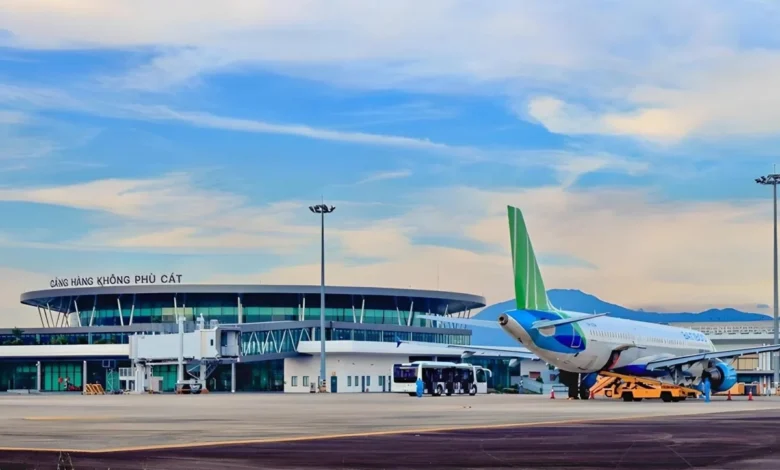
FLC Group Joint Stock Company has formally submitted a proposal to the Ministry of Construction and the Civil Aviation Authority of Vietnam (CAAV) seeking approval to research and develop investment plans for the comprehensive upgrading and expansion of two major aviation hubs in Vietnam’s Central Highlands and South Central Coast: Phu Cat Airport and Pleiku Airport. This strategic move marks a significant step in the conglomerate’s renewed focus on the aviation sector, aiming to synchronize transportation infrastructure with its existing hospitality and service ecosystems. The proposal follows a preliminary agreement from the Gia Lai Provincial People’s Committee, which has expressed support for FLC to explore these projects under the Public-Private Partnership (PPP) investment model, ensuring alignment with national aviation master plans.
A Strategic Vision for Regional Connectivity
The proposal from FLC Group arrives at a pivotal moment for Vietnam’s aviation industry, which is currently undergoing a post-pandemic transformation characterized by a shift toward private sector involvement in infrastructure development. FLC’s request to the Ministry of Construction and the CAAV emphasizes the need for a streamlined process to allow the enterprise to conduct in-depth feasibility studies, collaborate with relevant technical agencies, and finalize investment dossiers in accordance with current legal frameworks.
According to the documentation provided by FLC, the group intends to leverage its extensive experience in local investment and its previous contributions to the socio-economic development of the regions where these airports are located. By integrating airport infrastructure with its broader service ecosystem—which includes resorts, golf courses, and the operations of Bamboo Airways—FLC aims to create a seamless travel experience that could stimulate tourism and trade in the Central Highlands and Binh Dinh Province.
The Gia Lai Provincial People’s Committee, in its communication dated July 10, 2026, gave the green light for FLC to begin the research phase. The provincial authorities have stipulated that any proposal must clearly define the scope, scale, and specific investment items. Furthermore, the studies must establish a solid legal basis, demonstrate financial viability, and outline clear mechanisms for capital mobilization and investment recovery. Most importantly, the projects must show a significant "spillover effect" on the local economy, fostering growth beyond the aviation sector itself.
Detailed Development Plans for Pleiku Airport
Pleiku Airport, located in Gia Lai Province, serves as a critical gateway to the Central Highlands. Under the current national aviation master plan, Pleiku is designated as a dual-use domestic airport, serving both civil aviation and military purposes. FLC’s proposal aligns with the long-term vision to elevate the airport’s capacity to meet the growing demands of the region.
By 2030, the objective is to upgrade Pleiku Airport to a Level 4C facility (according to International Civil Aviation Organization standards). The planned expansion would bring the airport’s capacity to approximately 2 million passengers per year. To achieve this, the project would utilize an estimated land area of 383.68 hectares. The financial commitment required for this initial phase of modernization is substantial, estimated at approximately 12,660 billion VND.
Looking further ahead to 2050, the master plan envisions maintaining the Level 4C status while further increasing the terminal capacity to 5 million passengers annually. While the land usage is expected to remain stable at 383.68 hectares, an additional investment of approximately 2,420 billion VND would be required for technological upgrades and facility enhancements. This phased approach ensures that the airport can scale its operations in tandem with the economic development of Gia Lai and the surrounding provinces.
Transforming Phu Cat Airport into a Major Regional Hub
Phu Cat Airport in Binh Dinh Province represents an even larger scale of development within FLC’s proposal. Given its proximity to the coastal tourism city of Quy Nhon—where FLC operates a massive resort complex—the expansion of Phu Cat is seen as a high-priority project for the group’s integrated business model.
The proposal seeks to upgrade Phu Cat Airport to a Level 4E facility by 2030. A Level 4E designation would allow the airport to handle large, wide-body aircraft such as the Boeing 787 and Airbus A350, which are essential for long-haul international flights. The target capacity for 2030 is set at 3 million passengers per year, requiring a significant land footprint of 1,042.64 hectares. The investment cost for this phase is estimated at 8,785 billion VND.
By 2050, the vision for Phu Cat becomes even more ambitious. The goal is to reach a capacity of 7 million passengers per year while maintaining its 4E classification. This long-term expansion would require a further investment of 6,308 billion VND. The transformation of Phu Cat into a major international-standard hub would not only benefit Binh Dinh but also serve as a logistics and tourism catalyst for the entire South Central Coast of Vietnam.

The Resurgence of FLC in the Aviation Sector
FLC Group’s aggressive move into airport infrastructure is inextricably linked to its history and future with Bamboo Airways. As the founding entity of the airline, FLC’s relationship with the aviation industry has been complex. Following the legal challenges faced by former chairman Trinh Van Quyet in 2022, Bamboo Airways underwent a period of significant restructuring, including a temporary transition of management to a new group of investors.
However, by 2025, the management and operational control of Bamboo Airways were officially returned to FLC Group. Since reclaiming the airline, FLC has focused on stabilizing the carrier and slowly expanding its fleet. By December 2025, the airline added a new aircraft, bringing its operational fleet to eight units. While this is a reduction from its peak of 30 aircraft, the focus has shifted toward sustainable growth and operational efficiency.
In a move to further solidify its aviation footprint, FLC Group established the FLC Aircraft Investment and Leasing Joint Stock Company in February 2026 with a charter capital of 1,500 billion VND. Initially named Tien Phong Aviation Investment and Exploitation JSC, the company underwent several name changes before settling on its current identity in May 2026. Headquartered in the Nhon Ly – Cat Tien sea tourism area in Quy Nhon, this subsidiary is designed to manage aircraft assets and provide the technical and financial backbone for FLC’s aviation ambitions.
Analyzing the Implications of the PPP Model
The choice of the Public-Private Partnership (PPP) model for these airport projects is a strategic necessity. Historically, airport infrastructure in Vietnam was almost exclusively managed by the state-owned Airports Corporation of Vietnam (ACV). However, the massive capital requirements for the national aviation master plan have led the government to encourage private investment.
By proposing a PPP model, FLC is offering to take on the financial risk and operational management in exchange for long-term exploitation rights. For the government, this reduces the burden on the state budget while accelerating the modernization of critical infrastructure. For FLC, owning or managing the airports where its airline operates provides a significant competitive advantage. It allows the group to control ground handling services, airport fees, and terminal retail—creating a diversified revenue stream that can offset the volatility of airline operations.
Industry analysts point out that successful examples like Van Don International Airport in Quang Ninh have proven that private developers can build and operate high-quality aviation facilities efficiently. If FLC can demonstrate financial transparency and technical capability, the Pleiku and Phu Cat projects could serve as a blueprint for other regional airport developments across the country.
Chronology of Key Events
To understand the context of this proposal, it is essential to look at the timeline of FLC’s aviation journey over the past several years:
- March 2022: Former Chairman Trinh Van Quyet is detained, leading to a period of instability for FLC Group and Bamboo Airways.
- 2023-2024: Bamboo Airways undergoes a major restructuring process, reducing its fleet and focusing on core domestic routes to maintain liquidity.
- Early 2025: Operational control of Bamboo Airways is officially handed back to FLC Group as part of a broader corporate recovery strategy.
- December 2025: Bamboo Airways expands its fleet to eight aircraft, signaling a return to growth.
- February 2026: FLC establishes an aircraft leasing and investment subsidiary with 1,500 billion VND in capital.
- May 2026: The leasing subsidiary is officially renamed FLC Aircraft Investment and Leasing JSC.
- July 10, 2026: Gia Lai Provincial People’s Committee issues a document supporting FLC’s research into Pleiku and Phu Cat airports.
- July 17, 2026: FLC formally submits its proposal to the Ministry of Construction and the Civil Aviation Authority of Vietnam.
Socio-Economic Impact and Future Outlook
The potential impact of these investments extends far beyond the corporate balance sheet of FLC Group. For the Central Highlands, an upgraded Pleiku Airport means better access for high-value agricultural exports and a boost for eco-tourism. For Binh Dinh, a modernized Phu Cat Airport is the "key" to unlocking the full potential of Quy Nhon as an international luxury tourism destination.
However, challenges remain. The CAAV and the Ministry of Transport will scrutinize FLC’s financial capacity to ensure the group can follow through on the nearly 30,000 billion VND total investment required for both airports over the coming decades. Legal compliance, environmental impact assessments, and the coordination between civil and military authorities will be critical hurdles.
FLC Group has committed to allocating full resources for these studies and promises to work closely with central and local authorities to ensure the projects are feasible and legally sound. If approved, the expansion of Phu Cat and Pleiku airports will not only redefine FLC’s legacy in the aviation sector but also serve as a major engine for economic growth in Vietnam’s central regions for the next thirty years.