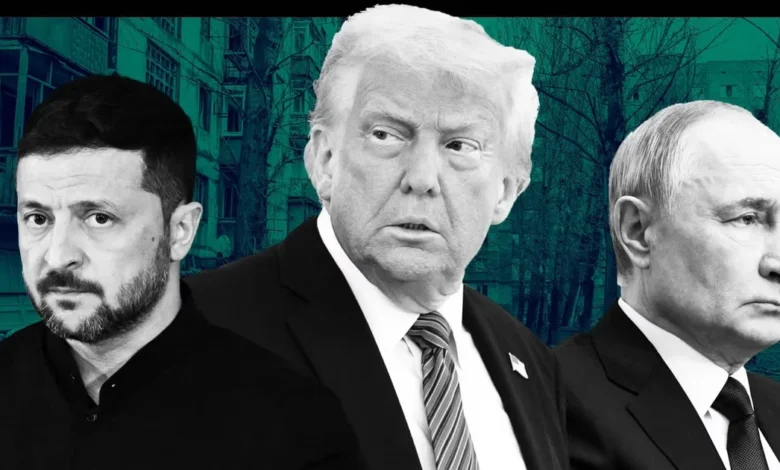
The political realignment in the United States arrives at a critical juncture for Ukraine, which has weathered years of relentless conflict. While domestic shifts in Washington empower opposition lawmakers to recalibrate oversight and funding initiatives, the immediate realities on the ground in Eastern Europe remain fraught with logistical bottlenecks, manufacturing limitations, and strategic uncertainties.
The Evolution of US Support: From Biden to Trump
When former President Joe Biden occupied the Oval House alongside a Democratic-led Congress, the United States, in lockstep with European allies, emerged as Kyiv’s most steadfast financial and military benefactor. Washington funneled tens of billions of dollars in emergency economic assistance, specialized military expertise, and increasingly sophisticated hardware—ranging from artillery shells to advanced air defense systems—into the hands of Ukrainian defenders.
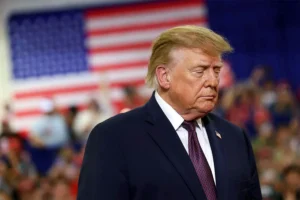
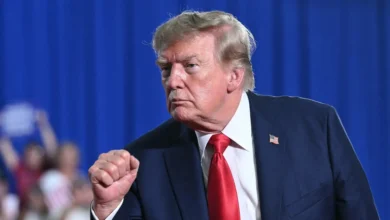
However, the geopolitical equation shifted abruptly with the return of Donald Trump to the presidency. During his high-profile diplomatic engagements and subsequent visits to Washington, Ukrainian President Volodymyr Zelensky faced a much colder reception. President Trump openly signaled his intent to pivot American foreign policy, frequently boasting of his personal rapport with Russian President Vladimir Putin. Concurrently, the administration moved to curtail foreign assistance programs, curb broad-scale financial packages, and scale back the unrestricted transfer of advanced weaponry to Ukraine.
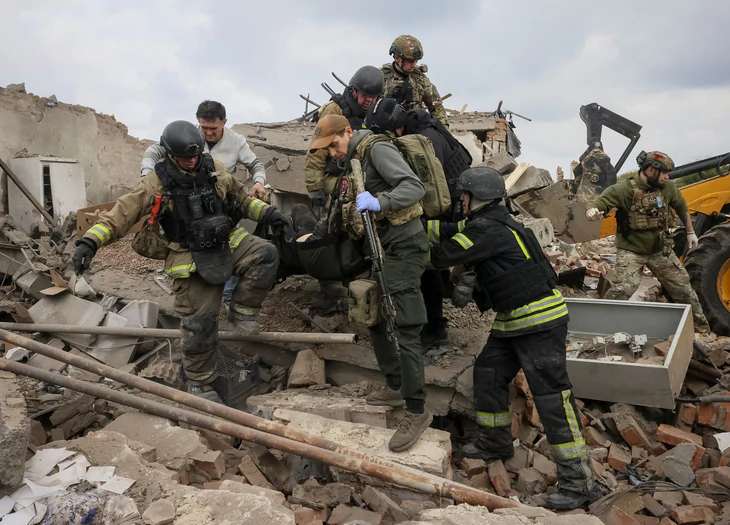
Despite these headwinds, the fluid nature of American domestic politics ensures that legislative leverage remains a constantly contested arena. Lawmakers sympathetic to Ukraine’s defense have continuously sought avenues to bypass executive roadblocks, utilizing congressional mechanisms to sustain the flow of defensive equipment. For instance, the US State Department’s approval for the transfer of hundreds of advanced interceptor missiles for Patriot air defense batteries underscored the ongoing bureaucratic tug-of-war between the executive branch and Capitol Hill. Yet, despite these authorizations, senior officials in Kyiv have repeatedly warned that the pipeline from factory floor to frontline battery remains painfully slow.
Structural Bottlenecks on the Battlefield and Industrial Limits
Evaluating the immediate impact of the midterm election results, geopolitical analysts emphasize that congressional victories by opposition parties will not translate into overnight military relief for Ukraine.
"While a newly empowered Congress may succeed in returning Ukraine assistance to the legislative forefront, it cannot instantly resolve the chronic shortages of Patriot air defense systems and interceptor missiles," noted Yuriy Boyechko, chief executive of the advocacy group Hope for Ukraine. According to Boyechko, while fresh budgets can pave the way for future arms packages, severe limitations in global manufacturing capacity mean that production and delivery timelines will inevitably stretch across multiple years.
This industrial bottleneck is echoed by defense experts across Europe and North America. Aurélien Colson, co-director of the Center for Geopolitics, Defense, and Leadership at ESSEC Business School in France, pointed out that the structural limitations of the defense industrial base transcend legislative willpower.
"A new Congress can certainly pressure the Pentagon to prioritize Ukraine, accelerate manufacturing schedules, and approve the transfer of equipment from allied reserve stockpiles," Colson explained. "However, the underlying hardware shortage cannot be solved overnight. Congress cannot magically manufacture weapons out of thin air."
Concurrently, European analysts point out that the overarching strategy of the White House remains anchored in burden-sharing. Matthew Arnold, a specialist at the London School of Economics and Political Science, argues that the administration remains firmly committed to shifting the financial burden of Ukraine’s defense onto European partners, viewing territorial compromises by Kyiv as an inevitable prerequisite for any sustainable peace settlement.
"I do not anticipate President Trump altering his core strategic calculus following the midterms," Arnold assessed. "There is little indication that the White House will revert to the interventionist approach of the previous administration, regardless of how congressional majorities shift."
Executive Overreach and the Limits of Legislative Power
The interplay between the White House and Capitol Hill has highlighted the friction inherent in American foreign policymaking. Even as lawmakers attempt to legislate tighter sanctions on Moscow or enforce rigid oversight, executive actions frequently bypass traditional legislative bottlenecks.
Political observers point to previous instances where executive authority superseded congressional intent. For example, despite legislative efforts championed by senior senators to tighten military and economic constraints on Moscow, executive maneuvers—such as temporary waivers on diesel fuel imports designed to stabilize domestic energy prices—demonstrated that sitting presidents retain substantial unilateral authority in foreign commerce
and economic warfare.
"History demonstrates that administrations from both major parties are fully prepared to utilize statutory waivers or loosen punitive measures whenever strict enforcement conflicts with broader macroeconomic or diplomatic objectives," Boyechko observed.
Nevertheless, institutional scholars argue that congressional control over the legislative agenda, budget allocations, and high-profile committee hearings provides opposition lawmakers with formidable tools. Professor Brian Taylor of Syracuse University emphasizes that control of Capitol Hill grants three distinct levers: management of the legislative calendar, the power of the purse, and subpoena authority.
Because a second-term president often experiences a natural erosion of political capital during the latter half of their tenure, pro-Ukraine legislators within both parties may find themselves with greater latitude to push through bipartisan assistance packages. Furthermore, Congress retains the prerogative to bundle foreign aid into mandatory, must-pass legislation, such as the National Defense Authorization Act (NDAA) or routine federal funding bills, making it politically perilous for the White House to issue sweeping vetoes without triggering severe domestic stalemates.
Diplomatic Repercussions and Future Outlook
While foreign policy watchers remain transfixed on the fate of military aid packages, the broader domestic agenda—encompassing the cost of living, inflation, and energy prices—will inevitably consume the bandwidth of lawmakers following the legislative shakeup.
Yet, when it comes to international diplomacy, the ultimate authority over America’s stance toward the Russia-Ukraine conflict remains firmly concentrated within the executive branch. As Matthew Arnold emphasized, despite shifting dynamics on Capitol Hill, the primary architects of US foreign policy retain the decisive instruments of statecraft.
Ultimately, the structural realignment in Washington introduces a complex variable into an already protracted conflict. Whether the legislative branch can successfully compel a shift in executive strategy or whether the White House will maintain its distinct diplomatic trajectory remains one of the defining geopolitical questions of the decade. As international stakeholders monitor the unfolding legislative session, the balance between congressional oversight and presidential prerogative will continue to dictate not only the political climate in Washington, but the very course of security in Eastern Europe.