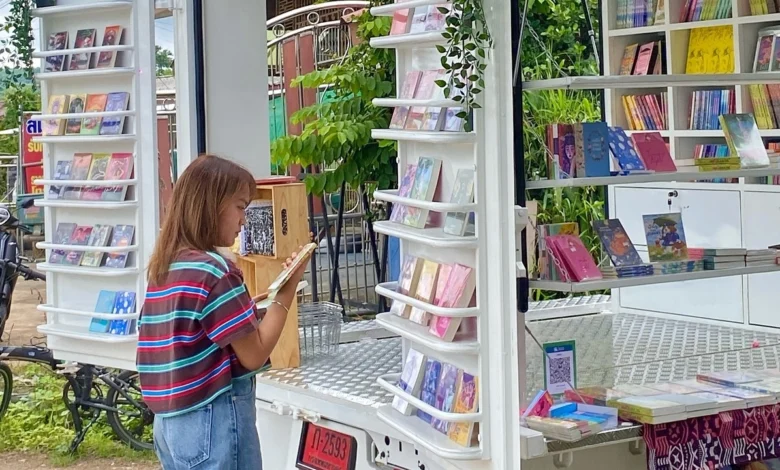
In a compelling initiative to bridge the literary divide in Southeast Asia, independent bookstore Somelee has embarked on an ambitious two-year mission to traverse all 77 provinces of Thailand. By transforming a heavy-duty truck into a mobile library and storefront, the team behind this project is not merely selling books; they are cultivating a grassroots reading culture in regions often underserved by traditional retail infrastructure.
The Genesis of a Mobile Literary Movement
The project, spearheaded by Borisat Pongwat and project manager Yasawath Chuthivisitrathikul of PS Publishing, emerged from a desire to break the geographic monopoly of book culture. Historically, Thailand’s literary scene has been heavily concentrated in Bangkok and other major urban centers, where high-end bookstores and literary festivals thrive. In contrast, rural provinces have long faced a dearth of physical spaces dedicated to literature.
The Somelee team, a dedicated group of five professionals, launched the project with a fleet consisting of a specially outfitted truck. Their initial inventory strategy was modest, focusing on Thai novels, short stories, and poetry. However, as they moved across the country, the team realized that literary appetites were far from uniform. They observed a significant divergence in demand: some rural communities exhibited a strong preference for translated world literature, while others remained deeply invested in indigenous Thai narratives and local folklore.
Chronology and Operational Logistics
Since its inception, the mobile bookstore has visited approximately 25 distinct locations, documenting their journey across the vast and varied landscape of Thailand. The logistics of the operation are complex. To ensure a constant supply of diverse literature, the team coordinates "book drops" at pre-arranged hotels along their route. Local cafe owners often serve as informal community partners, assisting with the scheduling of stops and providing essential logistics support to the traveling team.
The life of the traveling bookseller is one of both romantic idealism and grueling physical reality. According to the team’s driver, Jarungdach Phosri, the challenges are multi-faceted. Fuel costs, vehicle maintenance, and the unpredictable nature of regional weather—particularly the severe monsoon rains—frequently disrupt their itinerary. There are days when the truck cannot move, and the team must pause their operations to wait out the elements.
Despite these hurdles, the financial model is lean. The team implements a flexible pricing strategy, offering discounts ranging from 15% to 30% for the general public, with student discounts sometimes exceeding 50% to ensure that literature remains accessible to the younger generation.
The Human Connection: Beyond the Transaction
What distinguishes this project from traditional retail is the emphasis on face-to-face interaction. In an era dominated by e-commerce and algorithmic book recommendations, the Somelee team prioritizes the physical experience.
"Beyond the act of selling, we value the human connection," says Jarungdach Phosri. "There are individuals we previously only interacted with via screens, through social media comments or digital inquiries. To finally meet them in person, to exchange ideas and share stories about the books they are reading, is what makes this work truly meaningful."
The team maintains an active presence on social media, using these platforms to foster long-term relationships with their readers. They often follow up on recommendations and check in on the literary growth of their customers, turning one-off purchases into sustained community engagement.

A Parallel Movement in Vietnam
The phenomenon of the mobile bookstore is not isolated to Thailand. In Vietnam, artist Tran Dai Thang, the founder of A Books, has been executing a similar, albeit independently conceived, project titled "Books to Every Home."
Thang, alongside two colleagues, operates a 6.5-ton truck laden with approximately 2,000 titles. His approach is characterized by a strict lack of corporate sponsorship. The revenue generated from book sales is immediately reinvested into fuel, food, and accommodation. Thang’s mission is driven by a commitment to autonomy, refusing to set rigid targets or commercial goals.
"I thought I understood my readers," Thang noted reflecting on his three months on the road. "But it was only when I began selling books directly, standing in front of the people, that I realized how much I still had to learn." His experience highlights a recurring theme among mobile booksellers: the realization that the traditional publishing industry is often disconnected from the actual needs and interests of the regional reader.
Socio-Economic Implications and Literary Impact
The implications of these mobile bookstore projects extend far beyond the revenue generated. By bringing literature to the "last mile," these initiatives are effectively functioning as mobile cultural hubs. They address a fundamental issue of accessibility—not just in terms of availability, but in terms of relevance.
Data from the publishing sectors in Southeast Asia have long suggested that a significant portion of the population in rural areas does not engage with books simply because the "discovery" phase of the retail process is absent. Traditional bookstores in capital cities create a curation-heavy environment that is exclusionary to those outside the urban middle class. By moving to the customer, these trucks act as curators who adapt to local demand in real-time.
Furthermore, the pedagogical impact on children is significant. Both the Somelee project and Thang’s "Books to Every Home" report that children are often the most enthusiastic participants at their stops. By providing children in remote villages with physical access to diverse books, these projects are helping to instill a lifelong habit of reading that could have long-term educational benefits for these communities.
Analysis: The Future of Mobile Retail
The success of these mobile libraries suggests that there is a viable, albeit challenging, niche for non-traditional literary distribution. The model relies heavily on three pillars:
- Community Partnerships: Relying on local businesses (cafes, schools) to anchor the truck’s presence.
- Dynamic Curation: Abandoning static, top-down inventory lists in favor of responding to regional demographic interests.
- Low-Overhead Resilience: Operating with minimal staff and utilizing the vehicle as both a residence and a warehouse.
However, the sustainability of such models remains a question of scale. Both the Thai and Vietnamese teams emphasize that this is a labor-intensive, passion-driven endeavor. Without government subsidies or formal grants, these projects remain vulnerable to economic fluctuations, rising fuel prices, and the physical toll on the staff.
As the Somelee team continues its journey across the remaining provinces of Thailand, their project serves as a compelling case study in cultural democratization. They have proven that there is a hunger for physical literature, provided that the supply chain is willing to meet the reader where they are.
In the broader context of the digital age, the "book truck" movement represents a paradoxical return to basics—using the mobility afforded by modern transportation to facilitate the ancient, quiet, and essential act of reading. Whether this will inspire a larger shift in how publishers view rural distribution remains to be seen, but for now, the sight of a white truck loaded with books arriving in a quiet, rural town remains a powerful symbol of intellectual bridge-building.