Vietnam Accelerates 5G Infrastructure Rollout with Landmark State Support and Strategic Policy Reform

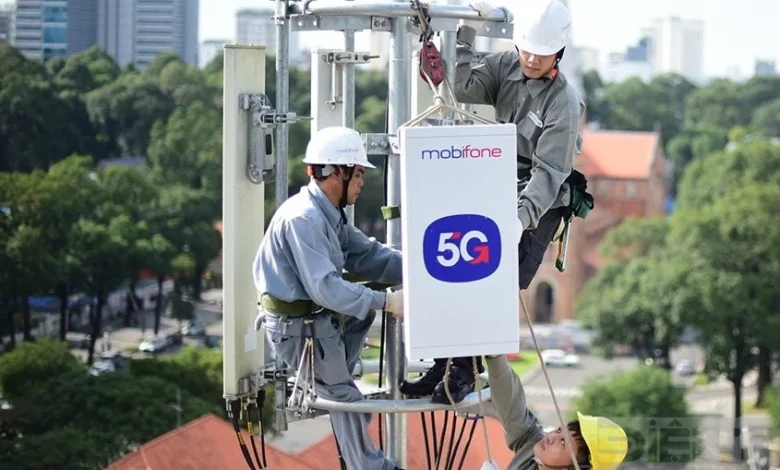
In a decisive move to solidify its position in the global digital economy, the Vietnamese government has officially enacted a landmark resolution aimed at fast-tracking the nationwide deployment of 5G infrastructure. On February 19, 2025, the National Assembly voted to approve a series of specialized policies and mechanisms designed to overcome the capital and logistical barriers that have historically hindered telecommunications expansion. The centerpiece of this legislative effort is a state-funded subsidy program that offers financial incentives to telecommunications enterprises, provided they meet ambitious infrastructure targets within the 2025 calendar year.
The policy mandates that any telecommunications operator seeking government support must install at least 20,000 5G base stations that are successfully commissioned and operational by December 31, 2025. To alleviate the financial burden of this rapid expansion, the state will provide a subsidy equivalent to 15% of the average equipment cost per 5G base station. This financial support will be drawn from the proceeds collected during the state’s spectrum auction held throughout 2024, ensuring that the revenue generated from digital resources is directly reinvested into the nation’s technological backbone.
Contextualizing the National 5G Strategy
For years, Vietnam has sought to transition from a labor-intensive economy to a digital-first powerhouse. The decision to accelerate 5G deployment is not merely an upgrade in mobile connectivity but a fundamental shift in national infrastructure policy. Prior to this resolution, private enterprises were typically limited to installing roughly 5,000 base stations annually due to high capital expenditure (CAPEX) requirements and return-on-investment concerns.
Minister of Information and Communications, Nguyen Manh Hung, emphasized the necessity of this intervention during a meeting with ICT stakeholders on February 19. He noted that the government’s direct involvement is unprecedented, marking the first time in the country’s history that state funds are being allocated to cover up to 15% of the total investment value for 5G equipment. By bridging the gap between current deployment rates and the 20,000-station target, the Ministry aims to achieve nationwide 5G coverage, a move considered essential for sustaining the country’s projected GDP growth in the digital era.
Streamlining Regulatory Hurdles for International Connectivity
Beyond the domestic 5G rollout, the new resolution addresses the critical issue of international connectivity through subsea fiber optic cables. Recognizing the vulnerability of existing routes, the government is incentivizing Vietnamese telecommunications firms to take the lead as primary investors in new international maritime cable systems.
Under the new regulatory framework, projects involving the construction of international subsea cables with landing stations in Vietnam will benefit from expedited administrative procedures. These projects will be treated with the same priority as domestic strategic investments, provided they meet rigorous national security and defense requirements.
To facilitate this, the National Assembly has granted authority for the use of "direct appointment of contractors" for projects within the 2025–2030 development phase. This mechanism is designed to bypass the typically lengthy bidding processes, allowing firms to react swiftly to the evolving technological landscape. In scenarios where direct appointment is not utilized, the resolution mandates adherence to internationally recognized best practices or collaborative agreements between Vietnamese operators and foreign partners, ensuring the long-term resilience of the nation’s global data links.
The Competitive Landscape: Viettel, VNPT, and MobiFone
The race to dominate the 5G market has spurred intense competition among the nation’s three major telco players. As of early 2025, each operator has adopted a distinct strategy to capture market share and fulfill the government’s vision.
Viettel, currently the market leader, has already established a robust presence with over 6,500 5G base stations. Their coverage spans all 63 provinces and municipalities, with strategic concentration in industrial zones, airports, seaports, and major hospitals. According to internal reports, Viettel’s 5G network currently achieves speeds between 700 Mbps and 1 Gbps—roughly ten times faster than existing 4G infrastructure. By the end of January 2025, Viettel reported 5.5 million active 5G subscribers, a milestone reached just five months after their initial commercial launch.
Meanwhile, VNPT has focused its efforts on deep coverage within administrative centers and critical economic zones. The company has reported full coverage across all 705 district-level administrative units in the country, with approximately 3 million active 5G users.
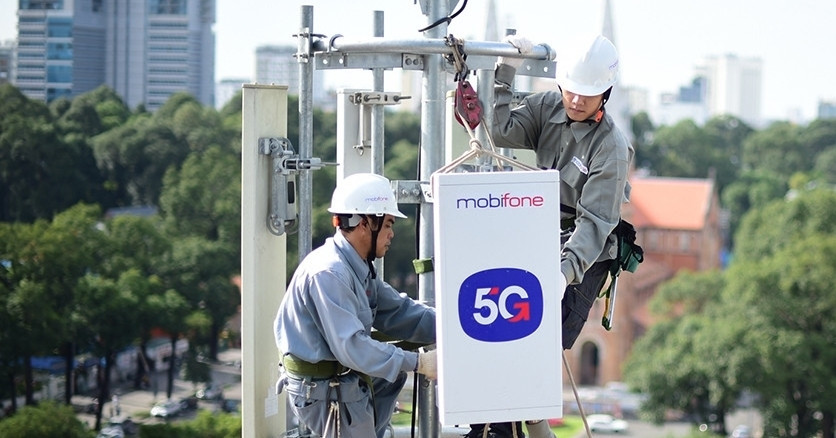
MobiFone, while taking a more measured approach to public service announcements, is actively expanding its infrastructure by optimizing its spectrum holdings. The operator has set its sights on extending 5G signal coverage to 100% of rural communes nationwide, aiming to provide high-speed connectivity to underserved areas and bridge the digital divide.
Implications for Industrial Transformation
The widespread adoption of 5G is expected to catalyze a transformation in several key sectors, most notably manufacturing, logistics, and smart city development. Rita Mokbel, Chairperson of the Board of Directors at Ericsson Vietnam, highlighted the potential for 5G to serve as a cornerstone of the digital economy. "5G is not just about faster internet for mobile users; it is a critical tool for industrial automation, high-precision remote control, and resource optimization," she stated.
The technology enables "private 5G networks" within factories, which allow for real-time monitoring of automated assembly lines and the implementation of robotics that require ultra-low latency. These advancements are expected to lower operational costs for manufacturers while opening new revenue streams for telecommunications providers through enterprise-grade B2B solutions.
Furthermore, the integration of 5G is anticipated to be a major driver for Vietnam’s economic output. Government projections suggest that the digital economy could contribute as much as 20% of the nation’s GDP by 2025. The success of this target is inextricably linked to the reliability and reach of the 5G infrastructure currently being incentivized.
A Look Ahead: Challenges and Strategic Security
While the policy framework provides a clear path forward, the scale of the deployment presents logistical challenges. The 20,000-station target is ambitious, requiring a massive logistical effort to procure, import, and install specialized hardware within a single year. Moreover, the focus on international subsea cables comes at a time when global data security is of paramount concern.
The government’s mandate that all cable projects must meet national security and defense standards suggests a cautious, sovereign-focused approach to telecommunications. By encouraging domestic firms to lead as owners and investors rather than merely participating as minor stakeholders, Vietnam is attempting to secure its digital sovereignty and minimize the risk of disruptions to its international data traffic.
As the implementation phase begins, the success of these policies will be measured by the ability of these state-backed firms to manage the high capital intensity of the rollout while maintaining service quality. The synergy between government financial support and private sector execution appears to be the key variable in whether Vietnam will succeed in its goal of becoming a regional leader in the 5G era. The months leading up to December 2025 will be a critical period for monitoring the progress of these installations and the subsequent adoption rates among the population and industrial sectors.