Russia Successfully Launches Soyuz-2.1b Carrier Rocket Carrying Classified Military Spacecraft from Plesetsk Cosmodrome

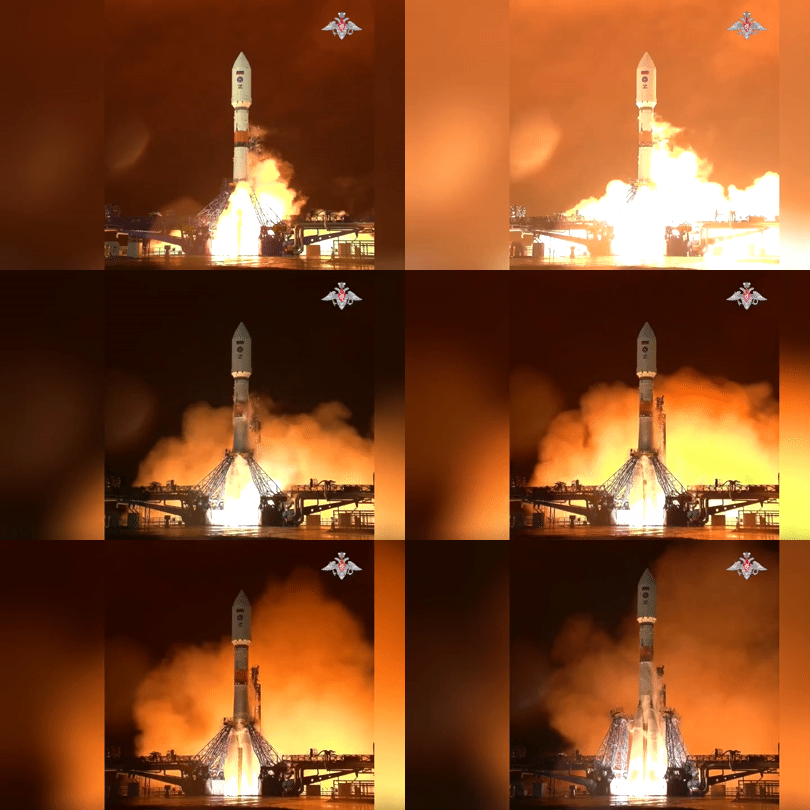
Russia’s Ministry of Defense announced the successful launch of a Soyuz-2.1b medium-class carrier rocket on November 7, carrying a classified spacecraft designed for military purposes. The liftoff took place from the strategic Plesetsk Cosmodrome, located in Russia’s northern Arkhangelsk region. The operation marks another significant milestone in Moscow’s ongoing efforts to modernize and expand its orbital reconnaissance, navigation, and early-warning capabilities amidst heightened geopolitical tensions.
According to a statement released by the Russian defense establishment via the RT network, the entire launch sequence and the subsequent insertion of the spacecraft into its designated target orbit proceeded smoothly and without any technical anomalies. "At the scheduled time, the spacecraft was successfully delivered into the target orbit and placed under the control of ground-based systems belonging to the Russian Space Forces," the Ministry of Defense confirmed, adding that all onboard systems are operating normally.
Chronology of the Launch and Trajectory
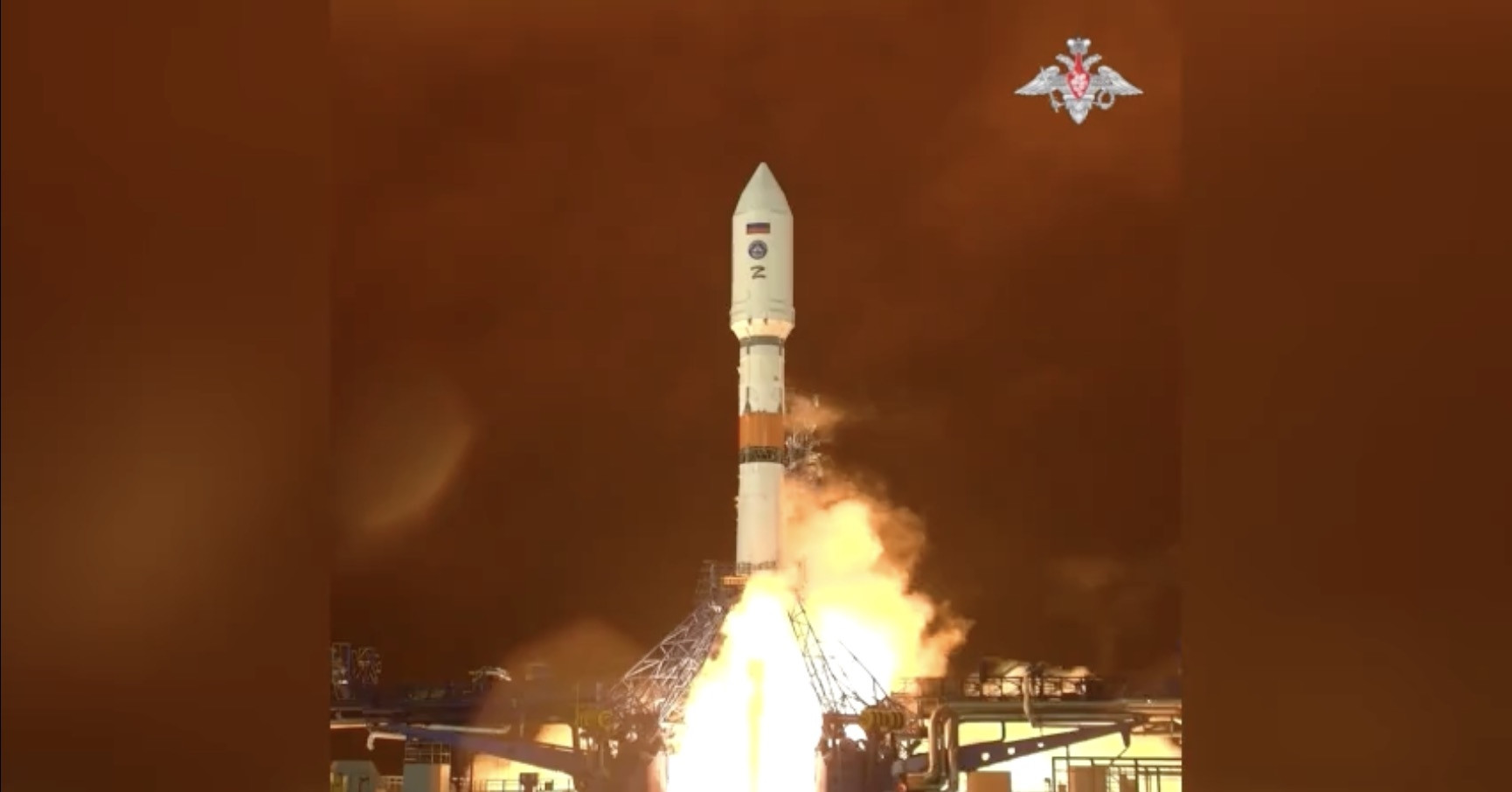
The launch vehicle lifted off from the snow-dusted pads of the Plesetsk Cosmodrome in the Arkhangelsk region, surging into the arctic skies. As the Soyuz-2.1b climbed through the upper atmosphere, observers across Russia’s Komi Republic were treated to a rare and striking celestial phenomenon commonly known in the region as a "space jellyfish."
Local residents managed to capture vivid imagery of a luminous, expanding plume of gas unfolding into massive glowing tendrils against the dark night sky. This visual spectacle typically occurs when the first stage of the rocket burns through its remaining propellant, separates, and the second stage is ignited. At this precise altitude, the high-altitude exhaust gases are illuminated by the rays of the sun while observers on the ground remain enveloped in twilight darkness.
The process is a byproduct of high-altitude staging mechanics, where expanding exhaust plumes catch the solar radiation long after surface twilight has faded. Aerospace engineers note that these visual events, while startling to civilian populations unfamiliar with spaceflight schedules, are routine technical signatures of medium-lift orbital insertions from northern latitudes.
Payload Secrecy and the Soyuz-2.1b Workhorse
While the Russian Ministry of Defense strictly withheld specific details regarding the exact nature, classification, or precise operational parameters of the payload, defense analysts and aerospace experts have pieced together likely candidates based on the launch vehicle and historical flight profiles.
The Soyuz-2.1b is a highly reliable, three-stage medium-lift launch vehicle that forms the backbone of Russia’s routine military and civilian space access. It frequently deploys critical national security assets, including satellites belonging to the GLONASS global navigation constellation, Liana electronic intelligence (ELINT) gathering satellites, and the Tundra-class early-warning system designed to detect ballistic missile launches against the Russian Federation.
Given the strategic importance of the Plesetsk Cosmodrome for military payloads—owing to its high-latitude trajectory which allows access to polar and inclination orbits ideal for surveillance and communication—the launch underscores Moscow’s continued prioritization of space-based assets for battlefield management, reconnaissance, and strategic deterrence.

Geopolitical Context and Previous Security Incidents
The successful mission comes against a backdrop of increasing vulnerability and friction surrounding Russia’s space infrastructure. Earlier this year, the Plesetsk Cosmodrome faced direct security threats when it was targeted by attempted drone strikes originating from Ukraine.
Dmitry Bakanov, Director General of the Russian State Space Corporation (Roscosmos), previously disclosed that Kyiv had attempted to sabotage a critical broadband internet satellite launch facility in March. Although those attacks were ultimately thwarted by Russian air defenses and electronic warfare systems, they highlighted the growing vulnerability of strategic spaceports to asymmetric warfare, particularly unmanned aerial vehicle (UAV) incursions.
The militarization of near-Earth orbit and the protection of ground-based launch infrastructure have thus become top priorities for the Russian military leadership. With space serving as the invisible nervous system for modern military operations—enabling secure communications, precision-guided munition targeting, troop tracking, and strategic missile warning—defending facilities like Plesetsk is viewed by Moscow as an existential requirement.

Broader Implications for Global Space Security
The successful deployment of the classified spacecraft from Plesetsk highlights the persistent pace of Russian military space operations despite sweeping international economic sanctions and ongoing conventional military engagements elsewhere. Western intelligence agencies and defense analysts closely monitor these launches, as the integration of advanced reconnaissance and early-warning platforms directly impacts the strategic balance of power.
As space increasingly transforms into a contested operational domain, the intersection of ground-based defense, counter-drone measures, and rapid-response launch capabilities will remain central to the military doctrines of major spacefaring nations. For now, the Russian Space Forces have secured another vital asset in orbit, ensuring that Moscow maintains uninterrupted oversight of its domestic satellite networks and strategic defense constellations.
Related posts: