Global Gold Prices Rally Sharply Toward $4,000 Milestone Amid Extreme Market Volatility and Shifting Economic Landscapes

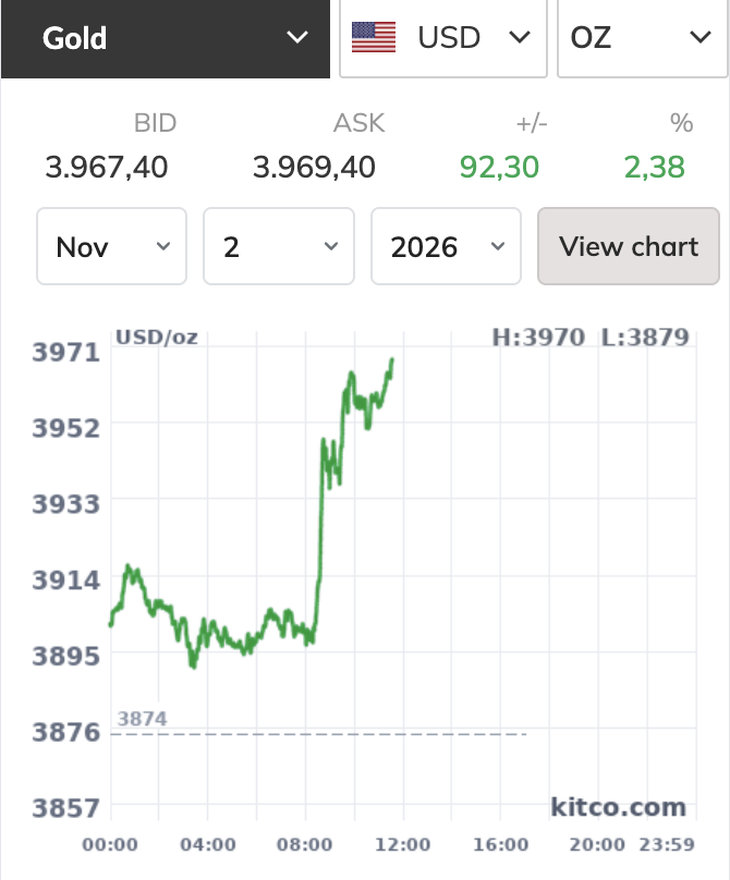
Global gold prices experienced a dramatic and unexpected resurgence late Monday evening, surging by $92 per ounce to reach $3,970 per ounce by 11:50 PM. This sudden rebound follows a turbulent period that saw bullion plummet to its lowest levels in over a year, catching market analysts and institutional investors off guard. The sharp recovery represents an increase of approximately 2.88 million VND per tael. When converted using official commercial bank exchange rates, international gold values translate to roughly 124.3 million VND per tael, signaling a profound shift in market sentiment as traders recalibrate their positions across multiple asset classes.
The Dramatic Descent and the Catalyst Behind the Sell-Off
Prior to this sudden late-night surge, the precious metals market was gripped by a severe downward spiral. At the close of trading late last week, international spot gold tumbled precipitously to $3,876.40 per ounce. This reading marked a definitive one-year low, driven by an extraordinary confluence of macroeconomic pressures and margin calls. Institutional investors and large-scale market participants found themselves forced to liquidate safe-haven assets, including gold, to cover mounting losses in their broader portfolios.
The primary catalyst for this liquidity crunch originated in the technology sector, specifically within artificial intelligence (AI) equities. A sharp, unexpected wave of profit-taking and aggressive selling hit AI-related stocks, sending shockwaves through global equity markets. As portfolio valuations compressed, fund managers faced stringent margin requirements. To meet these obligations and offset severe equity losses, investors were systematically compelled to offload their most liquid, secure holdings—chiefly gold—triggering a cascading sell-off that pushed bullion to cyclical lows.
The Road to $4,000: Market Dynamics and Key Economic Indicators
Financial analysts emphasize that the precious metals market is navigating a highly sensitive environment, with several critical macroeconomic catalysts poised to dictate price trajectories in the coming days. Among the most immediate concerns for traders are geopolitical tensions, particularly ongoing conflicts in the Middle East, alongside persistent fluctuations in international crude oil benchmarks. Energy market volatility continues to fuel inflationary anxieties, keeping safe-haven demand simmering beneath the surface.
Furthermore, market participants are bracing for the release of the United States non-farm payrolls report for October, scheduled for publication at the end of the week. This closely watched employment metric serves as a vital barometer for the health of the world’s largest economy and heavily influences the Federal Reserve’s monetary policy path. Expectations surrounding interest rate trajectories remain a central pillar of gold price movements.
Market consensus currently points toward the possibility of additional monetary tightening by the U.S. Federal Reserve. Analysts project that persistent inflationary pressures could compel the central bank to implement another interest rate hike during its upcoming policy meeting in December, with potential follow-up measures extending into the first quarter of 2027. Higher interest rates typically increase the opportunity cost of holding non-yielding assets like gold, introducing a persistent headwinds factor that could cap prolonged rallies unless offset by heightened geopolitical or financial system risks.
Domestic Market Rebound and Structural Discrepancies
Domestically, the ripple effects of the international gold price recovery were felt immediately across major trading hubs. SJC gold bars climbed by 1 million VND per tael, reaching a selling price of 140 million VND per tael, while purchasing prices hovered around 137 million VND per tael. Meanwhile, 9999 purity gold rings traded slightly lower, with selling prices established at 136.8 million VND per tael and buying prices at 132.8 million VND per tael.
The extreme volatility observed in global markets has translated directly into widened spreads within the domestic retail sector. Major gold trading companies and authorized distributors have widened the gap between buying and selling prices to between 3 million and 4 million VND per tael, a defensive measure designed to mitigate operational risks amid erratic price swings.
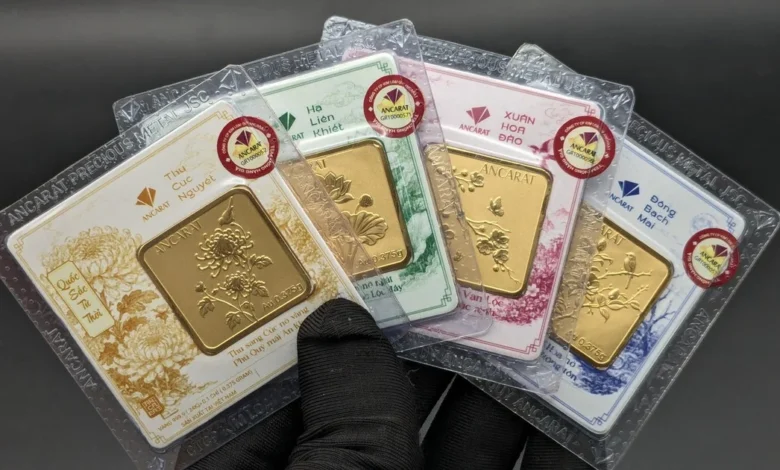
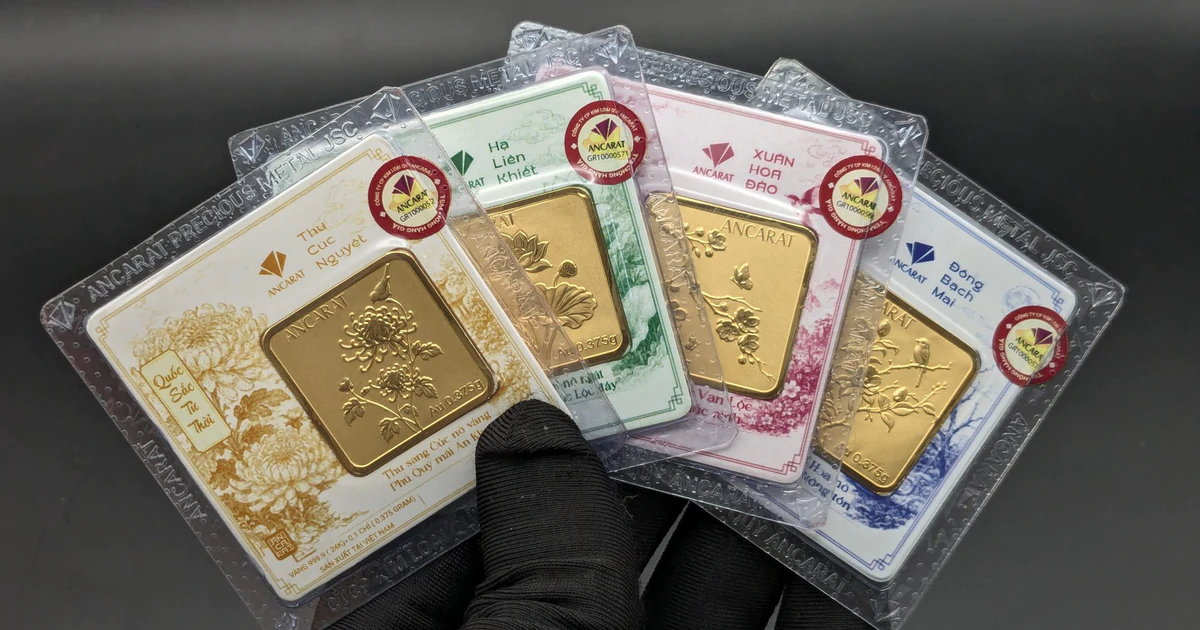
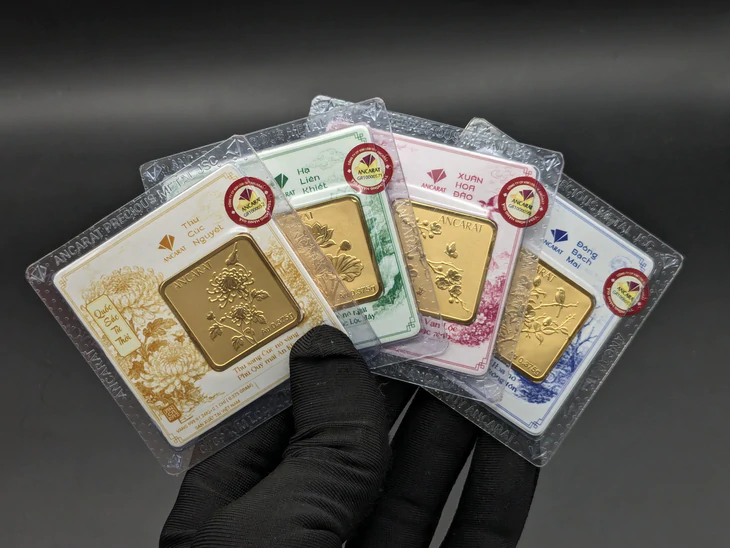
Alternative domestic distributors exhibited similar upward adjustments. Ancarat listed gold selling prices at 143.5 million VND per tael against a buying price of 137 million VND per tael. Concurrently, Mi Hong posted selling prices at 139.8 million VND per tael and buying prices at 138.3 million VND per tael.
When evaluated against converted international benchmarks, domestic gold prices remain elevated by approximately 15.7 million VND per tael. Despite the recent late-night rebound, SJC gold bars are still trading significantly below their historical peak—falling short by more than 52 million VND per tael compared to their all-time high valuations.
Broader Commodity Impacts: The Plunge in Silver Prices
While gold commands the lion’s share of market attention, other precious metals have suffered catastrophic corrections that highlight the depth of the recent liquidity crisis. Silver investors, in particular, have absorbed devastating losses following an aggressive deflation of speculative bubbles.
Market records indicate that retail investors who purchased silver at peak valuations exceeding 120 million VND per kilogram are now facing a grim reality. Current buying prices have collapsed to a mere 42 million VND per kilogram, translating to a staggering 65% loss in value.
At current international valuations resting around $50.93 per ounce, and converted using official banking exchange rates, physical silver trades at approximately 1.6 million VND per tael. Across domestic channels, pricing structures reflect this depressed reality. Ancarat lists silver selling prices at 1.661 million VND per tael and buying prices at 1.611 million VND per tael. Similarly, SBJ quotes silver at 1.668 million VND per tael for sale and 1.614 million VND per tael for purchase, while Phu Quy maintains a selling price of 1.642 million VND per tael and a buying price of 1.593 million VND per tael.
Implications and Future Outlook for Precious Metals
The sudden volatility in both gold and silver markets underscores a fragile global financial ecosystem where cross-asset contagion remains a clear and present danger. The rapid whipsaw from one-year lows to a near-breach of the psychological $4,000 threshold demonstrates that institutional hedging and algorithmic portfolio rebalancing can trigger massive price dislocations within hours.
As the market looks ahead to upcoming U.S. employment data and central bank signals, investors are advised to exercise heightened caution. While safe-haven fundamentals—such as persistent macroeconomic uncertainty, stubborn inflation, and geopolitical friction—continue to provide a solid long-term floor for gold, short-term price discovery will likely remain erratic. Whether bullion can successfully consolidate above the $3,900 threshold and mount a sustained assault on the $4,000 mark will depend heavily on incoming labor data and the Federal Reserve’s definitive stance on interest rates heading into the final month of the year.