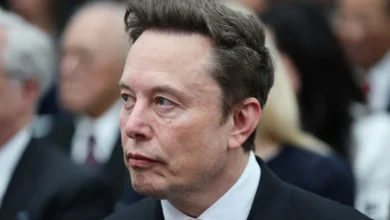
CEO NVIDIA Jensen Huang admits to infidelity, triggering shockwaves for the world’s leading chip conglomerate.


On November 8, Jensen Huang, the 63-year-old visionary leader of NVIDIA, formally acknowledged to the company’s staff that he had been unfaithful to his wife of 41 years, Lori Huang. This personal admission, coming at a time when NVIDIA sits at the absolute epicenter of the global artificial intelligence revolution, has introduced a layer of unforeseen volatility for a corporation currently valued at approximately $4.5 trillion. In a candid statement released to employees, Mr. Huang accepted full responsibility for the personal fallout and expressed his profound apologies to his family and the organization for the distress his actions have caused.
The revelation has moved beyond the realm of personal scandal, as reports from the New York Times identified the individual involved as Alice Huang (also known as Huang Le), a Chinese entrepreneur formerly in a leadership position at Megaspeed International. The company, which specializes in data center infrastructure, maintains significant commercial ties with the semiconductor giant. The situation has intensified due to reports from U.S. intelligence circles suggesting that Alice Huang may have had undisclosed links to Chinese intelligence services, potentially attempting to cultivate a relationship with the NVIDIA CEO to gain sensitive access to technological data. While the NVIDIA Board of Directors has launched an independent investigation into the matter, there is currently no verified evidence confirming that any trade secrets or national security protocols were breached. The Chinese government has formally denied these allegations, characterizing them as unfounded provocations.
A Timeline of the Crisis and Corporate Governance
The intersection of high-level executive personal conduct and corporate security is a rare but perilous terrain for publicly traded companies. NVIDIA, which has seen its market capitalization skyrocket due to the global demand for AI chips, is particularly sensitive to executive instability. Jensen Huang is not merely a CEO; he is the face of the company, a figure whose public persona is synonymous with the rapid evolution of the semiconductor industry.
The board’s decision to initiate an independent probe reflects the gravity of the situation. Corporate governance experts suggest that the primary focus of such an investigation is not the morality of the CEO’s personal life, but whether his actions created a conflict of interest, exposed the company to corporate espionage, or violated the company’s internal code of conduct regarding vendor relationships. As of this writing, the board has not released any findings, and market analysts remain in a state of cautious observation.
From Dishwasher to Titan of Industry
To understand the magnitude of this disruption, one must look at the trajectory of Jensen Huang. Born in 1963 in Taiwan, Huang moved to the United States as a child, eventually settling in Oregon. His rise to the pinnacle of the tech world is a quintessential American success story that he has often referenced in public. During his teenage years, he worked at a Denny’s restaurant, performing menial tasks including washing dishes and waiting tables. He has frequently highlighted these formative years as the crucible of his work ethic.

After graduating with a degree in electrical engineering from Oregon State University and earning a master’s degree from Stanford University, Huang cut his teeth at LSI Logic and AMD. In 1993, at the age of 30, he co-founded NVIDIA alongside Chris Malachowsky and Curtis Priem. The company’s early years were marked by significant risk, including a near-collapse following the failure of their first chip architecture. Huang’s pivot toward programmable GPUs (Graphics Processing Units) transformed the company from a niche gaming hardware manufacturer into the backbone of modern computing.
The Technological Hegemony of NVIDIA
NVIDIA’s dominance is built upon a unique "fabless" business model. By outsourcing manufacturing to partners like TSMC, the company focuses exclusively on design and innovation. This efficiency, combined with the 1999 introduction of the GeForce 256—marketed as the "world’s first GPU"—allowed NVIDIA to capture the market for computer graphics and video games.
However, the true turning point occurred when Huang recognized that the massive parallel processing power of GPUs could be repurposed for complex mathematical calculations, specifically those required for Artificial Intelligence. His strategic insistence on investing in CUDA, a proprietary software platform, created an insurmountable barrier to entry. Today, NVIDIA’s H100, H200, and Blackwell B200 chips are the foundational components for data centers operated by giants like Microsoft, Google, Amazon, and Meta. As the world transitions into the era of generative AI, the synergy between NVIDIA’s hardware, software, and ecosystem has made the company nearly indispensable.
Economic Implications and Market Volatility
As of November 9, NVIDIA’s valuation hovered near $4.5 trillion. While this is a decrease from the peak of over $5.7 trillion seen in early October, the company remains among the most valuable in the world. The current scandal has introduced a new variable into the valuation model for institutional investors.
The broader AI infrastructure market is projected by S&P Global Ratings to exceed $1.3 trillion in capital expenditure by 2027. NVIDIA is positioned to capture a significant share of this growth. However, the political landscape—specifically the U.S.-China trade war—presents a persistent threat. Export controls imposed by the U.S. Department of Commerce have already hindered NVIDIA’s ability to sell its most advanced chips to the Chinese market, a region that represents a significant portion of its potential growth.
If the current scandal were to result in a leadership transition or a prolonged distraction for management, the impact could be significant. Institutional investors typically prize stability and predictability. Any sign that the CEO’s personal life has compromised the company’s strategic alignment with U.S. national security interests could invite increased regulatory scrutiny, further complicating NVIDIA’s international operations.

Industry Reactions and Future Challenges
While no official statement has been issued by NVIDIA’s key partners, industry observers note that the company’s ecosystem is resilient. Nevertheless, the competition is not standing still. Companies like AMD, alongside internal chip development efforts by Google, Amazon, and various Chinese firms, are aggressively challenging NVIDIA’s market share.
The primary challenge for NVIDIA in the coming years is twofold: maintaining its technological edge while justifying the massive capital expenditures of its clients. If AI implementation fails to yield the anticipated revenue growth for the corporations buying NVIDIA’s chips, the company could face a correction in demand.
Jensen Huang’s legacy remains tied to his ability to navigate these complex waters. His recognition for his contributions—including being a recipient of the VinFuture Prize 2024 for his work in deep learning—underscores his status as a key architect of the modern digital age. The current crisis, however, represents a shift in his narrative. The focus is no longer just on his vision for the future of silicon, but on the integrity of the leadership guiding one of the most important companies in history.
Analyzing the Corporate Response
The effectiveness of the NVIDIA board’s response will likely be measured by how transparently they handle the potential security concerns. By initiating an independent investigation, the board is attempting to separate the personal indiscretion from the corporate health of the firm.
If the investigation concludes that no sensitive information was compromised, the company will likely look to minimize the public fallout, emphasizing the separation between executive life and business operations. If, however, the inquiry uncovers evidence of undue influence, the implications could be far-reaching, potentially leading to a restructuring of the board or a change in the executive suite.
For the investors who have driven NVIDIA’s market cap to unprecedented heights, the next few months will be critical. They will be watching to see if the internal culture remains focused on innovation or if the distraction of the scandal begins to seep into the company’s operations. As it stands, NVIDIA remains a powerhouse, but it is a powerhouse now facing its most significant internal test in its three-decade history. The path forward for Jensen Huang will require not only the technical brilliance that defined his career but a level of crisis management that the company has not yet had to employ on this scale. The global tech sector, regulators, and the financial markets await the final outcome of the investigation, fully aware that the repercussions of this event could echo far beyond the walls of NVIDIA headquarters.