Stephanie Case Makes History as the First Woman to Complete a 100-Mile Ultramarathon in Antarctica

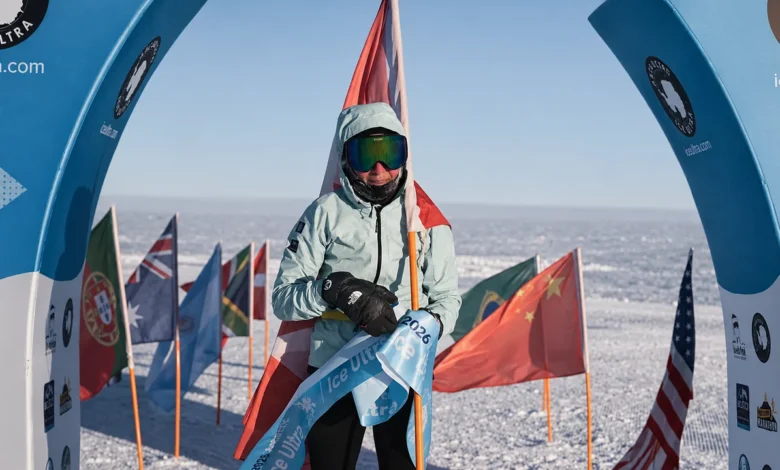
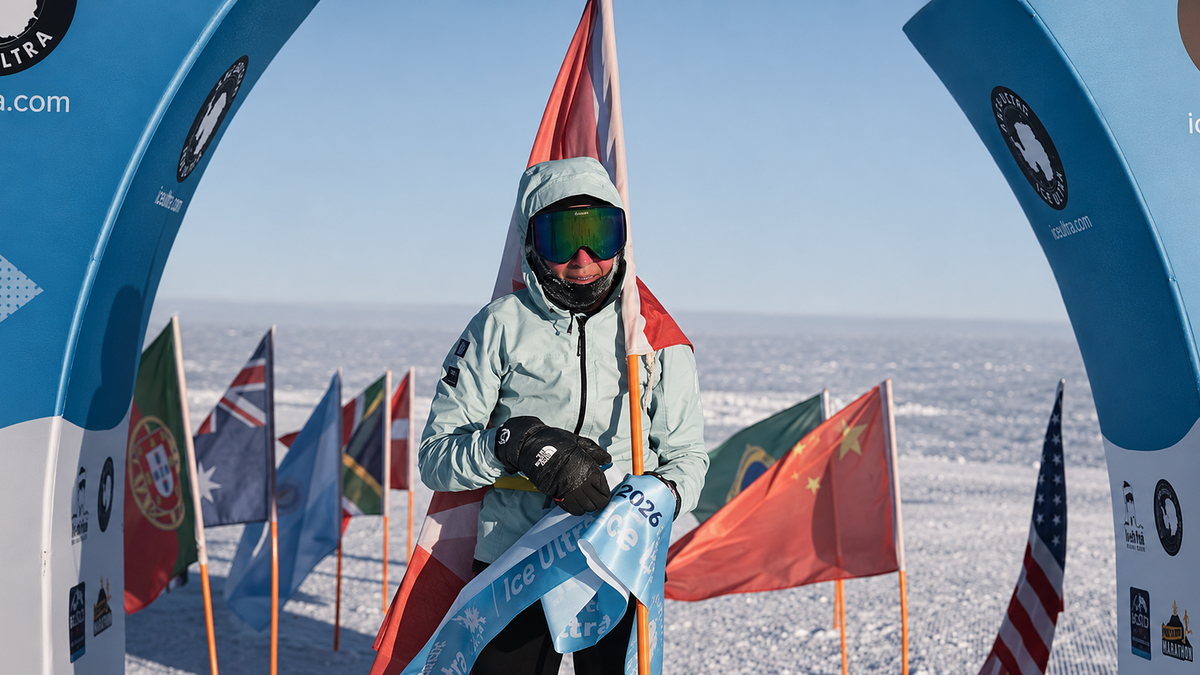
In a feat of extraordinary physical and mental endurance, Canadian ultra-runner Stephanie Case has cemented her place in sporting history, becoming the first woman to successfully complete a 100-mile (160.93 km) race in the harsh, unforgiving environment of Antarctica. Competing in the prestigious Antarctic Ice Ultra on November 8, 2026, Case defied bone-chilling temperatures that plummeted to -35°C and relentless polar winds to cross the finish line, shattering existing performance expectations by over five hours.
The Brutal Reality of Antarctic Endurance
The Antarctic Ice Ultra is widely considered one of the most punishing endurance events on the planet. To ensure the safety of the participants, organizers established a circuit-based route, requiring runners to navigate a 4.2-kilometer loop 38 times around a research base near the Schirmacher Oasis in Queen Maud Land.
The conditions were far from ideal. Even in the constant daylight of the southern polar summer, the environment remains lethal. The athletes faced "white-out" conditions and severe wind chill, which forced organizers to push the start time to 1:00 AM. For Case, the primary antagonist was not just the distance, but the physiological necessity of maintaining core body temperature.
"Out there, 20 minutes is fine. But if you are out there for 17 hours or more, you have to expend a huge amount of energy just to stay warm," Case explained in an interview with BBC Sport. "You have to run fast enough to stay warm but avoid sweating. Once you sweat, you get cold immediately, and that becomes a life-threatening situation."
A Chronology of the 100-Mile Push
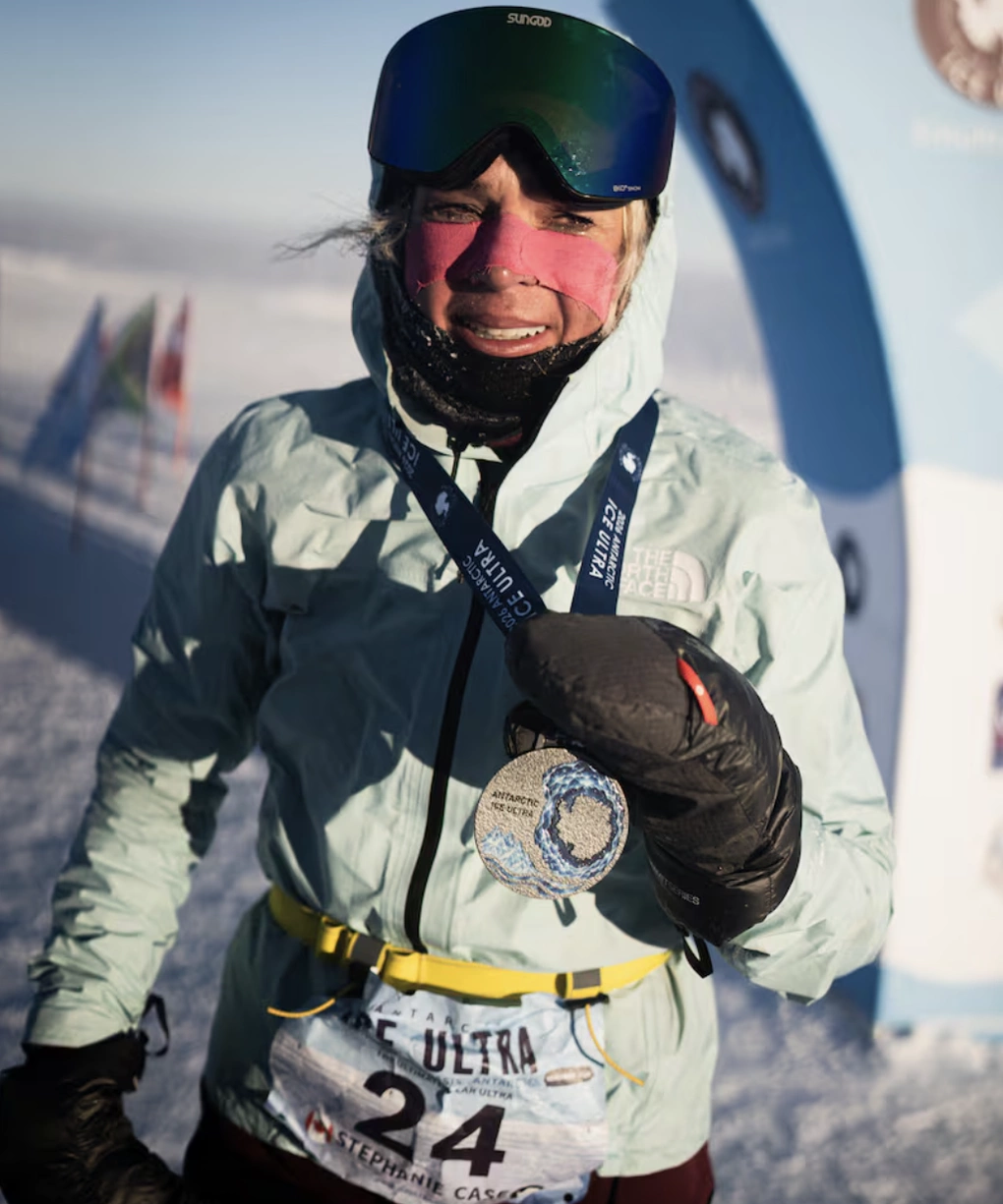
The race began under a dark, foreboding sky, with only four participants starting the 100-mile category. The logistics of the race were as demanding as the physical exertion. By the eighth lap, the cold had intensified to such a degree that Case’s face mask had frozen solid, rendering it impossible to breathe through the fabric. She was forced to seek refuge in a support tent to manage her gear and core temperature, a move that required a rapid recalibration of her strategy.
The challenge extended beyond the terrain to basic human biology. Under Antarctic safety protocols, no waste can be left behind, meaning athletes had to navigate the complexities of managing bathroom breaks while wearing multiple layers of specialized thermal gear. For Case, stripping down to handle these necessities in -35°C temperatures while protecting her extremities from frostbite proved to be one of the most taxing aspects of the entire ordeal.
As the race progressed, the field thinned. Of the four starters, Case was the only one to complete the full distance, finishing with an official time of 17 hours, 31 minutes, and 39 seconds. Her performance was not only historic for being the first female finish but also competitive on an absolute scale, finishing just 29 minutes and 15 seconds behind Chinese runner Ni Yusheng, who set a new course record of 17 hours, 2 minutes and 24 seconds.
Breaking Records and Expectations
Case’s performance in 2026 represents a massive leap forward for female representation in polar ultra-running. By finishing within minutes of the male record-holder, she has effectively challenged the long-standing assumption that extreme cold endurance is a male-dominated domain. Her finishing time was significantly faster than the previous course record established in 2025, underscoring the rapid evolution of performance standards in extreme weather sports.
The rivalry between Case and Ni was described by spectators as a tactical masterclass. Throughout the final stages of the race, the two athletes paced each other, with Ni accelerating whenever Case closed the gap. "Every time I saw that I was getting close, he would look back and then speed up," Case recalled. "I think we both pushed each other to reach our absolute limit."
Background: Beyond the Track
Stephanie Case is not a career athlete in the traditional sense; she is a human rights lawyer and the founder of Free to Run, an organization dedicated to providing sports opportunities for women and girls in conflict-affected regions. Her background as an advocate for women’s rights informs her approach to extreme endurance.
Her transition from professional legal work to elite athletics is defined by a commitment to proving that motherhood and professional success are not mutually exclusive with high-performance sports. In May 2025, just six months after the birth of her daughter, Pepper, Case completed the 100-kilometer Ultra-Trail Snowdonia in Wales. During that race, she made headlines for stopping at aid stations to breastfeed before returning to the trail to finish first in the women’s category.
That imagery—a mother managing the physiological demands of nursing alongside the physical demands of an ultramarathon—sparked global discourse. While the majority of the public response was celebratory, Case faced criticism from those who argued she should be at home with her child. These detractors, she notes, only served as further motivation to succeed in the Antarctic. "When I am doing the things that make me happy, I become a better mother," Case remarked. "I can go back and show my daughter that she can do whatever she sets her mind to."
Broader Implications for Extreme Sports
The success of the 2026 Antarctic Ice Ultra carries significant implications for the future of extreme sports. As climate patterns shift and the accessibility of remote regions changes, the data gathered from events like this provides crucial insights into human physiology under extreme stress.
Medical experts have long studied how the body reacts to prolonged exposure to sub-zero temperatures, but few studies possess the real-world, high-intensity data that a 17-hour, 100-mile race provides. The ability of Case to manage the "thermoregulation-performance trade-off"—the delicate balance between heat production and sweat management—offers a roadmap for future athletes and survival experts alike.
Furthermore, the participation of women in polar endurance events is at an all-time high. The success of the Antarctic Ice Ultra serves as a testament to the fact that with the right equipment, training, and mental fortitude, the "final frontier" of endurance sports is increasingly open to all. As the sporting world looks toward 2027, Case’s record stands as a benchmark for the next generation of endurance athletes, proving that the harshest environments on Earth can be navigated, managed, and eventually, conquered.
With this historic finish, Stephanie Case has not only redefined what is possible in the Antarctic but has also solidified her legacy as one of the most versatile and resilient endurance athletes of her generation. Her story, from the halls of human rights law to the ice sheets of Queen Maud Land, serves as a profound reminder of the limits of human potential and the enduring power of personal resolve.
Related posts: