Ukraine Deploys First-Person View Drones to Destroy Russian BM-21 Grad Multiple Launch Rocket System on the Frontline

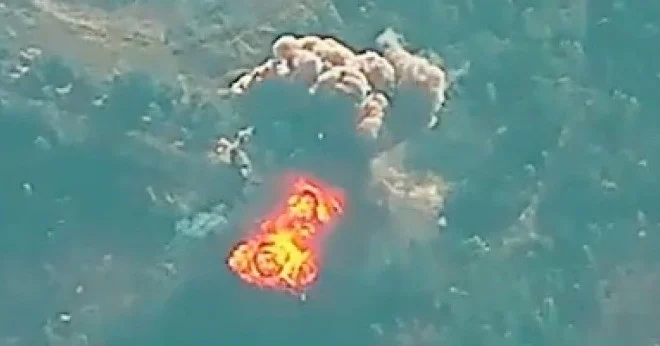
The ongoing conflict between Ukraine and Russia continues to evolve as an asymmetric war defined by rapid technological adaptation, where relatively low-cost unmanned aerial systems frequently neutralize multi-million-dollar military assets. In the latest demonstration of this battlefield dynamic, the Ukrainian military successfully deployed a first-person view (FPV) kamikaze drone to track, target, and completely destroy a Russian BM-21 Grad multiple launch rocket system (MLRS) directly on the frontline.
The engagement, which highlights the pervasive threat overhead in modern mechanized warfare, was officially publicized by the Ukrainian Ministry of Defense. While precise geographic coordinates and the exact timestamp of the tactical strike remain classified for operational security reasons, the released visual evidence underscores the lethal efficiency of specialized drone units operating in contested airspace.
The Precision Strike by the 59th Motorized Brigade
According to updates provided by Ukrainian defense authorities and corroborated by military analysts at Defense Express, the successful ambush was executed by dedicated FPV drone operators belonging to Ukraine’s 59th Motorized Brigade. The targeted Russian BM-21 Grad artillery system had reportedly just completed a fire mission, having launched two rockets toward Ukrainian positions before attempting to reposition or conceal itself.
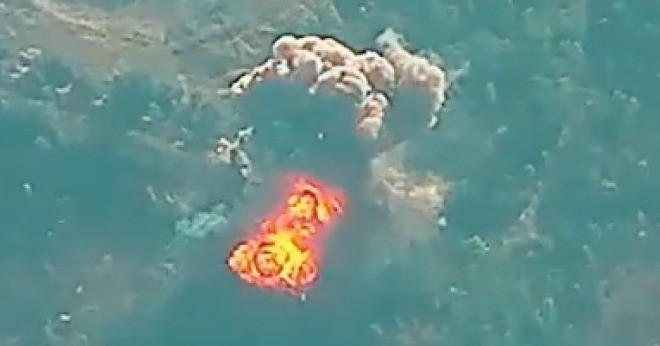
Rather than allowing the mobile artillery piece to slip away, the Ukrainian FPV drone operators maintained persistent surveillance, pursued the vehicle, and executed a terminal dive attack. The precision strike struck the launcher directly, igniting the remaining onboard propellant and munitions. This triggered a catastrophic secondary explosion that completely gutted the military vehicle, reducing it to a charred skeleton of twisted metal.
Military spokespersons from the 59th Motorized Brigade noted that this engagement was not an isolated incident. Over the preceding weeks, the brigade’s drone units have maintained an aggressive operational tempo, successfully hunting down and neutralizing a variety of high-value Russian logistical and combat assets. Alongside the BM-21 Grad system, the unit’s inventory of destroyed equipment includes logistics trucks, armored personnel carriers (APCs), and critical support gear designed to sustain front-line operations.
Anatomy of the Target: The Legacy and Capability of the BM-21 Grad
The BM-21 Grad remains one of the most iconic and widely utilized mobile artillery systems in modern military history. Developed by the Soviet Union and formally introduced into military service in the early 1960s, the system has endured as a cornerstone of Soviet and Russian mechanized artillery doctrine.
Designed for high-volume area suppression, the standard BM-21 configuration consists of a robust Ural-375D or Ural-4320 military truck chassis fitted with a 40-tube launcher rack for 122mm rockets. The complete system measures approximately 7.35 meters in length, 2.4 meters in width, and 3.09 meters in height, with a combat weight of around 13.7 tons. It requires a dedicated crew of six personnel to operate effectively in the field.
When first deployed, the system relied heavily on the standard 9M22U high-explosive fragmentation rocket, which weighs approximately 65 kilograms and possesses an operational range of 1.6 to 20 kilometers. However, to maximize combat efficiency and adapt to evolving battlefield requirements, Soviet and subsequently Russian defense engineers developed more than ten distinct rocket variants for the Grad platform. Modern iterations can execute a wide array of missions ranging from structural demolition and anti-personnel fragmentation to specialized tasks such as laying anti-tank minefields, deploying smoke screens, and broadcasting radio-electronic interference.
Despite its versatility and devastating firepower when massed, the BM-21 Grad possesses inherent vulnerabilities. Operating unarmored or lightly armored truck cabs, the crews have minimal protection against modern shrapnel, small arms fire, and precision overhead attacks. Furthermore, the large footprint and signature of a rocket volley make the launcher an immediate priority target for counter-battery fire and aerial reconnaissance.
The Proliferation of FPV Drones in Modern Warfare
The destruction of the BM-21 Grad is part of a broader, accelerating trend on the Ukrainian battlefield where commercial-grade or custom-built FPV drones have fundamentally transformed tactical reconnaissance and strike missions. Originally adapted from consumer racing drones, FPV systems have been weaponized to serve as precision-guided munitions at a fraction of the cost of traditional artillery shells or guided missiles.
Operating an FPV drone requires specialized training, as the pilot wears video goggles that project a real-time feed directly from the drone’s onboard camera. This immersive perspective allows operators to navigate complex terrain, bypass electronic countermeasures in some instances, and guide the explosive-laden aircraft directly into vulnerable spots on enemy vehicles, such as engine compartments, open hatches, or ammunition storage racks.
Military analysts have frequently highlighted the cost asymmetry of these engagements. While an FPV drone typically costs a few hundred to a couple of thousand dollars to manufacture and equip with an explosive charge, the assets they neutralize—such as multi-million-dollar air defense systems, attack helicopters, and artillery pieces—represent massive financial and strategic losses for the targeted military.
Recent Context: A Pattern of High-Value Losses
This latest strike against the BM-21 Grad adds to a growing catalog of high-profile Ukrainian drone victories documented over recent weeks, showcasing the systematic targeting of Russian hardware across the operational depth of the front lines.
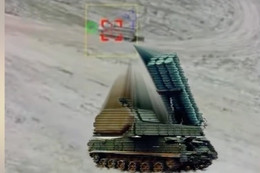
Earlier, the 3rd Assault Brigade of Ukraine released compelling combat footage showcasing a specialized FPV drone tracking down a Russian Mi-8 utility and transport helicopter. In that engagement, the nimble drone successfully hunted the rotorcraft, closing in and striking it to deny the Russian forces crucial transport and medical evacuation capabilities near the front.
In mid-October, Ukrainian forces also utilized FPV technology to target and neutralize a sophisticated Russian Buk-M3 air defense system. The Buk-M3 is an advanced, highly mobile medium-range missile system valued between $45 million and $50 million, designed to protect ground forces from tactical ballistic missiles, cruise missiles, and aircraft. The loss of such an expensive and technologically complex asset represents a significant blow to regional air defense coverage.
Furthermore, tactical innovation has extended beyond aerial kamikaze platforms. Reports from late September highlighted instances where Ukrainian forces successfully utilized large heavy-lift drones to drop unmanned ground vehicles (UGVs)—essentially combat and logistical robots—directly into contested or rear-area zones to support infantry units in close combat without risking human lives.
Strategic Implications and Broader Impact
The systematic employment of FPV drones against mobile artillery platforms like the BM-21 Grad carries profound implications for modern military doctrine. Artillery remains the primary instrument of destruction in the Russia-Ukraine war, responsible for the vast majority of casualties and structural damage. Consequently, neutralizing enemy artillery through counter-battery fire has always been a high priority.
However, traditional counter-battery duels rely on radar tracking and counter-artillery pieces, which are themselves vulnerable and limited in supply. The introduction of FPV drones democratizes precision strikes, placing low-cost, highly accurate striking power directly into the hands of front-line infantry brigades and specialized reconnaissance units.
For Russian forces, the omnipresence of Ukrainian drones necessitates continuous adaptation. Units are increasingly forced to invest in electronic warfare (EW) systems, deploy "cope cages" (improvised overhead slat armor) on trucks and artillery pieces, and minimize movement during daylight hours when aerial surveillance is most effective. Despite these countermeasures, the vast expanse of the frontline makes absolute protection impossible, as demonstrated by the fiery end of the BM-21 Grad system.
As the conflict grinds forward, the race between drone offense and counter-drone defense will undoubtedly shape the trajectory of tactical operations. For now, the successful integration of FPV kamikaze units into regular brigade structures has given Ukraine a persistent asymmetrical advantage in degrading Russian combat power one vehicle at a time.