The draw ceremony for the 20th Asian Games (Asiad 20) volleyball tournament, held on July 23, has set the stage for compelling contests, particularly for the Vietnamese women’s national team, which finds itself in a "just right" group with a familiar formidable foe. The much-anticipated event, scheduled to take place in Nagoya, Japan, from September 16 to 22, will see 12 official players registered for each men’s and women’s indoor volleyball team, adhering to the regulations set by the organizing committee. The volleyball matches will be hosted across two primary venues: the Okazaki Chuo Sogo Park Gymnasium and the Park Arena Komaki.
Women’s Volleyball: Group D and the South Korean Challenge
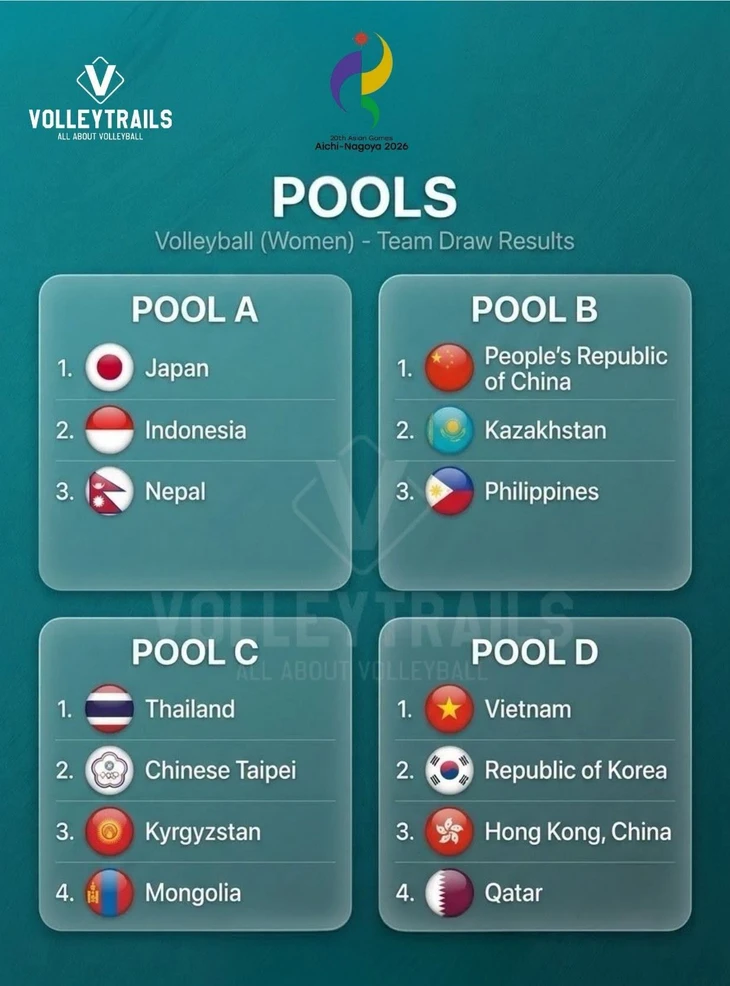
The Vietnamese women’s volleyball team has been placed in Group D, alongside South Korea, Qatar, and Hong Kong. This grouping is generally considered to be of "medium difficulty" for head coach Nguyen Tuan Kiet’s squad, presenting both opportunities and significant hurdles. While Qatar and Hong Kong are not typically viewed as direct contenders for advancement to the knockout stages, their presence offers valuable match practice and a chance for Vietnam to secure crucial early victories. These matches will be vital for building momentum and confidence before facing their primary rival in the group.
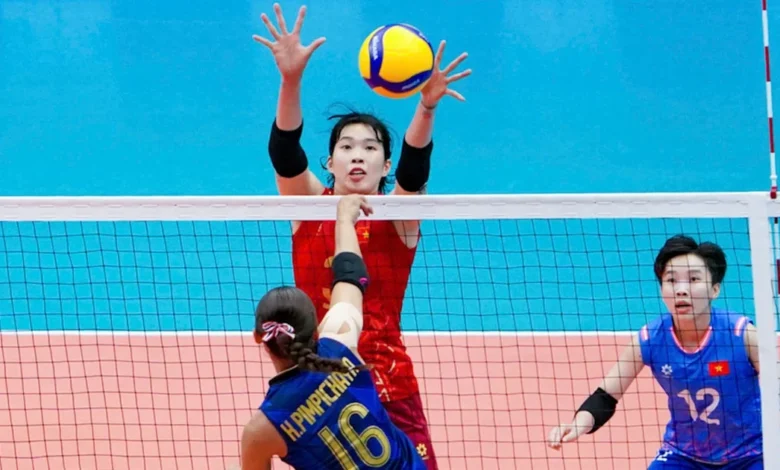
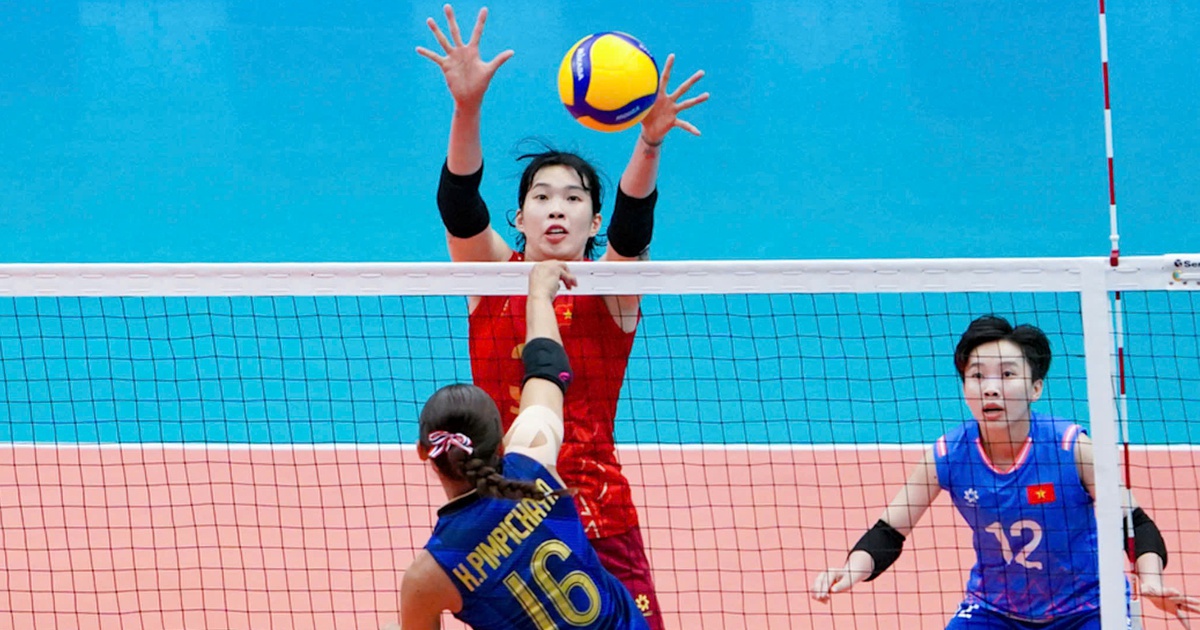
The true test for Vietnam will undoubtedly come against South Korea. This matchup carries significant historical weight and recent memory. At the previous Asiad 19 in 2023, the Vietnamese team, led by star player Tran Thi Thanh Thuy, orchestrated a stunning upset against a highly-rated South Korean side. Despite being considered underdogs, the Vietnamese "gals" displayed remarkable resilience and tactical prowess, clinching an emotional 3-2 victory. That memorable win was a watershed moment, propelling them into the quarterfinals and ultimately securing an unprecedented fourth-place finish in the tournament, marking a historic achievement for Vietnamese volleyball. This previous encounter adds an intense layer of rivalry and expectation to their upcoming group stage clash, with both teams eager to prove their current strength and strategic adjustments.
Looking at the other women’s volleyball groups, the landscape appears less competitive. Group A features hosts Japan, along with Indonesia and Nepal. Japan, a perennial powerhouse in Asian volleyball, is expected to navigate this group with relative ease. Defending champions China lead Group B, joined by Kazakhstan and the Philippines, with China widely anticipated to dominate. Group C sees Thailand, another strong contender from Southeast Asia, pitted against Chinese Taipei, Kyrgyzstan, and Mongolia. Like Japan and China, Thailand is a formidable force, and their group is not expected to pose significant challenges to their advancement. The concentration of top Asian teams in separate groups (Japan in A, China in B, Thailand in C) highlights the dominant position these "big three" hold in Asian women’s volleyball, contrasting with Group D’s perceived higher level of internal competition.
Men’s Volleyball: Vietnam’s Quest for Advancement in Group C
The men’s volleyball draw has placed Vietnam in Group C, where they will face Qatar, Hong Kong, and India. This group also presents a challenging but potentially navigable path for the Vietnamese side, coached by Federico Rampazzo. Qatar stands out as a formidable opponent, having previously reached the top four at Asiad 19, demonstrating their strength within the region. Their experience and skill set them apart as the leading contender in this group.
However, the remaining two opponents, Hong Kong and India, are considered to be of a more manageable caliber. This offers a realistic opportunity for Vietnam to secure one of the two coveted spots for advancement to the knockout stages. The team will likely focus on strategic preparations to overcome both Hong Kong and India, aiming to consolidate their position before potentially challenging Qatar.
The other men’s groups include Group A with Japan, Pakistan, Kazakhstan, and Uzbekistan; Group B with Iran, Indonesia, Thailand, and Kyrgyzstan; and Group D with South Korea, China, Chinese Taipei, and the Philippines. These groupings feature a mix of established and emerging teams, promising diverse and exciting matches across the tournament.
Background Context and Recent Performance of Vietnamese Volleyball
The recent success of Vietnamese volleyball, particularly on the women’s side, underscores a significant development in the sport within the country. The remarkable fourth-place finish at Asiad 19 was not an isolated event but rather a culmination of sustained efforts and strategic investments in talent development. Tran Thi Thanh Thuy, a prominent figure in the team, has gained international recognition for her powerful spikes and leadership on the court. Her experience playing in professional leagues abroad has undoubtedly contributed to raising the team’s overall standard and tactical awareness.
Over the past few years, Vietnamese women’s volleyball has shown consistent improvement, securing medals at regional events like the Southeast Asian Games (SEA Games) and making strong showings in continental tournaments such as the AVC Challenge Cup. These achievements have fostered a new wave of optimism and ambition within the national volleyball federation and among fans. The Asiad 20 draw offers another platform for the team to solidify its standing as a rising force in Asian volleyball, particularly if they can replicate or surpass their Asiad 19 performance.
For the men’s team, while their international profile might not be as high as their female counterparts, steady progress has been noted. Under the guidance of foreign coaches like Federico Rampazzo, there has been a concerted effort to enhance their technical skills, physical conditioning, and tactical discipline. Participating in a major continental event like the Asian Games provides invaluable experience against diverse playing styles and higher levels of competition, which is crucial for their long-term development.
Strategic Implications and Outlook for Asiad 20
For the Vietnamese women’s team, Group D presents a fascinating strategic landscape. The objective will be clear: secure victories against Qatar and Hong Kong to ensure passage to the knockout rounds, and then approach the match against South Korea with the confidence derived from their Asiad 19 triumph. A strong performance against South Korea, even if it doesn’t result in a win, could boost their seeding for the next stage. The psychological advantage gained from their previous upset victory will be a key factor, potentially allowing them to play with less pressure and more freedom, while South Korea might feel the weight of expectation and the desire for revenge.
Coach Nguyen Tuan Kiet and his staff will likely emphasize meticulous preparation, focusing on scouting South Korea’s current squad, identifying their strengths and weaknesses, and refining their own offensive and defensive strategies. The team’s unity, fighting spirit, and Thanh Thuy’s individual brilliance will be crucial elements in their campaign.
On the men’s side, the focus will be on maximizing their chances against Hong Kong and India. Given Qatar’s strong performance at the last Asiad, challenging them for the top spot in the group might be an ambitious goal, but not entirely out of reach. Securing second place would be a commendable achievement and a testament to the team’s ongoing development. Coach Rampazzo will need to instill a disciplined approach, ensuring the team minimizes errors and capitalizes on scoring opportunities against their more evenly matched opponents.
The broader implications of the Asiad 20 volleyball tournament extend beyond individual team successes. It serves as a vital benchmark for the growth of volleyball across Asia. While traditional powerhouses like China, Japan, and Thailand continue to dominate, the emergence of teams like Vietnam, Kazakhstan, and Qatar signals a healthy diversification of talent and competitiveness. Such events provide invaluable exposure for players and coaches, contributing to the overall development of the sport in the region.
Official Responses and Inferred Statements
While specific official statements regarding the draw are not detailed in the original report, it is reasonable to infer the sentiments of the Vietnamese volleyball delegation. Following the draw, Coach Nguyen Tuan Kiet, for instance, would likely have expressed a cautious optimism, acknowledging the "just right" nature of Group D for the women’s team. He might have highlighted the respect for all opponents but underscored the team’s determination to perform well, particularly against South Korea, drawing on the inspiration from Asiad 19.
"We understand the challenge that South Korea poses, especially given our memorable encounter at the last Asian Games," a hypothetical statement from Coach Kiet might read. "However, our team has grown, and we are confident in our preparations. Qatar and Hong Kong will also be important matches to build our rhythm. Our goal remains to advance from the group and strive for the best possible finish."
For the men’s team, Coach Federico Rampazzo would likely have articulated a strategic approach, emphasizing the importance of detailed preparation for each match. "Qatar is a strong team, but we see clear opportunities against Hong Kong and India," Rampazzo might have commented. "Our focus will be on executing our game plan, minimizing mistakes, and playing with intensity to secure our place in the next round. This tournament is a crucial step in our development."
The Vietnamese sports authorities and national volleyball federation would also likely echo these sentiments, expressing pride in the teams’ progress and offering full support for their Asiad 20 campaigns. The historical success of the women’s team at Asiad 19 has undoubtedly raised expectations, and the entire nation will be keenly watching their performance in Nagoya. The Asiad 20 volleyball tournament promises to be a thrilling showcase of Asian talent, with both Vietnamese teams poised to leave their mark on the international stage.