26-Year-Old Volkswagen Passat Achieves Record-Breaking 2,400-Kilometer Range on a Single Tank of Diesel

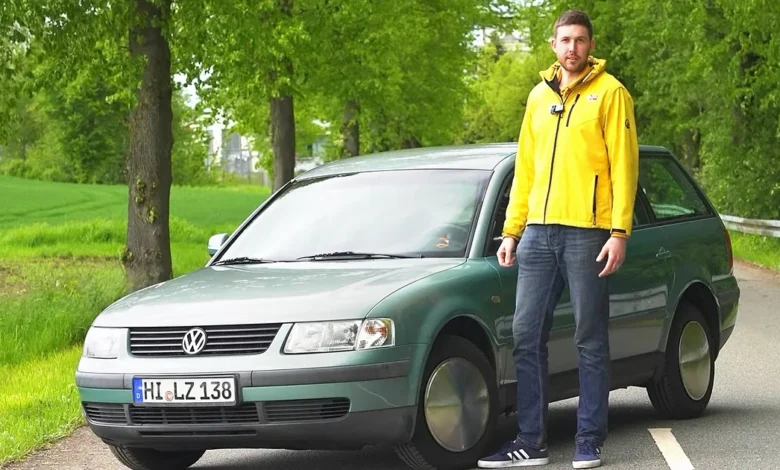
In an era where the automotive industry is locked in a fierce competition to extend the range of electric vehicles (EVs) beyond the 1,000-kilometer milestone, a German automotive enthusiast has demonstrated that decades-old internal combustion technology still possesses untapped potential. Elias, the creator behind the popular YouTube channel Offroadventure, recently completed a remarkable endurance challenge, driving a 1998 Volkswagen Passat B5 1.9 TDI from Hildesheim, Germany, to the Arctic Circle on a single tank of fuel. The journey, which spanned nearly 2,400 kilometers, has sparked renewed discussions regarding the efficiency of legacy diesel engines and the practical impact of meticulous vehicle optimization.
The feat was documented in detail by the technology outlet Xataka and across Elias’s digital platforms, showcasing a blend of mechanical preparation and disciplined driving. By the time the vehicle finally succumbed to an empty fuel tank, the odometer revealed a total distance of 2,398.7 kilometers. This result essentially doubles the range of the world’s most advanced long-range electric sedans, highlighting a significant, albeit specialized, advantage of high-efficiency diesel powertrains in long-distance touring.
The Legend of the 1.9 TDI Engine
To understand how a vehicle approaching its 30th anniversary could achieve such a result, one must look at the heart of the machine: the Volkswagen 1.9-liter Turbocharged Direct Injection (TDI) engine. Produced during an era often cited as the "golden age" of Volkswagen engineering, the 1.9 TDI engine is legendary among automotive enthusiasts for its reliability and thermal efficiency.
The specific model used in this challenge was a 1998 Passat B5 Variant (wagon). During the late 1990s, this engine utilized a rotary pump injection system (and later, the "Pumpe-Düse" or Unit Injector system) that allowed for extremely precise fuel metering. While modern engines are cleaner in terms of nitrogen oxide (NOx) and particulate emissions due to complex urea-injection (AdBlue) systems and particulate filters, the older 1.9 TDI units were inherently simpler and focused heavily on fuel economy. In its factory configuration, the Passat B5 was rated for approximately 5.6 liters per 100 kilometers (L/100km) in combined driving, with highway ratings dipping as low as 4.5 L/100km.
A Chronology of the Challenge: From Failure to Success
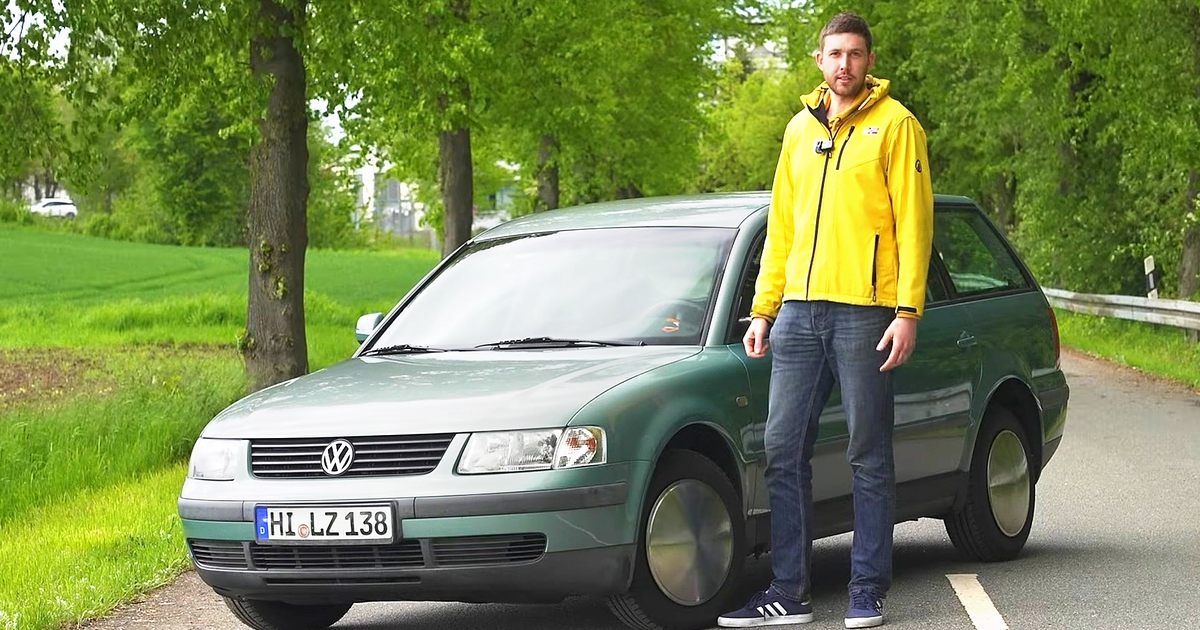
This record-breaking run was not Elias’s first attempt at the 2,000-kilometer mark. In a previous expedition, he managed to cover 1,900 kilometers before the fuel ran dry, narrowly missing the elusive 2,000-kilometer milestone. The near-miss served as a catalyst for a more scientific approach to vehicle modification and route planning.
The second attempt began with a rigorous preparation phase. Elias focused on "hypermiling"—a set of techniques used to maximize fuel economy. Before departing from Hildesheim, the vehicle’s fuel tank was filled to its absolute capacity. In the German market, the Passat B5 diesel was equipped with a 72-liter tank, which is notably larger than the versions sold in several other international markets. To ensure the integrity of the test, Elias applied a physical seal to the fuel filler cap, proving that no mid-journey refueling took place.
The journey took the 26-year-old wagon through the diverse landscapes of Northern Europe, crossing through Denmark and Sweden before reaching the harsh, frigid environments of the Arctic Circle. The goal was simple yet grueling: drive until the engine stopped, exhausting even the reserve fuel supply.
Engineering Optimization: The Science of Hypermiling
The success of the 2,400-kilometer run was not merely the result of a "lucky" engine but the consequence of several targeted modifications designed to reduce energy loss. Elias addressed the three primary enemies of fuel efficiency: aerodynamic drag, rolling resistance, and internal mechanical friction.
Aerodynamic Enhancements
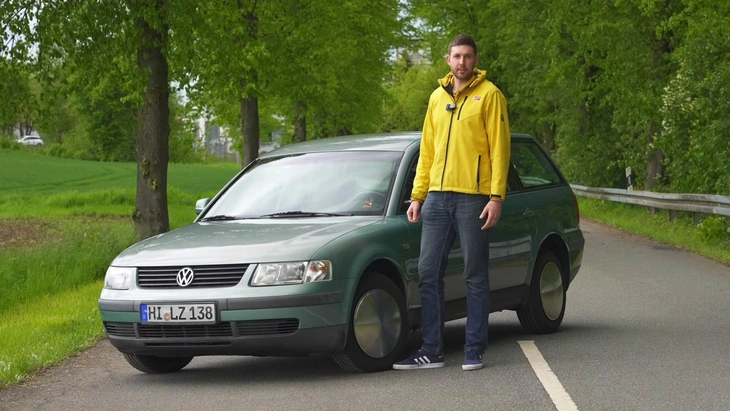
At highway speeds, the majority of a vehicle’s energy is spent overcoming air resistance. To mitigate this, Elias removed the factory roof rails and the radio antenna, streamlining the car’s silhouette. He also installed aerodynamic wheel covers, similar to those found on modern "Eco" models or Teslas, to reduce turbulence around the wheel arches. Furthermore, he partially blocked the front air intakes. While engines require air for cooling, excess airflow into the engine bay creates significant "internal" drag; by narrowing these openings, Elias improved the car’s "slippery" profile without causing the engine to overheat.
Reducing Rolling Resistance
The vehicle was fitted with Michelin low-rolling-resistance tires, which are engineered with specific rubber compounds to minimize energy loss as the tire deforms against the road. Crucially, Elias inflated these tires to the maximum pressure recommended by the manufacturer. While this can result in a firmer, less comfortable ride, it minimizes the tire’s contact patch and rolling friction, directly contributing to lower fuel consumption.
Mechanical and Electrical Efficiency
Inside the engine, Elias replaced all standard filters and utilized low-friction synthetic lubricants to ensure that every drop of diesel was converted into forward motion rather than heat. He also addressed the electrical load on the alternator. By converting the vehicle’s exterior and interior lighting to LED technology, he reduced the electrical draw, which in turn slightly reduced the load on the engine.
Finally, Elias retrofitted a cruise control system, a feature that was not standard on his specific 1998 model. This allowed for a perfectly steady throttle position, eliminating the micro-adjustments and fuel surges typically associated with manual foot control.
Analyzing the Data: Better Than a Scooter
The final statistics of the journey are staggering. To achieve 2,398.7 kilometers on a 72-liter tank, the Volkswagen Passat maintained an average fuel consumption of approximately 3.0054 liters per 100 kilometers.
To put this into perspective, a modern Honda SH 350i—a high-performance maxi-scooter—has an official fuel consumption rating of approximately 3.63 L/100km. Elias managed to move a 1.5-ton mid-sized wagon, capable of carrying five passengers and luggage, more efficiently than a single-cylinder commuter motorcycle.
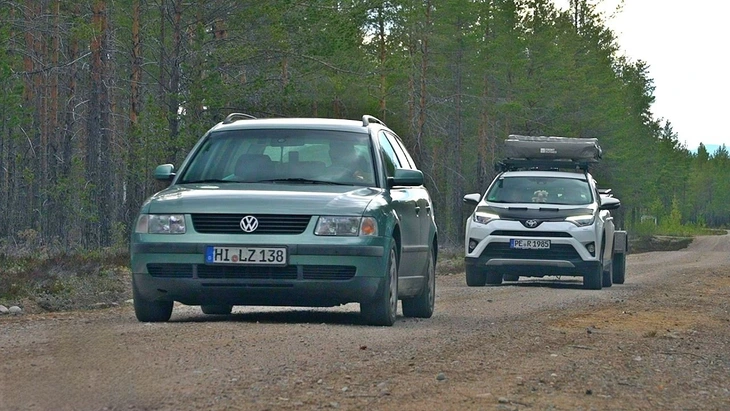
During the journey, Elias maintained an average speed of 74 km/h (approximately 46 mph). This speed is often cited by engineers as the "sweet spot" for many older diesel engines, where the vehicle is in its highest gear and the engine is operating at its peak torque-to-fuel-consumption ratio. Data from the car’s onboard trip computer showed that during flat stretches of the Scandinavian highways, the instantaneous consumption dropped as low as 2.5 L/100km.
Broader Implications and the Future of Long-Range Travel
The success of the Offroadventure project offers a nuanced perspective on the current transition to electric mobility. While the environmental benefits of zero-tailpipe-emission vehicles are undeniable, this challenge highlights the "energy density" advantage of liquid fuels. A 72-liter tank of diesel contains roughly 720 kWh of thermal energy. Even at a conservative 30-40% engine efficiency, the available kinetic energy far exceeds what can be stored in the largest current EV batteries (typically 100-120 kWh).
Industry analysts suggest that this experiment underscores several key points for the future of automotive design:
- Aerodynamics Matter More Than Ever: The significant gains Elias achieved through simple aerodynamic tweaks suggest that modern car designs, which often favor "boxy" SUV shapes for aesthetic reasons, are leaving substantial efficiency on the table.
- The Value of Maintenance: The fact that a 26-year-old car can achieve record-breaking figures suggests that well-maintained internal combustion engines can remain viable and efficient for decades, supporting the "right to repair" and sustainability through longevity.
- The Efficiency Gap: While modern diesels are cleaner, they are often heavier and more complex due to emissions hardware. This test raises questions about whether the industry has prioritized emissions reduction at the total expense of raw fuel economy.
Conclusion
As the vehicle finally rolled to a stop just short of the 2,400-km mark, Elias’s achievement stood as a testament to both German engineering and the art of hypermiling. After the engine died, Elias broke the seal on the fuel cap and added a small amount of reserve diesel he had carried for safety to reach the nearest fueling station.
The experiment, while extreme, serves as a practical reminder that efficiency is a multi-faceted equation involving the machine, the environment, and the driver. While the world looks toward a future of electric motors and solid-state batteries, the "old" 1.9 TDI Passat has proven that there is still a lot of life—and a lot of miles—left in the technology of the past. For Elias and his viewers, the journey was not just about a record; it was a demonstration that with careful optimization, the limits of what we consider "obsolete" technology can be pushed much further than previously imagined.