HAGL Forced to Move National Cup Home Match to Quy Nhon Due to Waterlogged Pleiku Pitch


The 2026-2027 Vietnamese football season has barely found its footing, yet it is already delivering logistical and infrastructural hurdles that threaten the competitive integrity of domestic competitions. In a striking development that underscores the ongoing challenges of stadium maintenance across Southeast Asia during severe weather seasons, Hoàng Anh Gia Lai (HAGL) Football Club has officially announced that it cannot host its upcoming National Cup fixture at its historic home ground. Instead, the Pleiku-based side will relocate its Round 1 qualifying match against Hưng Yên FC to Quy Nhơn Stadium, roughly 300 kilometers away in Bình Định province.
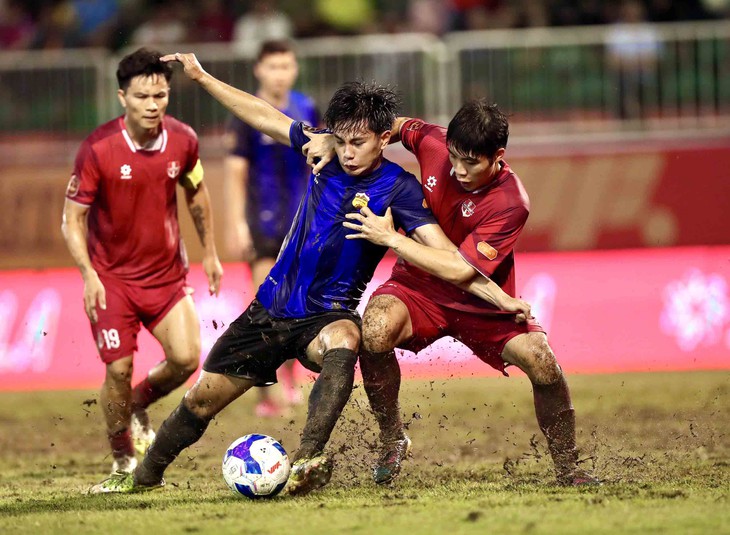
The decision comes in the wake of relentless torrential rainfall that transformed the iconic Pleiku Stadium pitch into an unplayable, mud-soaked quagmire during HAGL’s V-League encounter against Hải Phòng FC. The stark imagery of players wading through standing water and struggling to control a waterlogged ball quickly circulated across Vietnamese sports media, drawing widespread criticism from fans, pundits, and club officials alike. With tournament organizers enforcing strict facility standards to protect player safety and uphold the technical quality of the game, club leadership had little choice but to seek alternative arrangements.
A Crucial Fixture on Neutral Territory
Scheduled for 17:00 on September 20, the upcoming clash in the 2026-2027 National Cup preliminary round represents an intriguing matchup between a traditional V-League powerhouse and a rapidly rising challenger. However, the temporary relocation means HAGL will surrender their traditional home-field advantage—a venue famous for its passionate local support and unique mountain climate—to play at the neutral ground of Quy Nhơn Stadium, home of Quy Nhơn United.
For HAGL, the logistical disruption could not come at a worse time. The club has experienced a turbulent start to the 2026-2027 V-League campaign, currently searching for stability under the tactical guidance of head coach Lê Quang Trãi. Consecutive defeats—a humbling 0-4 loss to Nam Định FC at Thiên Trường Stadium followed by a 1-3 defeat at home against Hải Phòng FC—have left the mountain squad languishing near the bottom of the early-season standings.
Playing away from Pleiku, even on a neutral pitch in Quy Nhơn, strips the team of its familiar surroundings just as the squad desperately needs to regain psychological and tactical momentum. Team management has acknowledged the disadvantage but emphasized that player safety and tournament compliance must take precedence.

The Infrastructure Crisis at Pleiku Stadium
The root cause of the relocation lies in the severe deterioration of Pleiku Stadium’s drainage and turf infrastructure. Over the past decade, HAGL has been celebrated for pioneering professional youth development and modern club infrastructure in Vietnam. Yet, the natural grass pitch at Pleiku has frequently struggled to cope with the Central Highlands’ heavy seasonal monsoon rains.
The tipping point arrived on September 13 during Matchday 2 of the V-League season. Continuous downpours turned the turf into a thick layer of mud, severely limiting ball movement, increasing the risk of acute muscular and ligament injuries, and turning the spectacle into a contest of survival rather than technical football. Following the match, league inspectors and club agronomists conducted urgent assessments and concluded that the pitch requires a complete overhaul rather than superficial patching.
During the hiatus created by the National Cup scheduling and upcoming international breaks, HAGL groundskeeping staff will initiate extensive remediation work on the Pleiku turf. The club plans to regrade sections of the field, improve subsurface drainage channels, and replace damaged turf sections to ensure the facility meets professional standards moving forward.
League Oversight and Re-Inspection Timeline
The Vietnam Professional Football (VPF) company and the Vietnam Football Federation (VFF) have maintained a strict stance regarding stadium infrastructure for the 2026-2027 season, which has been widely touted as a milestone year for foreign player quotas and heightened competitive intensity.
According to tournament regulations, VPF officials will conduct a comprehensive inspection of Pleiku Stadium following the completion of the turf renovation project. The evaluation will determine whether the pitch meets the rigorous safety and technical benchmarks required for top-flight professional matches.
If the restoration efforts succeed and pass inspection, HAGL will be permitted to return to their spiritual home for Matchday 3 of the V-League, where they are scheduled to host SHB Đà Nẵng on October 10. However, failure to meet these standards could force the club to extend its exile, further complicating their fixture schedule and operational costs.
Formidable Opposition: The Rising Threat of Hưng Yên FC
While HAGL grapples with off-field infrastructural headaches, their opponents on September 20 present a formidable competitive threat. Hưng Yên FC, formerly known under the banner of PVF-CAND, has entered the 2026-2027 season with high ambitions and exceptional early-round form.
The team, managed by head coach Bùi Đoàn Quang Huy, launched their First Division campaign in spectacular fashion with a resounding 3-0 victory over Cần Thơ away from home. That clinical performance propelled them to the top of the standings after the opening weekend. Alongside other heavily invested outfits like Công An Nhân Dân and Becamex TP.HCM, Hưng Yên FC is widely regarded by analysts as one of the three primary contenders for promotion to the V-League this season.
Boasting a well-structured tactical setup, aggressive pressing, and confident attacking depth, Hưng Yên FC will view the National Cup fixture not merely as a knockout match, but as an opportunity to test their mettle against top-tier opposition. For a struggling HAGL side forced to play away from home on unfamiliar turf, containing Hưng Yên’s dynamic frontline will require a disciplined defensive masterclass.
Broader Implications for Vietnamese Club Football
The necessity to relocate a professional fixture due to pitch degradation highlights a broader, systemic issue within Vietnamese football infrastructure. While several clubs have invested heavily in state-of-the-art training facilities and stadium modernization, others continue to struggle with municipal funding, aging drainage systems, and unfavorable geographic microclimates that test the limits of natural turf.
Sports economists and league analysts frequently point out that infrastructure bottlenecks directly impact the commercial value of the V-League and its associated tournaments. Broadcast quality, fan engagement, and player longevity are all compromised when matches are played on waterlogged or uneven surfaces. The swift action taken by VPF in this instance reflects an increasing intolerance for substandard venues, signaling to club owners that infrastructural investment is just as critical as squad recruitment.
As HAGL prepares for the journey to Quy Nhơn Stadium, the stakes extend far beyond a single preliminary round match in the National Cup. For the club, it is a battle to protect its sporting reputation amidst a rocky start to the season. For the stadium management, it is a race against time to restore the pride of Pleiku. And for Vietnamese football administration, it serves as another reminder that the growth of the game on the pitch must be matched by the resilience of the grounds beneath the players’ feet.