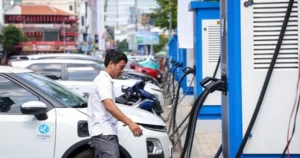
General Motors Faces Strategic Crossroads as US Consumer Demand Shifts Toward Hybrid Vehicles

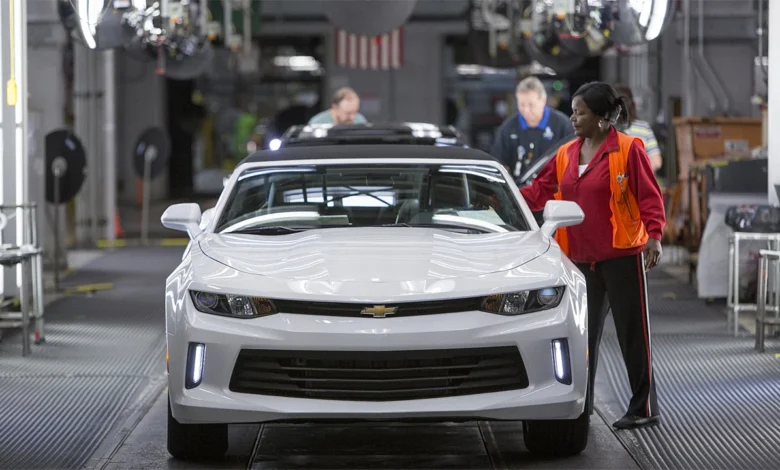
While American consumers are increasingly turning to hybrid vehicles to mitigate the financial burden of volatile fuel prices, General Motors is finding itself at a difficult impasse, with its leadership long dismissing the technology as a mere transitional bridge. As the automotive landscape undergoes a significant transformation, the divergence between market demand and corporate strategy has created a palpable tension within the company’s retail network.
For dealers on the front lines, the contrast is stark. Bill Wallace, who oversees a chain of 16 dealerships in Florida, reports that a significant portion of recent customer inquiries centers on hybrid vehicles—the dual-power technology combining traditional internal combustion engines with electric batteries. While staff at his Hyundai, Kia, and Mazda franchises are struggling to keep up with consumer interest in hybrids, the Chevrolet and Cadillac showrooms remain notably quiet. Despite GM’s broad portfolio of electric vehicles (EVs), the company currently offers only one hybrid model: the high-performance Chevrolet Corvette.
The Surge of the Hybrid Market
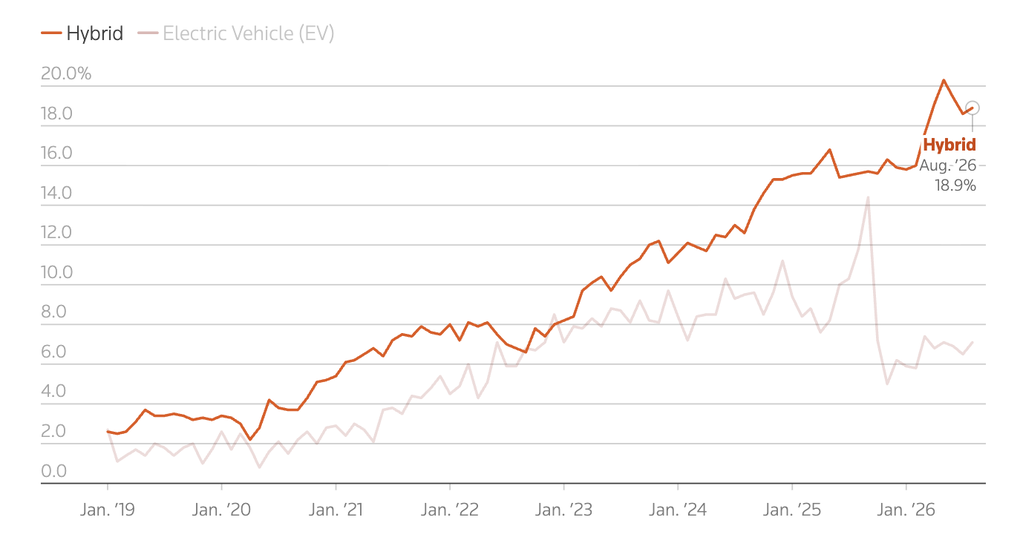
The current market shift is underscored by significant data. Following geopolitical instability in the Middle East earlier this year, gasoline prices in the United States surged by approximately 40%. This rapid increase in the cost of operation has driven a surge in demand for fuel-efficient vehicles. According to recent industry metrics, hybrid vehicles accounted for 19% of the U.S. market share in August, a figure that significantly outpaces the 7% share held by battery-electric vehicles (BEVs). Effectively, for every five vehicles sold, one is now a hybrid.
Data from market analysis firm JD Power further illustrates the momentum. During the second quarter, the growth rate of hybrid vehicle sales at dealerships was more than double that of traditional internal combustion engine vehicles. Analysts suggest that hybrids have captured the sentiment of American buyers because of their lower entry price points compared to full EVs, even when accounting for potential long-term fuel savings. Furthermore, they offer a seamless transition for consumers who are not yet prepared to overhaul their driving habits, such as installing home charging infrastructure or navigating range anxiety.
GM’s "Green" Philosophy and the EV Bet
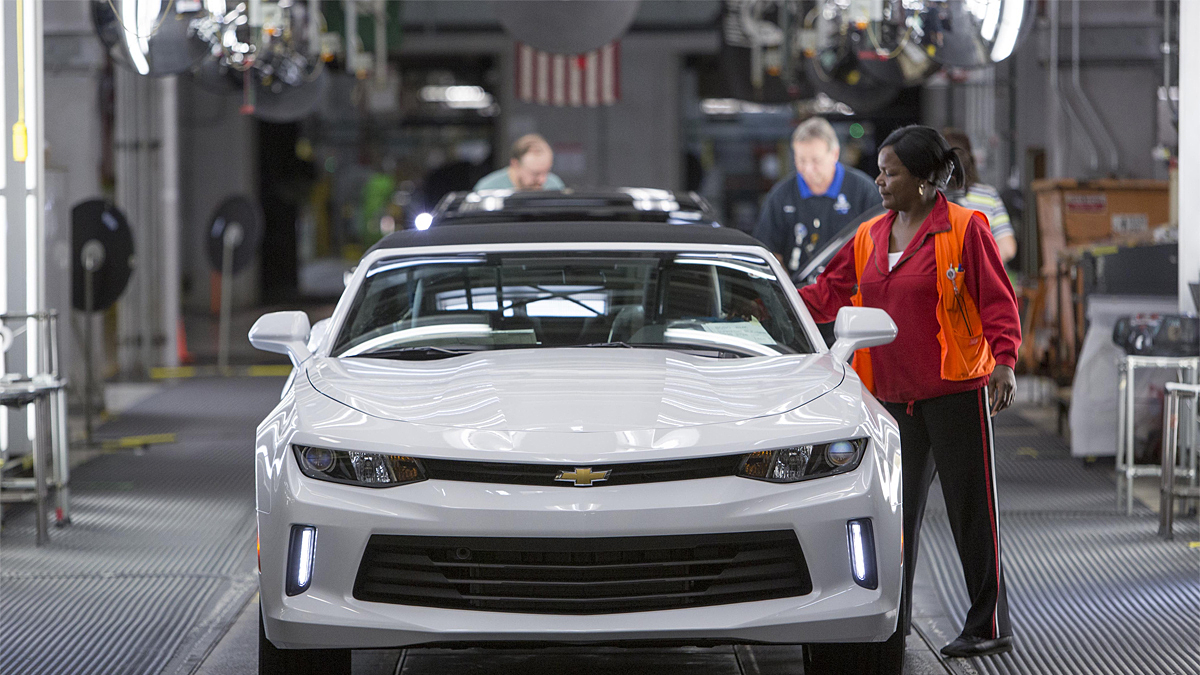
For years, General Motors’ executive leadership has maintained a firm stance that hybrid technology is a costly and complex investment that does not align with their long-term sustainability goals. CEO Mary Barra has frequently characterized hybrids as a "temporary green solution," prioritizing an all-electric future. The company has invested billions into EV infrastructure, convinced that the market would eventually shift exclusively toward zero-emission vehicles.
However, as of late 2024, the reality of the market has begun to clash with these projections. With EV sales failing to meet the aggressive growth targets set by industry analysts and corporate planners, GM is now reportedly considering the introduction of plug-in hybrid (PHEV) models for the North American market by 2027. Unlike standard hybrids, PHEVs feature larger battery capacities, allowing for significant electric-only range before the gasoline engine engages, providing a middle ground for consumers.
Despite these internal deliberations, industry suppliers and market forecasting firms suggest that it could take until the end of the decade before GM can effectively scale a hybrid presence in the United States. The company has declined to comment on specific future product roadmaps.
A Shifting Political and Economic Landscape
The automotive industry is navigating a period of unprecedented turbulence, not only in terms of consumer preference but also in regulatory and political support. Following the inauguration of President Donald Trump, the U.S. administration moved to rescind significant incentives for electric vehicles, while simultaneously blocking mandates that would have phased out gasoline-powered cars in several states, including California, by 2035.
This policy shift has forced major automakers to rethink their electrification strategies. Ford, for instance, announced the cessation of production for most of its pure-battery models late last year, absorbing a $19.5 billion write-down in the process. Yet, by maintaining a robust lineup of hybrid alternatives, Ford has managed to create a safety net that has mitigated some of the financial fallout.
Conversely, Toyota Motor has long been the pioneer of hybrid technology, having introduced the Prius in the late 1990s. This early strategic bet has paid dividends; in the first half of this year, electrified vehicles—the vast majority being hybrids—accounted for more than half of Toyota’s total U.S. sales. Similarly, in the compact SUV segment, models like the Toyota RAV4 and Honda CR-V have seen explosive growth. Nissan has also accelerated the launch of its Rogue hybrid variant to stay competitive. In stark contrast, GM continues to rely on gasoline-only versions of its compact SUVs, such as the Chevrolet Trax and Buick Envista.
The Financial and Retail Consequences
The lack of a competitive hybrid offering is beginning to impact GM’s market position. During the first half of this year, GM’s market share in the United States slipped to 16.8%, down from 17.6% during the same period last year. Meanwhile, competitors heavily invested in hybrids have seen their market shares climb.
Retailers are feeling the pressure of this disconnect. David Ferraez, a GM dealer in New Jersey, noted that many dealers are becoming hesitant to accept more inventory of pure EVs, as they remain difficult to move in the current climate. "I hope GM can adapt and find a viable path to producing hybrids," Ferraez stated, reflecting a sentiment shared by many in the dealer network who feel the current product mix does not match the immediate needs of their customer base.
Strategic Outlook and Corporate Resilience
In a recent discussion with Fortune, CEO Mary Barra addressed the market’s mixed signals, emphasizing that the company must make decisions that are "low risk" and "no regret," while simultaneously preparing for multiple business scenarios. She reiterated that flexibility is essential but stressed that the company’s vision remains consistent. "Electric vehicles are still the ultimate destination," she stated.
The challenge for General Motors is balancing this long-term vision with the immediate, and often volatile, demands of the American consumer. As the industry approaches the end of the decade, the ability to maintain the agility required to pivot between electric and hybrid platforms may well determine the next chapter of the company’s dominance in the global automotive sector. The current data indicates that while the destination may be electric, the road to getting there is proving to be far more complex than initially envisioned, necessitating a pragmatic approach that embraces the hybrid as a vital, if temporary, component of the automotive evolution.