A Historic Milestone for the Vietnamese Economy
The reclassification of Vietnam from a "Frontier Market" to an "Emerging Market" status by FTSE Russell is the culmination of years of rigorous institutional reforms, legislative updates, and a sustained effort by the Ministry of Finance, the State Securities Commission (SSC), and various market participants. By aligning with the classification standards set by one of the world’s leading index providers, Vietnam has effectively removed a major psychological and structural barrier that previously hindered institutional capital inflows.
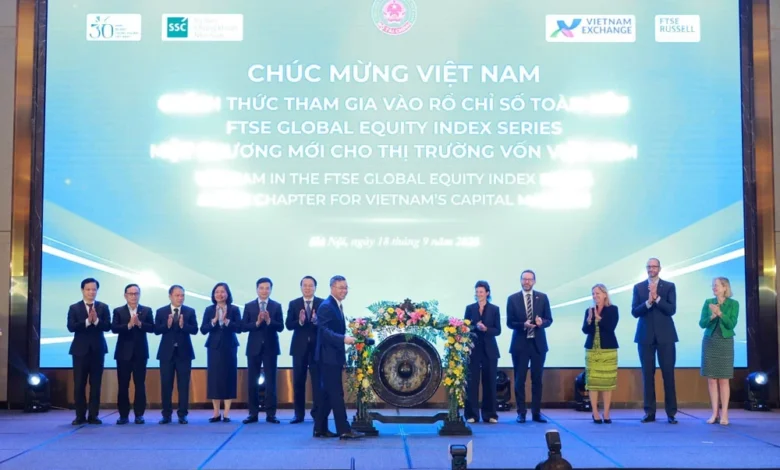
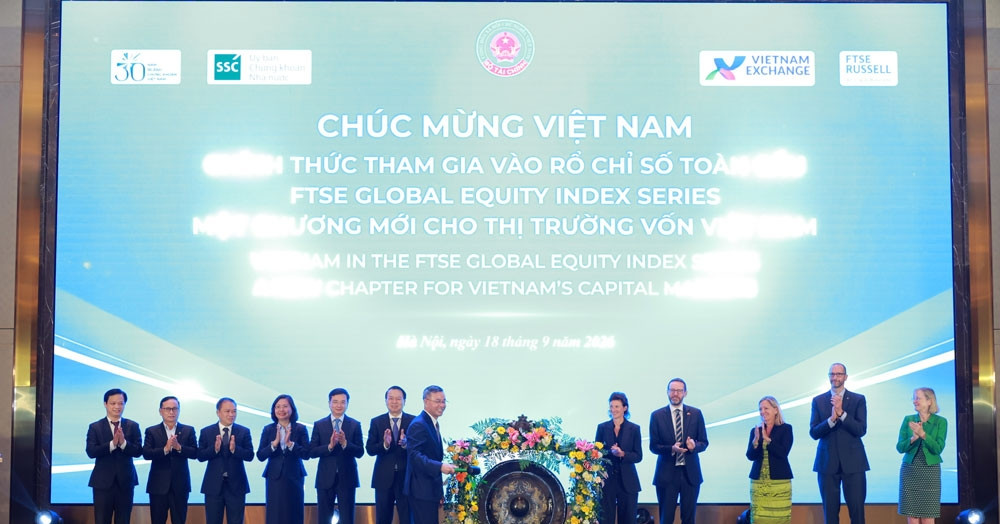
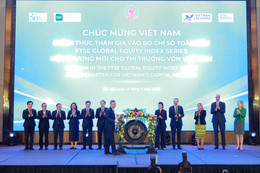
During the opening ceremony of the commemorative conference, Minister of Finance Ho Duc Phoc emphasized the profound significance of this upgrade. He noted that in an era of shifting global capital flows, Vietnam has remained steadfast in its commitment to macroeconomic stability, improving the business investment environment, and fostering a green, digital, and innovative economy. This transition is not merely a label change; it is an endorsement of the structural maturity of the Vietnamese bourse.
Chronology of the Path to Reclassification
The journey toward this upgrade has been characterized by persistent, multi-year efforts to satisfy the demanding criteria of global index providers.
- 2019-2020: The World Bank began providing comprehensive technical assistance to the Vietnamese government, focusing on the "Capital Market Development Program." This period saw initial legislative overhauls, including the revision of the Law on Securities to improve market oversight and investor protection.
- 2021-2023: Regulatory focus shifted toward the modernization of market infrastructure. Key improvements included the integration of advanced trading systems and the streamlining of account-opening procedures for foreign investors, reducing the administrative burden that had long been a deterrent.
- September 2025: FTSE Russell conducted a pivotal assessment, during which the progress of the Vietnamese market was evaluated. The agency confirmed that significant milestones regarding market access and regulatory frameworks had been reached.
- September 18, 2026: The official announcement confirming the status change was broadcast globally, with the Vietnamese flag and congratulatory messages displayed at the New York Stock Exchange (NYSE), symbolizing the country’s arrival on the international stage.
- September 21, 2026: The effective date for the reclassification, placing Vietnam firmly within the FTSE Emerging Markets index series.
Supporting Data and Market Dynamics
The inclusion in the FTSE Russell Global Equity Index Series is expected to catalyze a significant influx of passive and active investment. Currently, over $22 trillion in assets under management globally utilize FTSE Russell indices as their primary performance benchmarks.
Market analysts suggest that while the immediate capital inflow will be determined by the weight of Vietnamese stocks within these indices, the long-term impact on liquidity is expected to be transformative. Increased visibility among global institutional investors—such as pension funds, sovereign wealth funds, and global asset managers—is likely to reduce the cost of capital for listed Vietnamese enterprises.
Furthermore, the government has set ambitious targets for the capital market’s development through 2030, with a vision toward 2045. These goals include doubling the current market capitalization-to-GDP ratio, enhancing the diversity of available financial products (including derivatives and green bonds), and achieving a "market-clearing" efficiency that rivals regional peers like Thailand and Malaysia.
Official Responses and Strategic Vision
The sentiment from both domestic policymakers and international partners remains overwhelmingly positive, though it is tempered by a call for continued vigilance.
Minister Ho Duc Phoc underscored that this upgrade imposes a higher standard of accountability. "Vietnam is ready to listen to the feedback of international organizations and continue to pursue reforms," he stated. "Our objective is to build a transparent, safe, and highly efficient capital market that remains attractive to long-term, high-quality capital—the kind of capital that brings with it knowledge transfer, advanced management practices, and sustainable development."
Iain Grant Frew, the Ambassador of the United Kingdom of Great Britain and Northern Ireland to Vietnam, echoed these sentiments. He noted that the upgrade is a clear signal to global investors that Vietnam is serious about deepening its financial integration. He highlighted that the UK is keen to share its expertise in green finance, financial technology, and the development of international financial centers, areas where London’s experience can serve as a blueprint for Vietnam’s future growth.
Mariam J. Sherman, representing the World Bank, highlighted that while this upgrade is a "landmark moment," it should not be viewed as the finish line. She emphasized that the focus must now shift to "deepening market liquidity, diversifying financial channels outside the traditional banking system, and ensuring that long-term savings are channeled into high-impact investments."
Implications and Future Challenges
The reclassification brings both opportunities and challenges. On the positive side, Vietnam’s market is now positioned to attract a more stable and diverse class of investors. The requirement for higher governance standards—enforced by the State Securities Commission—will likely lead to better corporate behavior among listed companies, as they must now compete for capital on a global stage where transparency is a primary metric.
However, the transition also necessitates a continuous improvement in market surveillance and risk management. As capital inflows increase, the potential for market volatility rises. Consequently, the Ministry of Finance has outlined a three-pronged approach for the next phase:
- Strict Governance: Raising the bar for corporate governance, market discipline, and the effective handling of market violations.
- Investor-Friendly Environment: Continuing to simplify procedures for foreign investors in accordance with international standards, ensuring that the "Ease of Doing Business" in the stock market remains a competitive advantage.
- Modernizing Infrastructure: Building a robust legal and technical foundation for new financial products, including the potential introduction of specialized exchanges for SMEs and green-focused instruments.
A New Chapter for the Vietnamese Bourse
The presence of the Vietnamese flag at the New York Stock Exchange during the lead-up to this event served as a potent symbol of the country’s economic aspirations. It reflected a collective national effort—from the government agencies managing the regulatory transition to the stock exchanges and brokerage firms upgrading their technological capabilities.
As Vietnam settles into its new status, the global investment community will be watching closely. The success of this transition will be measured not just by the volume of capital entering the country, but by the resilience of the market during periods of global economic stress and the quality of companies that choose to list on the local bourse.
By prioritizing transparency, adhering to the rigorous benchmarks of FTSE Russell, and maintaining an open dialogue with global financial institutions, Vietnam has successfully signaled that it is no longer just an observer in the global financial system, but an active, growing, and increasingly sophisticated participant. This reclassification marks the beginning of a long-term strategic integration, one that promises to redefine the role of the capital market as a primary engine for Vietnam’s economic modernization and future prosperity.