Medical Professionals From Tuyen Quang General Hospital Resuscitate Drowning Victim During Vacation in Quang Binh Province

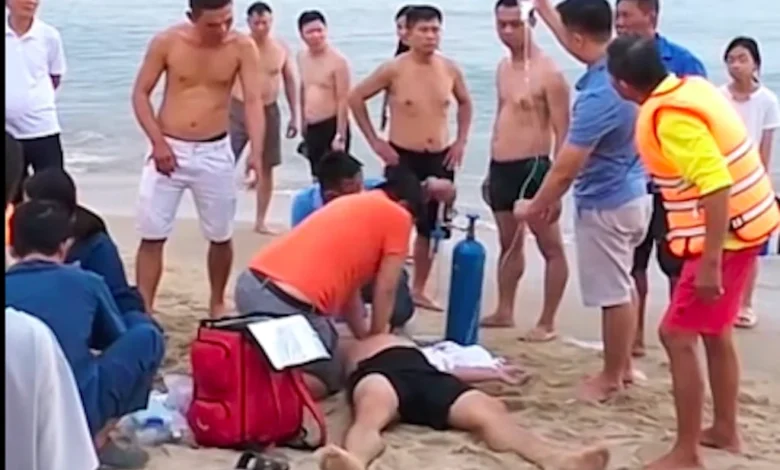
At approximately 6:00 AM on July 21, a group of medical professionals from the Tuyen Quang Provincial General Hospital, who were on a sightseeing trip in Dong Hoi City, Quang Binh Province, successfully performed a life-saving intervention on a drowning victim at Nhat Le Beach. The victim, who had been pulled from the water by local rescue forces in a state of critical circulatory arrest, was revived following ten minutes of intensive, coordinated emergency procedures performed directly on the sand. This incident underscores the vital importance of immediate professional medical intervention during the "golden window" of resuscitation and highlights the ongoing challenges of water safety in Vietnam’s coastal tourism hubs.
The Critical Ten Minutes on Nhat Le Beach
The incident occurred during the early morning hours, a peak time for tourists and locals alike to swim at Nhat Le Beach, one of the most popular coastal destinations in central Vietnam. According to eyewitness accounts and reports from the medical team, the victim had been swimming when they encountered distress and were submerged. Local lifeguards and rescue personnel quickly identified the situation and brought the individual to shore. However, upon reaching the beach, the victim was unconscious, non-responsive, and showed no signs of a pulse or breathing—a condition clinically recognized as circulatory arrest.
By a stroke of fortune, a delegation of staff from Tuyen Quang Provincial General Hospital was present at the scene. Recognizing the emergency through professional instinct, a team of five—comprising two doctors and three nurses—immediately rushed to assist the local rescue forces. The team was led by Dr. Dao Van Dai, a specialist from the Oncology Department, whose experience in critical care proved instrumental.
The medical team quickly established a field resuscitation protocol. The five members divided tasks with surgical precision: one performed continuous chest compressions to maintain blood flow to the brain, another managed the airway and provided bag-valve-mask ventilation, while others prepared for endotracheal intubation and the administration of emergency fluids. For ten grueling minutes, the team worked against the clock, surrounded by an anxious crowd of onlookers. Their efforts were rewarded when the victim showed signs of spontaneous circulation, including a returning pulse and shallow breathing.
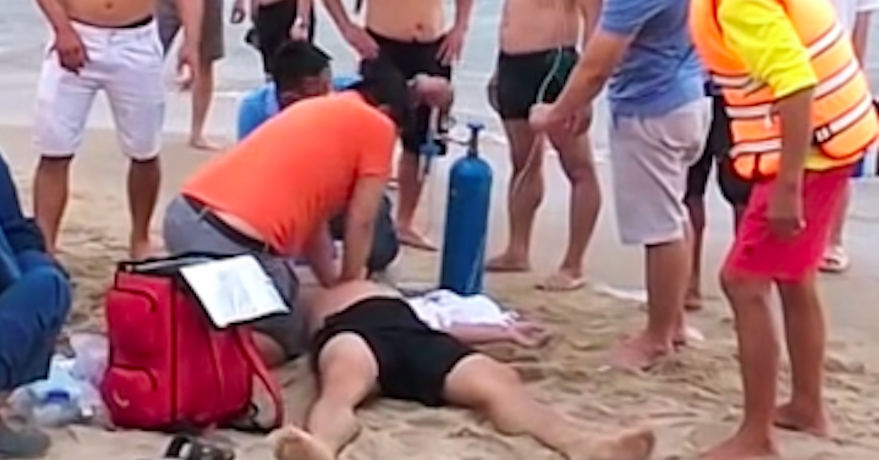
Once the victim was stabilized, the local 115 emergency medical services arrived and transported the individual to the Vietnam-Cuba Friendship Dong Hoi Hospital. Reports indicate that the victim passed the most critical stage of the crisis thanks to the immediate intervention on the beach.
The Science of the Golden Hour in Drowning Incidents
The success of the Tuyen Quang medical team highlights a critical principle in emergency medicine: the "Golden Hour," or more accurately in drowning cases, the "Golden Minutes." Dr. Dao Van Dai later emphasized that when a person suffers from drowning-induced cardiac arrest, every second counts. Brain damage can begin to occur within four to six minutes of oxygen deprivation.
In many drowning incidents, bystanders or untrained rescuers may lose precious time by attempting to transport the victim to a hospital immediately without performing on-site resuscitation, or by employing outdated and dangerous techniques. Dr. Dai noted that the immediate application of high-quality cardiopulmonary resuscitation (CPR) and the securing of the airway on the beach were the decisive factors in this victim’s survival. By the time an ambulance arrives, it is often too late if basic life support has not already been initiated.
The technical proficiency shown by the Tuyen Quang team—specifically the ability to perform intubation and coordinated ventilation in a non-clinical environment like a sandy beach—is a testament to the rigorous training of provincial medical staff in Vietnam. Their ability to remain calm and systematic under pressure turned a likely tragedy into a successful rescue.
A Broader Context: Drowning Trends in Vietnam
While the rescue at Nhat Le Beach ended positively, it serves as a stark reminder of the high incidence of drowning in Vietnam. According to data from the Ministry of Labour, Invalids and Social Affairs (MOLISA), drowning remains one of the leading causes of accidental death in the country, particularly during the summer months when tourism peaks.
Vietnam’s extensive coastline, combined with a vast network of rivers and canals, creates a high-risk environment. Statistics suggest that nearly 2,000 children die from drowning every year in Vietnam, a rate significantly higher than in many other Southeast Asian nations. While the government has launched various initiatives to promote swimming lessons and water safety awareness, the infrastructure for emergency response at public beaches remains inconsistent.
The incident on July 21 is part of a series of recent high-profile water emergencies. In early July, a four-year-old boy in Tuyen Quang was hailed as a hero for alerting adults when his two-year-old sister fell into a fish pond, saving her life. Conversely, a tragic incident in Hanoi saw a six-year-old boy suffer cardiac arrest at a swimming pool during his third lesson; despite being pulled out, the lack of immediate, high-quality intervention led to a far more dire prognosis. These cases collectively illustrate that drowning can happen anywhere—from private ponds to supervised pools and public beaches—and that the outcome depends almost entirely on the speed and quality of the first response.
Debunking Dangerous Myths in Drowning First Aid
One of the most significant hurdles to reducing drowning fatalities in Vietnam is the persistence of folk remedies and incorrect first-aid practices. Associate Professor Dr. Hoang Bui Hai, a leading emergency specialist, has frequently voiced concerns over the practice of "dốc ngược"—holding a drowning victim upside down and running with them or shaking them to "drain the water" from the lungs.
Medical experts clarify that this practice is not only ineffective but lethally dangerous. When a person drowns, the amount of water in the lungs is typically minimal; the primary issue is the closure of the airway (laryngospasm) or the filling of the lungs with fluid that prevents oxygen exchange. Holding a victim upside down causes gastric contents to flow back into the throat, leading to aspiration pneumonia. More importantly, it wastes the "Golden Minutes" that should be spent on chest compressions and rescue breaths.
The Tuyen Quang medical team’s adherence to international resuscitation standards—focusing on circulation, airway, and breathing (CAB)—serves as a model for how the public should be educated. The success of their intervention at Nhat Le Beach provides a powerful counter-narrative to traditional but harmful myths, proving that modern medical protocols are the only reliable way to save lives.

Official Responses and Implications for Tourism Safety
The heroic actions of the Tuyen Quang Provincial General Hospital staff have received widespread praise from the public and the medical community. While the staff were technically off-duty and on a personal vacation, their readiness to intervene reflects the "physician as a lifelong calling" ethos that the Vietnamese healthcare system strives to cultivate.
Local authorities in Quang Binh and Dong Hoi City have also taken note of the incident. There is an increasing call for tourism hubs to better equip their lifeguard stations with advanced medical tools, such as Automated External Defibrillators (AEDs) and bag-valve masks, and to provide specialized training for beach security forces. While lifeguards are skilled at retrieving victims from the water, the transition from rescue to medical resuscitation is where many fatalities occur.
Furthermore, this event highlights the potential for "medical tourism" in a different light—the presence of trained professionals among tourist crowds can be a significant safety net. Some experts suggest that popular beaches should have dedicated medical kiosks during peak seasons, staffed by rotating personnel or volunteers, to ensure that the "Golden Hour" is never missed.
Conclusion: A Call for Enhanced Public Awareness
The successful resuscitation of the tourist at Nhat Le Beach is a rare bright spot in a summer often marred by water-related tragedies. It serves as a definitive case study in the efficacy of immediate, professional CPR. However, the medical community warns that we cannot rely on the chance presence of vacationing doctors to keep beaches safe.
To lower the drowning mortality rate, Vietnam must pursue a multi-pronged approach:

- Universal Swimming Education: Expanding "safe swimming" programs in schools to ensure children understand water buoyancy and survival techniques.
- Public CPR Training: Encouraging the general public to learn basic chest compressions and the importance of calling for professional help immediately.
- Modernizing Beach Safety: Equipping rescue teams at major beaches like Nhat Le, Da Nang, and Nha Trang with modern resuscitation equipment and ensuring they are trained in the latest medical protocols.
- Eradicating Myths: Continuous public health campaigns to discourage dangerous practices like the "upside-down" method.
As the victim continues their recovery at the Vietnam-Cuba Friendship Dong Hoi Hospital, the story of the five medical workers from Tuyen Quang remains a powerful reminder of the value of medical expertise and the thin line between life and death. Their decisive actions on the morning of July 21 did more than save one life; they provided a vital lesson in the importance of preparedness, skill, and the courage to act when every second counts.